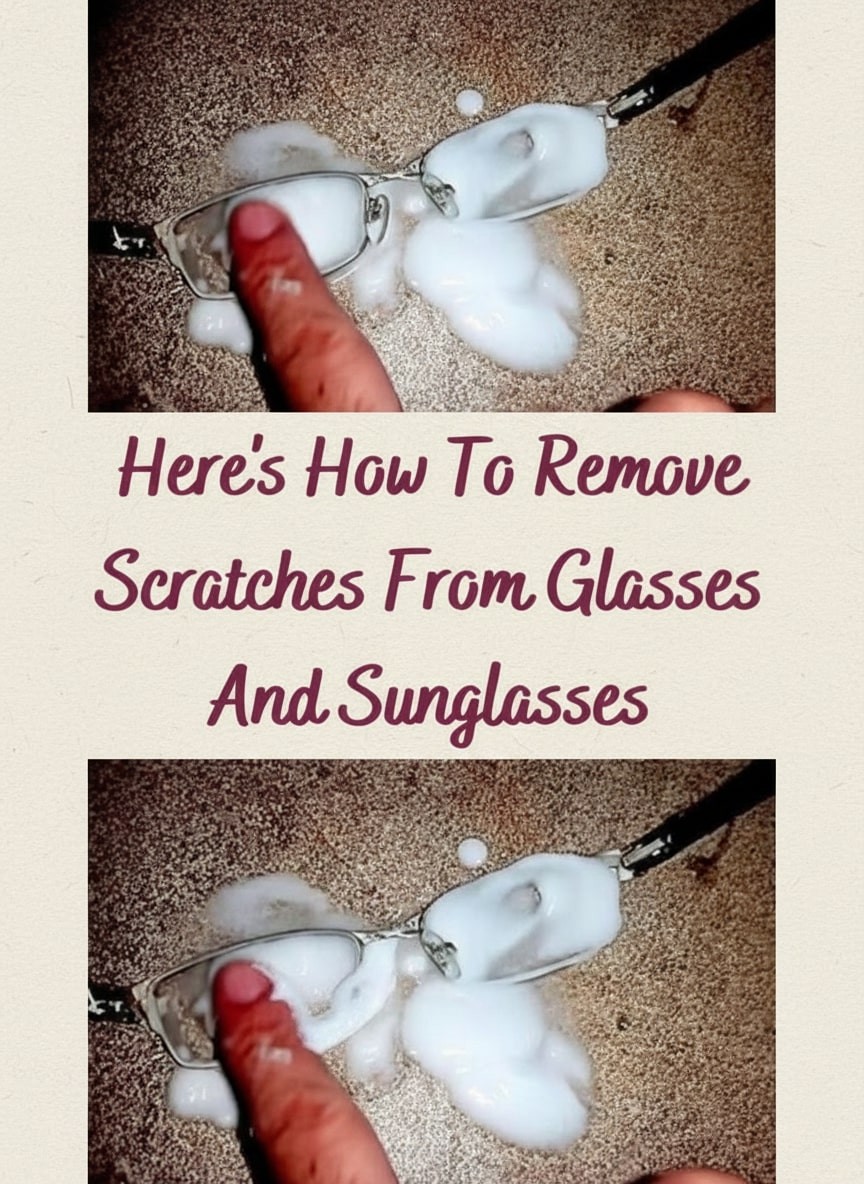
Scratched glasses are one of those little annoyances that feel way bigger than they should. One tiny mark can catch the light, blur your vision, or distract you all day. Before rushing to buy a new pair, it’s worth knowing what you can fix at home—and what’s better left to the pros.
The key? Understand your lenses, the depth of the scratch, and what’s realistically possible. No DIY hack will truly repair a scratch the way professional resurfacing does. At best, some methods can mask fine surface marks, usually on older, uncoated lenses. Used incorrectly, however, DIY tricks can permanently damage modern glasses.
Baking Soda Paste: Gentle but Limited
A baking soda paste is often recommended—but it only works in very specific cases. Mildly abrasive, it can smooth extremely shallow scratches, but it won’t remove deeper marks. Never try it on lenses with anti-reflective, blue-light, or scratch-resistant coatings.
To try safely: mix 1–2 teaspoons of baking soda with a few drops of distilled water into a thin paste. Clean your lenses first, then gently rub the paste over the scratch in tiny circles for 10–15 seconds. Rinse and dry with a microfiber cloth.
This is best for old reading glasses or inexpensive, uncoated lenses. For daily prescription glasses, the risk usually outweighs the reward.
Toothpaste: Handle With Extreme Caution
Plain, non-gel toothpaste is another popular DIY trick—but proceed carefully. Most toothpaste contains silica or polishing agents that can permanently cloud or strip coatings. If you try it, use a tiny dab on a damp microfiber cloth, rub gently for just a few seconds, rinse thoroughly, and always test on a corner first. Even then, results are inconsistent.
Continue reading on next page…