For more than sixty years, Dyan Cannon has remained a captivating presence in Hollywood, known for blending intelligence, warmth, and a distinctive on-screen charm. From her earliest performances to her later career roles, she consistently brought a balance of wit and emotional honesty that set her apart from her peers.
Her career has been marked by remarkable recognition, including three Academy Award nominations, multiple Golden Globe nods with one win, and a Saturn Award. Cannon’s ability to move effortlessly between comedy, romance, drama, and suspense made her one of the industry’s most versatile performers. In 1983, she received a star on the Hollywood Walk of Fame—a tribute not just to her talent, but to a career shaped by persistence, creativity, and lasting influence.
Audiences still remember her standout performances in films such as Bob & Carol & Ted & Alice, The Last of Sheila, Heaven Can Wait, and Deathtrap. In each role, she infused her characters with depth, humor, and emotional texture. Yet beyond the applause and red carpets, her personal life unfolded with trials that would redefine her sense of self.
A Romance That Redefined Her Life
In the early 1960s, Cannon caught the attention of Cary Grant, one of Hollywood’s most legendary leading men, after he saw her on a late-night television appearance. She was in her twenties, her expressive eyes and soft blonde hair immediately striking. Grant was captivated and determined to meet her.
After months of pursuit, their romance began and quickly became the subject of public fascination. They married in 1965, when Cannon was 28 and Grant 61. What appeared magical at first soon revealed emotional complexities she had not anticipated. Cannon later reflected that while she loved him deeply, the relationship demanded sacrifices she never imagined making.
Grant reportedly expected her to step away from acting and subtly reshape herself—her appearance, habits, even the way she moved and spoke. Wanting to preserve the marriage, Cannon tried to comply, adjusting small details of daily life in hopes of keeping peace. Over time, she realized that suppressing her true self came at a profound emotional cost.
“If you ignore your inner voice,” she later said, “you lose yourself.” The marriage ended in 1968. During the divorce, Cannon alleged emotional harm and described a relationship marked by imbalance and pressure. The separation left her not only heartbroken, but determined to rediscover who she was beyond the shadow of a famous name.
The Gift That Endured
From that union came her greatest joy: her daughter, Jennifer, born in 1966. Jennifer remains Cary Grant’s only child and became the anchor in Cannon’s life. No matter the turmoil, Cannon’s devotion to motherhood provided purpose and stability.
Even after Grant’s passing in 1986, Cannon declined lucrative offers to publish a sensational memoir. She chose instead to wait, later crafting a reflective account encouraged by Jacqueline Kennedy Onassis—one focused on growth, love, and resilience rather than scandal.
“It’s about what people do to themselves and each other under the name of love,” Cannon explained.
Rebuilding on Her Own Terms
The years following her divorce became a period of healing and reinvention. Cannon gradually returned to acting while expanding into directing and producing, reclaiming creative control over her career. Her later performances carried a new depth, shaped by lived experience and emotional clarity.
She proved that growth does not end with hardship. Instead, it can open new doors. Her return to Hollywood came on her own terms, setting an example for other women navigating reinvention in an industry that often resists it.
Faith, Service, and Inner Strength
Through every chapter, Cannon credits faith as her guiding force. Describing herself as a “big God girl,” she has spoken openly about how spirituality offered her direction and comfort during life’s most difficult moments.
Her faith is active, not abstract. She hosts monthly Bible studies in her home and volunteers with individuals in recovery, offering encouragement grounded in empathy and experience. For Cannon, belief translates into service—transforming personal pain into compassion for others.
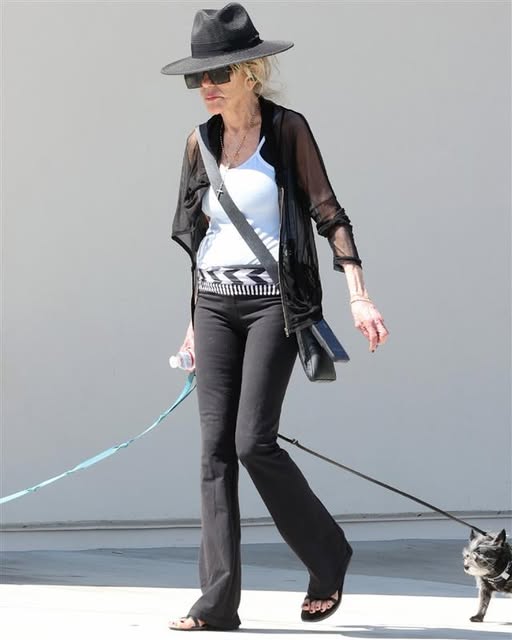
Even in her eighties, she remains engaged with life. Public appearances in recent years have drawn both admiration and criticism, reflecting society’s complicated relationship with aging women. Cannon meets it all with grace, emphasizing authenticity over approval.
Looking back, she describes her journey as one shaped by both sorrow and joy. “It took me time to find happiness,” she once said, “but I’m a happy puppy now.”
Her story is a testament to endurance: that fulfillment is not defined by fame or circumstance, but by resilience, self-acceptance, and the courage to live truthfully. Through decades of transformation, Dyan Cannon stands as a portrait of strength, faith, and a life lived on one’s own terms.