 News
News Young Man Hospitalized Following Unexpected Accident
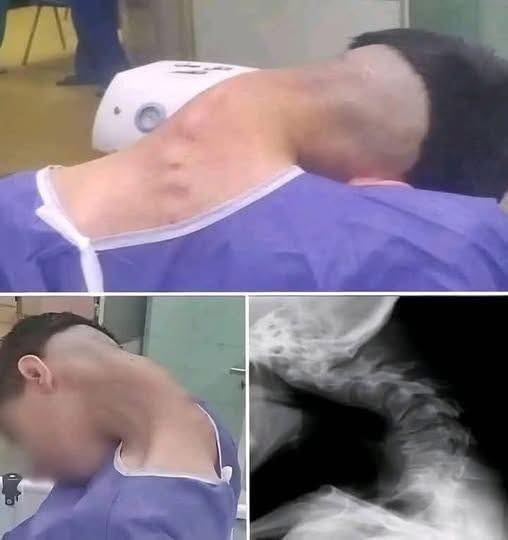
Workplace accidents can change lives in an instant—and sometimes, those seconds leave no chance for survival. A chilling case reported in the Journal of Orthopaedic Case Reports (September 2022) tells the story of an 18-year-old worker in India who suffered a fatal injury after a heavy metallic object fell onto the front of his head. Despite rapid emergency care, including stabilization and intensive treatment, he passed away within two days.
A Rare and Devastating Injury
What shocked medical experts wasn’t just the tragedy, but the unusual pattern of spinal fractures the young man sustained. His cervical vertebrae were damaged in a way never documented before, defying standard classification systems used in spinal trauma. Specialists were forced to confront an unsettling reality: existing frameworks may not cover every possible injury caused by extreme mechanical forces.
The Accident
The worker had been handling industrial tasks when a large metallic pipe—or possibly a structural beam—plummeted from above, striking his skull. The impact caused immediate loss of consciousness, respiratory distress, and circulatory shock. Emergency responders arrived quickly, but the neurological damage was catastrophic. The force fractured his skull and transmitted immense energy through the cervical spine, causing multi-level dislocations and ligament ruptures.
Lessons for Workplace Safety
This case underscores just how lethal workplace accidents can be—especially in environments where safety protocols are lax or inconsistently applied. Experts highlight that even small oversights, like unsecured loads or missing protective barriers, can have irreversible consequences. In many developing countries, young and inexperienced workers continue to face high-risk jobs with minimal training and outdated equipment, putting lives on the line every day.
 Up Next: Page 2 of 2
Challenges for Medical Professionals
The injury’s unusual pattern did not match any major classification system for cervical fractures, meaning doctors had to rely heavily on clinical...
Continue Reading