 Health
Harmful if made wrong! a hidden risk in a globally popular food
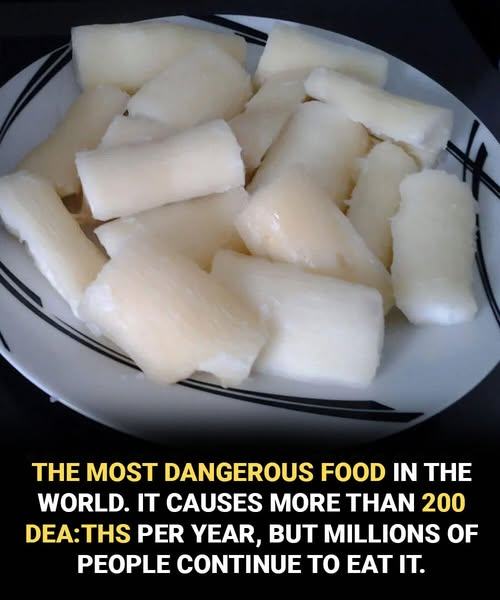
Cassava is one of the most heavily consumed staple foods on the planet — a root that feeds entire regions, anchors cultural dishes, and thrives in soils where almost nothing else will grow. Yet buried inside this familiar ingredient is a danger most casual consumers never think about. Prepared correctly, it’s nourishing, dependable, and endlessly adaptable. Prepared poorly, it can release enough cyanide to poison a family, a village, or, in extreme situations, an entire generation. The contradiction is striking: a food that keeps millions alive can also quietly harm them if the steps that make it safe are ignored.
The risk isn’t obvious at first glance. Cassava looks like an ordinary tuber — rough skin, starchy flesh, mild in flavor. But inside certain varieties, especially the “bitter” strains, are high levels of cyanogenic compounds. These chemicals sit dormant until the plant is damaged. Grating, slicing, even chewing triggers an enzymatic reaction that liberates cyanide. In small amounts, the body can neutralize it. In larger concentrations, cyanide becomes the same toxin associated with assassins and survival thrillers. For most people in industrialized countries, cassava arrives already processed into flour, tapioca pearls, or packaged chips. But in regions where fresh cassava is harvested and cooked daily, the responsibility for making it safe falls entirely on the household.
Poisonings typically occur not because people don’t understand the danger, but because conditions force them to cut corners. Cassava requires time, water, firewood, and attention — resources that can disappear during drought, conflict, or poverty. Families struggling through famine often harvest roots too young, skip soaking or fermentation, or reduce cooking time to conserve fuel. Emergency shortcuts have consequences. Cyanide that should have leached out stays inside the food. Over time, repeated exposure can overwhelm the body’s detox systems, especially in children and people whose diets lack protein. Protein contains sulfur-based amino acids that help neutralize cyanide; without them, the toxin lingers longer in the bloodstream.
One of the most tragic outcomes linked to chronic consumption of poorly processed cassava is konzo. The disease appears abruptly: a child or adolescent wakes up unable to walk properly, their legs stiff and weak. In severe cases, the paralysis becomes permanent. Entire clusters of konzo outbreaks have been recorded in rural areas during periods of hardship. The pattern is heartbreakingly consistent — families forced to rely almost exclusively on cassava, limited access to protein, and diminishing resources for proper preparation. Neurologists studying these cases describe konzo as a preventable catastrophe tied not to culture, but to circumstance.
 Up Next: Page 2 of 3
Despite the risk, cassava remains essential, and for good reason. When handled...
Cooking is the final safeguard. Boiling cassava for at least twenty minutes destroys lingering traces of cyanide. There is no safe shortcut....
Continue Reading