 Lifestyle
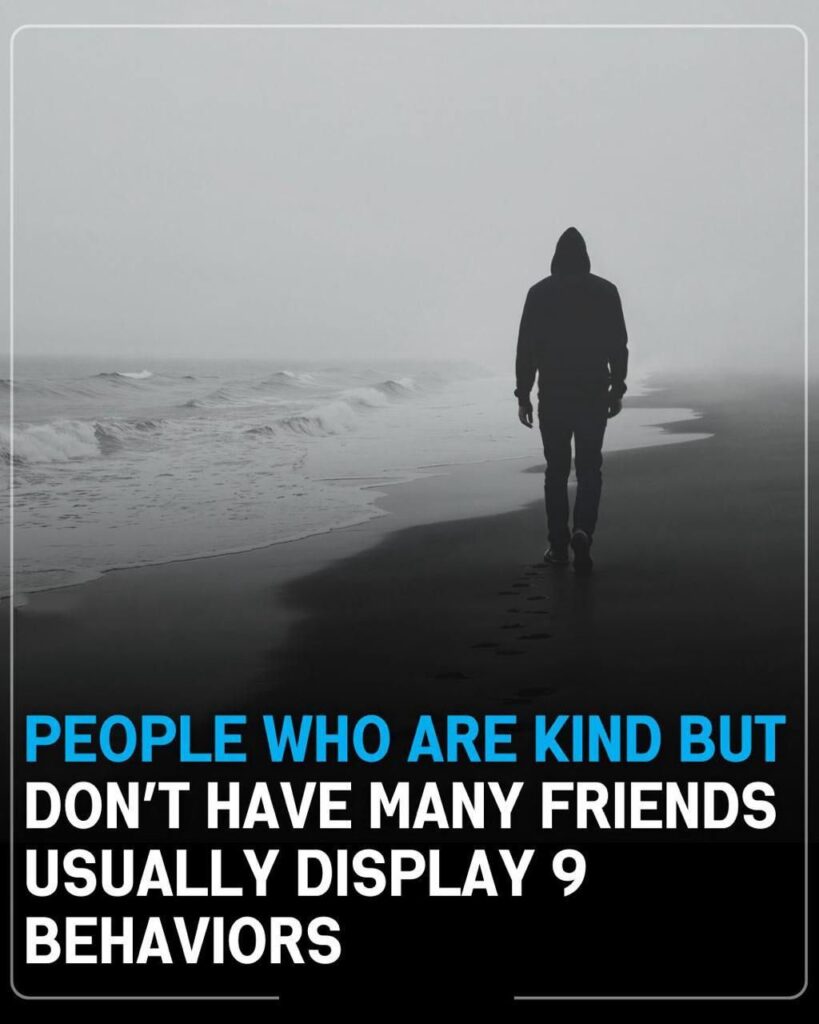
9 Quiet Behaviors That Show Why Kind People Often Have Few Friends!
The common belief is that kindness naturally leads to popularity. We tend to imagine kind people as socially surrounded—welcomed everywhere, constantly included, and admired by many. Yet real life often tells a different story. Some of the most compassionate, generous, and emotionally intelligent people move through the world with only a small circle of close relationships. They are warm and giving, yet quietly selective, often standing slightly apart from the social rush.
This isn’t a contradiction. It’s a consequence of depth.
Kind people frequently operate by values that don’t align with the fast, surface-level rhythm of modern social life. They value sincerity over performance, peace over stimulation, and meaning over momentum. They don’t withdraw because they lack social ability—they withdraw because they refuse to dilute who they are.
If you’ve ever noticed that the kindest people you know tend to have fewer friends, these nine quiet patterns explain why. None of them are flaws. They are signs of emotional maturity, self-respect, and inner strength.
They listen more than they speak.
Kind people don’t compete for attention. They don’t interrupt, dominate, or steer conversations back to themselves. Instead, they listen fully. They remember details. They notice emotional shifts. This makes others feel understood, but it also means they can fade into the background in loud or fast-moving groups. Their presence is subtle, not performative—and only those who value depth tend to recognize it.
They avoid gossip and unnecessary drama.
Many social bonds are built on shared judgment or emotional chaos. Kind people instinctively step away from this. They feel uncomfortable tearing others down or reliving conflicts for entertainment. When conversations turn negative, they disengage quietly. This choice often costs them social access, but it preserves their peace.
They set boundaries without making a show of it.
True kindness includes self-respect. These individuals give generously when they can, but they don’t sacrifice themselves to please others. When a dynamic becomes draining or disrespectful, they withdraw calmly instead of arguing or explaining. To outsiders, this can look distant. In reality, it’s how they protect their emotional health.
They feel things deeply.
Highly kind people are often highly empathetic. They absorb emotional energy easily, which makes social interaction more taxing. Supporting others comes naturally to them, but it also requires recovery time. Solitude isn’t rejection—it’s maintenance. Without it, their compassion would burn out.
 Up Next: Page 2 of 2
They don’t seek validation.Kind people don’t need constant approval. They aren’t driven...
They protect their energy carefully.Experience teaches kind people that not everyone values what they give. Over time, they become selective—not closed off,...
Continue Reading