 US Politics
Democratic Lawmaker’s Federal Case Linked to ICE Incident Raises Questions
A routine congressional visit turned into a high-stakes legal showdown with national implications. On May 9, 2025, Representative LaMonica McIver entered Newark’s Delaney Hall ICE facility for what she described as a congressional oversight visit. Minutes later, a confrontation erupted outside the detention center, sparking federal charges, constitutional questions, and a fierce political debate over the limits of legislative power.
Prosecutors allege McIver physically interfered with federal officers as they attempted to arrest Newark Mayor Ras Baraka, describing actions that included slamming her forearm into an agent and pushing past others. If convicted on the primary counts, McIver could face up to 17 years in prison. McIver’s defense, however, argues her actions were part of constitutionally protected oversight and that the chaos stemmed from restricted access and confusion at the facility gate.
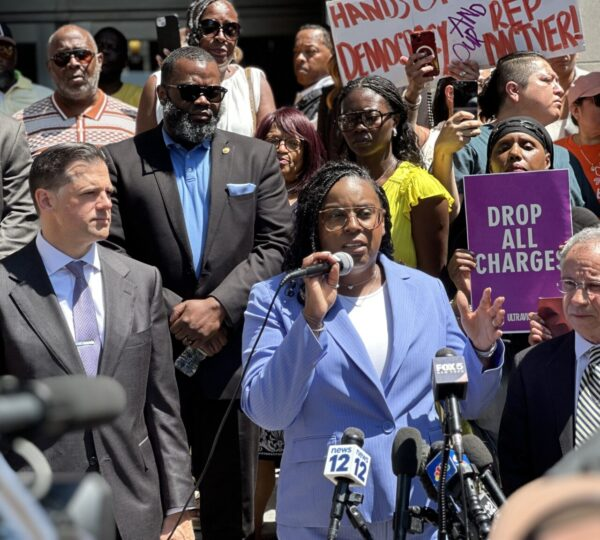
Judge Jamel K. Semper recently denied motions to dismiss most of the charges, ruling that legislative immunity does not extend to physical interference with law enforcement. However, he also censured DHS for social media posts that could prejudice the case, ordering several removed to protect a fair trial.
The incident has ignited a broader debate about the tension between congressional oversight and executive enforcement. Supporters argue that criminalizing oversight risks chilling lawmakers from holding federal agencies accountable, particularly in sensitive facilities like ICE detention centers. Critics counter that oversight rights do not extend to obstructing arrests or assaulting officers, emphasizing that accountability under the law applies to everyone, elected or not.
 Up Next: Page 2 of 2
Political reactions have been swift and polarized. Democratic leaders warn that the...
The McIver case is shaping into a test of constitutional boundaries, prosecutorial discretion, and the balance between oversight and lawful conduct. Its...
Continue Reading