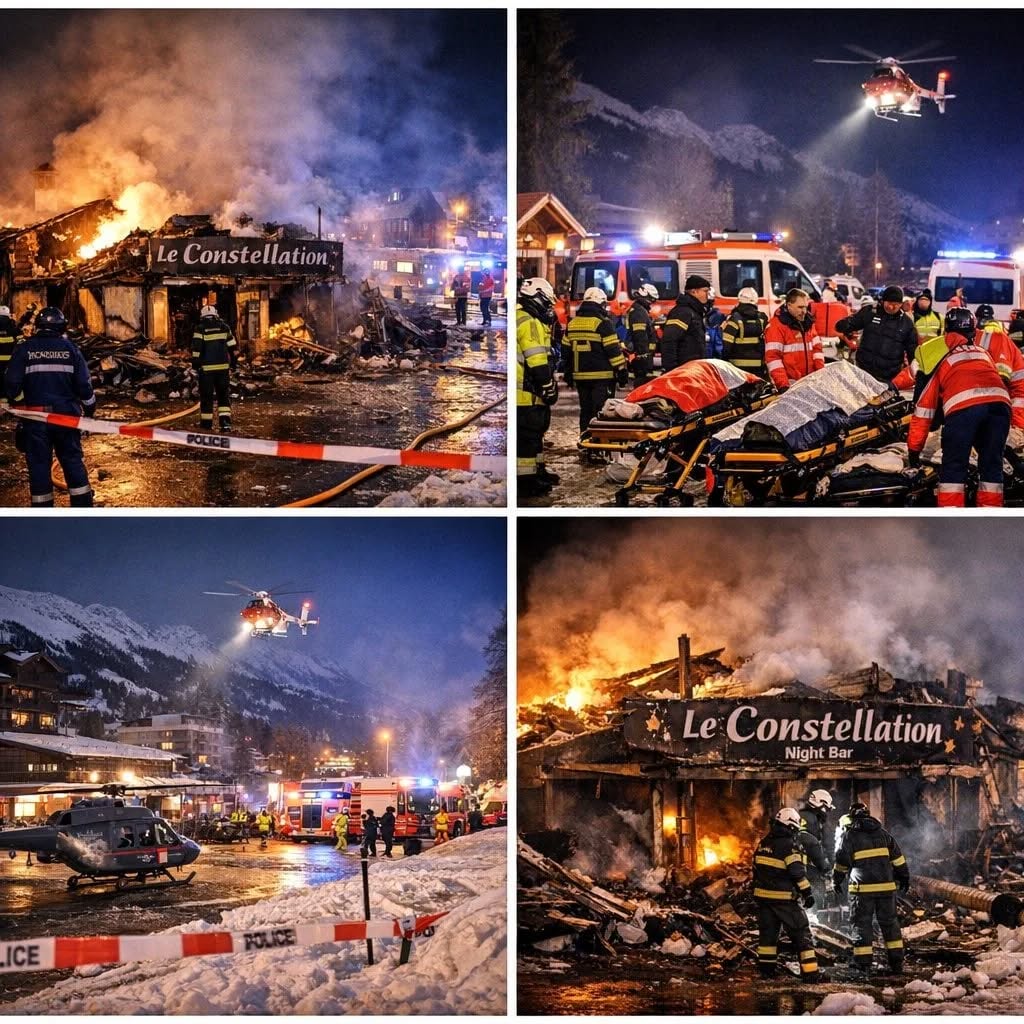
The music didn’t fade—it was shattered by a scream. Sharp, panicked, unmistakably human. In an instant, celebration turned to chaos. What had been a glittering New Year’s Eve at Le Constellation—champagne, fireworks, crowded dance floors—became a nightmare as flames tore through the club, trapping hundreds inside a space that became deadly in seconds.
Guests had come to Crans-Montana for a picture-perfect alpine holiday—luxury resorts, crisp snow, festive lights—but they weren’t prepared for smoke so thick it erased exits, for heat that stole every breath, or for the crush of bodies in blind panic. Music was replaced by coughing, shouting, the roar of fire, and the terrifying sound of people falling. Survivors recalled walls of heat, darkness swallowing the room, hands grasping for anything solid, anything that could guide them to safety. Some never rose again. Others crawled toward doors they couldn’t see, driven by instinct and the screams around them. The once-celebrated design of the bar became a deadly maze as flames raced faster than the fleeing crowd.
Outside, the contrast was jarring. Snow-covered streets, frigid mountain air, and sirens slicing the night. First responders faced scenes no training could fully prepare them for: injured bodies pulled from smoke, survivors wrapped in blankets, phones left ringing in abandoned pockets and bags. Midnight joy had barely arrived when the resort was plunged into grief.
By morning, the scale was clear. Forty people were dead. More than a hundred were injured, many with burns, smoke inhalation, and crush injuries requiring long-term care. Hospitals activated emergency protocols, ICU beds filled, and trauma teams worked around the clock. Families gathered, searching for faces, waiting for news, grappling with incomprehensible loss.
Continue reading on next page…