 US Politics
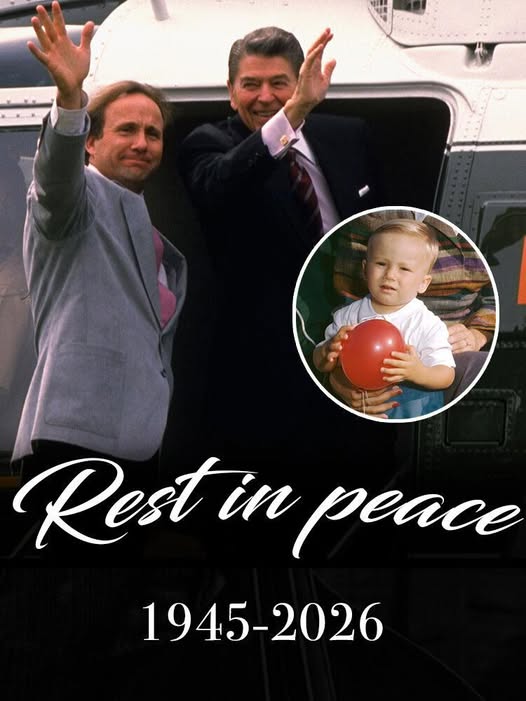
 The eldest son of President Ronald Reagan, Michael Reagan, died at 80. Adopted as an infant, he spent his life finding his place in the public eye, overcoming personal challenges, and promoting healing through honesty and faith.
Michael Reagan’s life unfolded under uncommon conditions—shaped by contrast, expectation, and deeply personal struggle.
Born in 1945, he entered the world already bound to history, adopted at birth by Ronald Reagan and actress Jane Wyman. From his earliest days, he carried a famous surname that promised opportunity but also imposed a quiet burden: the feeling that belonging in such a visible family was something to be proven, not assumed.
Learning of his adoption from his sister rather than from his parents left a mark that lingered. It planted questions about identity and place, made heavier by the reality that his father’s career—first in Hollywood, then in politics—pulled him further from the rhythms of ordinary family life.
While others might imagine privilege in growing up under such prominence, Michael often felt like an observer on the edge. Public obligations overshadowed private moments. Birthdays passed. Time at home was brief. The weight of legacy felt more present than intimacy.
Rather than reject his upbringing or romanticize it, Michael chose a more honest path. He admired his father’s accomplishments—his rise from actor to governor to president—but he also spoke openly about the emotional distance he experienced.
 Up Next: Page 2 of 2
In memoirs and interviews, he described a relationship defined by respect, affection,...
One of the most defining moments of his life came when he revealed that he had been sexually abused as a child....
Continue Reading