 US Politics
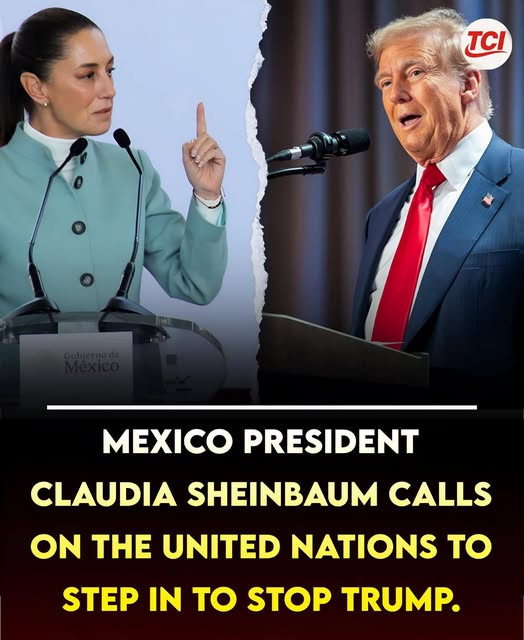
 Developments Surrounding Mexican President Claudia Sheinbaum
In the turbulent aftermath of the U.S. military operation in Venezuela and the capture of President Nicolás Maduro, the political landscape across the Americas has entered a period of intense uncertainty. At the forefront of opposition is Mexican President Claudia Sheinbaum, whose response has emerged as one of the strongest Latin American critiques of U.S. foreign policy in recent decades. Her condemnation is far from mere rhetoric; it is a deliberate, legally grounded challenge rooted in international law, established diplomatic norms, and the constitutional principles of Mexico. The move has not only strained bilateral relations but also reshaped diplomatic calculations throughout the hemisphere.
A Legal Challenge to Unilateral Action
Sheinbaum’s administration opened its response with a formal statement denouncing the U.S. operation as a unilateral breach of the United Nations Charter. Central to Mexico’s argument is Article 2(4), which explicitly forbids the threat or use of force against the territorial integrity or political independence of any sovereign nation.
By framing the opposition within this universally binding legal framework, Sheinbaum elevated the situation beyond a simple bilateral disagreement, turning it into a high-stakes debate about international norms. In numerous press briefings and public addresses, she has emphasized that Latin America and the Caribbean are designated as a “zone of peace,” a principle long promoted by Mexico’s Foreign Ministry to deter foreign military intervention in the region.
From her perspective, the U.S. action undermines sovereignty, self-determination, and respect for the international rule of law. In her view, the operation sets a dangerous precedent that the hemisphere cannot ignore.
The Push for Multilateral Engagement
Refusing to leave the issue to public opinion alone, Sheinbaum has called for urgent multilateral involvement. She has urged both the United Nations and the Organization of American States (OAS) to take meaningful action, rather than issuing mere statements, and to enforce international norms as mediators in crisis situations.
Her remarks also implicitly criticized the U.N. Security Council, which she described as paralyzed in the face of the U.S. operation—a weakness she argues exposes deep structural flaws in the global governance system.
 Up Next: Page 2 of 2
Sheinbaum’s stance also draws on Mexico’s longstanding diplomatic heritage, particularly the Estrada...
Historical Memory and Democratic IntegrityBeyond legal arguments, Sheinbaum has invoked historical context. She reminded the international community that Latin America’s past is...
Continue Reading