 Curious & Viral
 Your $2 Bill Could Be Worth More Than You Realize
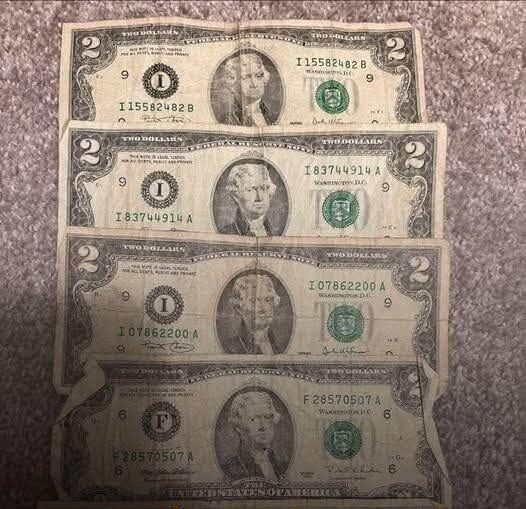
For decades, the American $2 bill has carried a mix of superstition, mystery, and outright confusion. Some say it’s unlucky. Others whisper that it’s cursed. But the truth? The $2 bill isn’t bad luck—it’s a hidden gem that could be worth far more than its face value. In fact, some bills sell for hundreds or even thousands of dollars.
The myth of unluckiness comes from simple misunderstanding. $2 bills were never discontinued, outlawed, or meant to be rare—they just stopped circulating widely. Because most people don’t see them, many assumed they’d vanished, creating legends that only fueled curiosity.
Originally designed to make transactions easier than handing over two $1 bills, the $2 bill faced resistance from day one. People found it awkward, cashiers didn’t like how it fit in drawers, and superstitions grew. Gamblers deemed it unlucky, some business owners called it inconvenient, and urban legends linked it to crime. Ironically, that very rejection made the $2 bill a collector’s favorite.
Why? When bills aren’t spent, they stay tucked away. Envelopes, wallets, birthday cards—they sit for decades in perfect condition. Condition matters more than age for collectors. Modern bills printed after 1976 usually hold face value unless pristine or sporting unique serial numbers. Patterns like repeating digits, ladders, low numbers, or mirrored sequences can easily push a bill’s value into triple digits.
Older bills? Even more enticing. Early 20th-century $2 bills with red or brown seals can fetch hundreds. Nineteenth-century oversized “horse blanket” notes? Museum-level collectibles. Printing errors or rare short-run series can send value skyrocketing. What seems ordinary to one person could be a goldmine to a collector.
 Up Next: Page 2 of 2
Contrary to popular belief, the $2 bill is still produced. Millions exist...
Stories abound of small fortunes discovered in forgotten drawers, old wallets, or attic stashes. A bill worth $20 a decade ago might...
Continue Reading