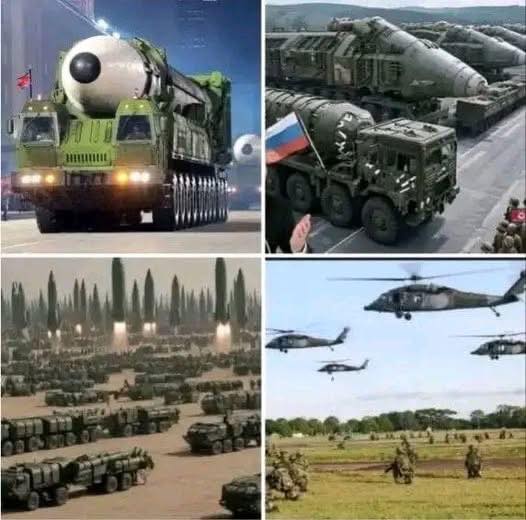
Breaking New! 13 Countries Join Forces To Attack – See More!

Europe’s strategic environment is entering one of its most dramatic transformations since the end of World War II. For nearly eighty years, the idea of a large-scale war on the continent existed largely as an abstract concern. That assumption has now been forcefully overturned. Russia’s full invasion of Ukraine has compelled the European Union to reexamine the foundations of its security model—one long built on diplomacy, economic interdependence, and a deep reliance on American military protection. In Brussels, the focus has shifted decisively from routine governance to urgent defense planning, as policymakers and military officials scramble to strengthen Europe’s readiness in the face of mounting external threats. The long-enjoyed “peace dividend” has given way to an era defined by rearmament, industrial mobilization, and societal preparedness.

Several forces are driving this accelerated shift. The war in Ukraine has decisively dispelled the belief that high-intensity conventional conflict belonged to history. At the same time, political signals from Washington suggest a recalibration of U.S. priorities, with American leaders increasingly emphasizing that Europe must shoulder responsibility for its own defense. This dual pressure—an aggressive Russia on one flank and uncertainty over sustained U.S. backing on the other—has pushed European leaders into action at unprecedented speed. Among the most notable responses are a €90 billion financial support package for Ukraine and a sweeping set of defense initiatives advanced by European Commission President Ursula von der Leyen, all aimed at strengthening Europe’s deterrence posture before the decade’s end.

Statements from key political and military figures have reinforced the seriousness of the moment. In late 2025, Russian President Vladimir Putin signaled readiness for a prolonged and total confrontation, implying that diplomatic off-ramps may be narrowing. NATO Secretary General Mark Rutte echoed these concerns, warning that Russia’s strategic ambitions could extend to NATO territory within the next five to ten years. Germany’s Defense Minister, Boris Pistorius, added to the sense of urgency by suggesting Europe may already have experienced its “final summer of peace.” These remarks are more than rhetoric—they are shaping budget decisions, defense planning, and even civilian life in states closest to potential conflict zones.
Public opinion, however, tells a more complicated story. A Euronews survey of nearly 10,000 respondents across the EU revealed a striking disconnect between government preparedness and civilian willingness to fight. Roughly three-quarters of participants said they would not take up arms to defend EU borders, while fewer than one in five expressed readiness to do so. Yet this reluctance is not uniform. In countries geographically closer to Russia, threat perception is far more pronounced. In Poland, Lithuania, and Denmark, majorities identify Russian military pressure as the leading national security concern, surpassing economic instability and energy shortages. These nations are responding by placing a strong emphasis on civilian resilience and defense awareness.

Eastern Europe and the Nordic region have effectively become testing grounds for a new model of societal defense. Lithuania is investing in border surveillance systems and drone-based defenses, while cooperating with Latvia to modify terrain in ways that could slow armored advances. Public preparedness campaigns have become routine: Lithuanian citizens have received shelter guides and emergency contact information, Latvia has introduced mandatory defense education in schools, and Poland has expanded security training programs for youth. Sweden, meanwhile, revived Cold War-era practices by distributing “If Crisis or War Comes” manuals to every household, offering guidance on evacuations, power disruptions, and emergency supplies. Online behavior reflects this heightened awareness, with searches related to shelters and evacuation planning surging throughout 2025.

At the EU level, coordination efforts are reaching historic proportions. Defense spending across Europe surpassed €300 billion in 2024, and draft budget plans for 2028–2034 allocate €131 billion to defense and aerospace—five times more than in previous cycles. A cornerstone of this effort is the “Readiness 2030” strategy, which seeks to overcome Europe’s fragmented military logistics. Central to the plan is the creation of a “Military Schengen,” enabling rapid cross-border movement of troops and equipment—within three days under normal conditions and as little as six hours during emergencies. Achieving this will require upgrading roughly 500 critical infrastructure sites, from bridges to rail corridors, at an estimated cost approaching €100 billion.

Financing this transformation is the ReArm Europe initiative, launched in 2025 to address long-standing inefficiencies in Europe’s defense industry. Historically, EU countries have operated incompatible weapons systems and supply chains, limiting interoperability. Through mechanisms such as the European Defence Industry Programme and the Strategic Armament Financing Envelope, the EU aims to standardize procurement and encourage joint production. SAFE alone provides up to €150 billion in loans, allowing member states to coordinate purchases so equipment and ammunition can be shared seamlessly across borders. By early 2026, more than €22 billion is expected to be allocated toward priority areas like air defense, missile technology, and autonomous systems.

The United States remains a critical—but increasingly demanding—partner in this process. Washington has made clear that by 2027 it expects Europe to lead NATO’s conventional defense efforts. Although NATO members agreed at the 2025 Hague summit to aim for defense spending equivalent to 5% of GDP by 2035, many European governments face serious fiscal constraints. Tensions have surfaced as EU officials rejected U.S. characterizations of Europe as a “weakened ally,” emphasizing that while transatlantic cooperation is essential, Europe intends to preserve its strategic autonomy and internal democratic choices.

In the end, Europe finds itself racing against both time and structural limitations. Despite massive financial commitments, obstacles remain—bureaucratic delays, aging populations, and an industrial base shaped by decades of relative peace. Procurement processes are still slow, and production capacity is only beginning to scale. Yet demand for the SAFE facility alone—covering hundreds of proposed projects and tens of billions in funding requests—signals that momentum is building. The debate in Brussels is no longer about whether Europe must rearm, but whether it can do so quickly enough. The question facing the continent is stark: can Europe restore its defensive shield before the next crisis tests its resolve?

Leave a Reply

Your email address will not be published. Required fields are marked *