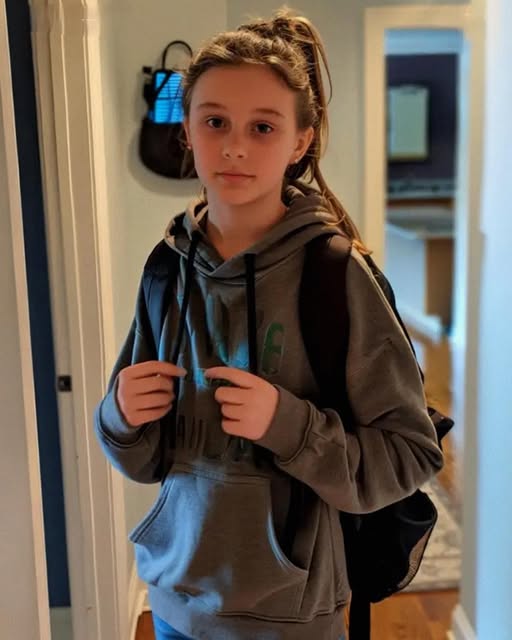
Trust is the quiet framework of a family, an intricate lattice of support we often overlook—until one fracture threatens the stability of everything we’ve built. For years, I believed my bond with my thirteen-year-old daughter, Jordan, rested on honesty as solid as concrete. We had navigated the trials of middle school together, and when she started asking for more frequent sleepovers at her best friend Alyssa’s home, I saw it as a natural step toward independence. I knew Alyssa’s mother, Tessa, casually enough—our connection was the polite “carpool parent” type, built on shared birthday parties and brief exchanges at pick-up. Trusting the environment, I gradually let go of the meticulous check-in messages that had once defined our routines. I assumed everything was fine. I was mistaken.
The truth emerged unexpectedly, triggered by what should have been an innocuous text about birthday plans. I reached out to Tessa to invite her to my celebration and to thank her for hosting Jordan so often. Her reply sent a chill down my spine: “Hey… I don’t want to freak you out, but Jordan hasn’t been here in weeks.”
Suddenly, the world shifted. Every farewell I had said at the door—“Be good, call me if you need anything”—looped relentlessly in my mind. I had watched my daughter leave for supposed sleepovers, unaware that she had disappeared into a reality I couldn’t see. Panic immediately took hold: secret parties, unsafe friends, all the urban nightmares every parent imagines. When I reached Jordan by phone, her voice was unnervingly calm. “I’m at Alyssa’s,” she lied, her tone measured, the hum of city traffic in the background.
The wait for her return was excruciating, a stretching of time filled with dread. When she finally came home, her backpack clutched like a shield, her confession was quieter and stranger than I could have imagined: “I’ve been at Grandma’s,” she whispered, the weight of a month-long secret evident in her voice.
To understand the impact of those words, one must know our family’s history. My husband’s mother had never accepted me. She came from a world of rigid expectations and had long regarded my community-college background and student loans as a flaw in her son’s future. Years of subtle undermining culminated in a fiery confrontation shortly after Jordan was born, after which my husband severed all contact. A decade had passed without a word—until now.
She had re-entered our lives through the most vulnerable portal: our daughter. She spun a narrative of terminal illness and remorse, imploring Jordan not to tell us, and used pie, old cartoons, and faded childhood photos of my husband to build a clandestine bond. She had weaponized a child’s longing for a grandmother to reclaim a connection she couldn’t ask for directly.
When my husband came home and heard the full story, his confusion quickly hardened into quiet fury. His mother had violated boundaries he had fought to protect, and his daughter had been coached to lie. Beneath his anger, however, lingered a single, weighty question: “Is she actually sick?”
Jordan’s description—pill bottles, fatigue, the subdued demeanor—was enough to confirm the truth. That evening, we drove to a modest apartment across town. There she was: diminished, frail, and trembling, a shadow of the formidable matriarch who once tried to dismantle our marriage. In the quiet of that cramped living room, pride had been replaced by fear and humility.
“I was selfish,” she admitted, hands shaking, clutching a tissue. “I was afraid you’d say no if I asked.” It was a confession of moral failure, of using a child as a proxy for reconciliation she could not initiate herself. She apologized to me, acknowledging the cruelty of her past judgments. My husband, standing in the room tinged with medicine and regret, faced a choice: maintain the protective silence of a decade or accept that our daughter longed for a grandmother, even an imperfect one.
I looked at him, then at Jordan, vibrating with hope. “Our daughter deserves a grandmother,” I said.
We did not offer unconditional forgiveness, but we opened a door. The Alyssa sleepovers ended, replaced by clear rules: no unsupervised visits, no secrets, and no emotional manipulation. If his mother wished to see her granddaughter, she would do so on our terms.
Two weeks later, the tension remains, and the first supervised visits are awkward reminders of past breaches. Yet the house feels lighter. Jordan no longer carries a hidden life, and my husband is gradually navigating the complexities of this final chapter with his mother. We’ve learned that while some cracks may never fully heal, it is possible to construct something new from the ruins. Now, when Jordan says, “I’m going to Grandma’s,” the words are spoken openly, in the light, carrying with them the fragile yet resilient architecture of trust restored.