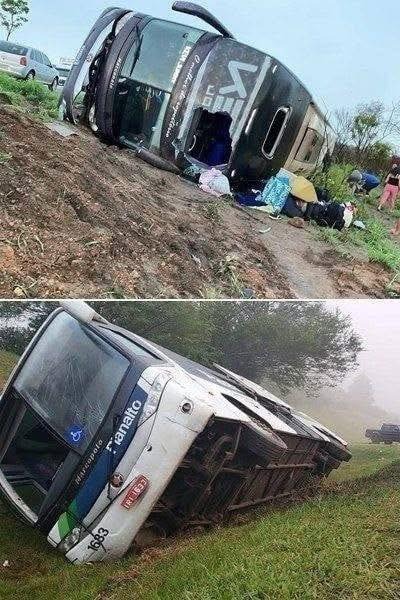
The morning sun rose over a landscape forever marked by an unimaginable tragedy. On a normally quiet stretch of road, a school bus—carrying the hopes, dreams, and futures of dozens of children—was involved in a catastrophic accident. By the time the emergency sirens faded and the scene was cleared, the losses were staggering: more than twenty young lives had been cut short, leaving families, a community, and a nation reeling in shared grief.
The accident struck with the suddenness that defines such nightmares. What began as an ordinary morning turned into a scene of chaos, with twisted metal and shattered glass telling a story of devastation. First responders rushed to the scene, confronting what witnesses described as a scene resembling a disaster zone. Among the wreckage, neighbors and passersby sprang into action, pulling children from the debris with trembling hands—not only from the morning chill, but from the weight of what was unfolding before them.
At the local hospitals, the tension was palpable. Emergency teams moved quickly, code-blue alarms cutting through sterile corridors as medical personnel mobilized to triage and care for the injured. Children arrived in waves, their small bodies surrounded by advanced life-saving equipment. For hours, doctors, nurses, and staff worked tirelessly, fighting against the clock to stabilize those whose lives hung in delicate balance.
Once the immediate rescue concluded, investigators began the painstaking work of determining what happened. Questions of “how” and “why” loom large, and early reports present conflicting details. Some witnesses suggested the bus may have been traveling too fast, while others raised concerns about the condition of the vehicle itself—a possible mechanical failure, brake issues, or a steering malfunction.
Environmental conditions are also under review. That morning, roads were reportedly slick, visibility was reduced, and any small misstep could have turned fatal. Authorities have emphasized the importance of a careful, methodical investigation, promising transparency while examining whether the tragedy stemmed from human error, equipment failure, or a combination of factors.
Beyond the statistics and investigations lie the families whose lives are irrevocably changed. Losing a child leaves an emptiness that time cannot fill. In neighborhoods where these students lived, silence dominates; bicycles sit idle, bedrooms remain untouched, and school materials lie as they were left that morning. To support the grieving community, a wide network of counseling services has been mobilized, offering assistance to families, surviving students, and school staff alike, helping them navigate the complex emotions of loss.
The broader response has been a testament to collective empathy. Condolences have come from leaders, organizations, and citizens around the world. Schools far from the site held moments of silence, and local spaces became impromptu memorials, filled with flowers, candles, and toys. While such gestures cannot undo the tragedy, they serve as reminders of humanity’s instinct to come together in the face of profound loss.
This devastating event has also reignited calls for systemic safety reforms. Experts have emphasized the need for consistent seatbelt use in school buses, more rigorous vehicle inspections, and comprehensive driver training programs. The tragedy underscores the importance of ensuring that those responsible for transporting children are supported by both robust safety protocols and proper oversight.
As the day draws to a close, attention remains split between honoring the past and preventing future losses. The memory of the more than twenty students will linger not only as a profound sorrow but as a call to action. The ultimate tribute to their lives is a commitment to safety—ensuring that the yellow school bus, long a symbol of childhood and growth, can carry children without fear.
Investigations will continue, and legal proceedings may follow, but for the families who must now navigate a world without their children, the pain is immediate and enduring. Through the collective efforts of community leaders, safety advocates, and everyday citizens, there is hope that this tragedy can drive meaningful change, preventing such heartbreak from ever happening again. The goal is clear: to transform loss into a renewed commitment to protect the most vulnerable among us, making safety an uncompromising standard rather than a hope.