 Curious & Viral
Only One Detail Is Different—Can You Spot It?
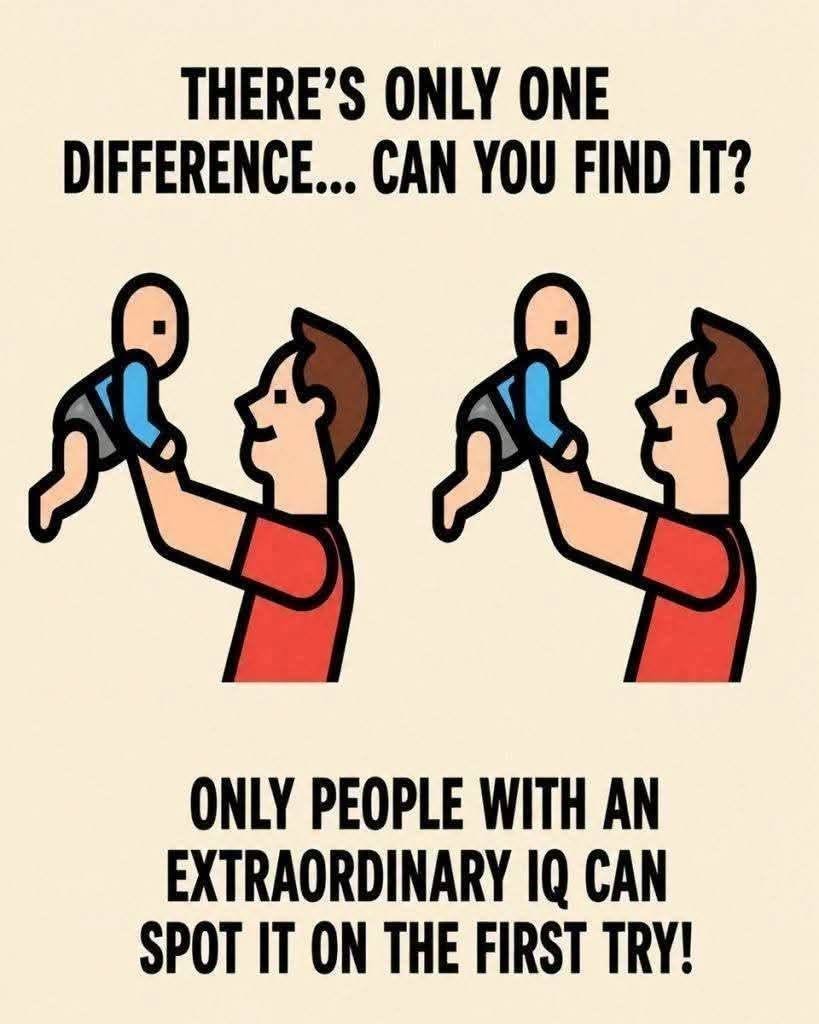
At first glance, the two pictures appear almost exactly the same.
You look at one.
Then the other.
Nothing seems unusual.
You look again.
Still nothing.
But somewhere in the image, one small detail has been changed.
And that's where the challenge begins.
Can You Find the Difference?
These puzzles are designed to make your eyes move back and forth between two nearly identical images.
At first, your brain tends to focus on the larger shapes and familiar objects. Because most of the picture matches, the small change can easily blend into the surrounding details.
That is what makes the puzzle surprisingly difficult.
The difference isn't necessarily hidden.
It may simply be something your attention hasn't focused on yet.
Don't Look Too Quickly
If you haven't found it, don't immediately assume you've missed something obvious.
Try dividing each picture into sections.
Start at the top.
Move slowly toward the middle.
Then check the lower half.
Pay particular attention to small objects, edges, patterns, and areas where similar shapes appear next to each other.
Sometimes changing the way you look at the picture is enough to make the answer suddenly stand out.
Why These Puzzles Feel So Tricky
When two images are almost identical, your visual system naturally takes advantage of the similarities.
Instead of carefully examining every single detail, your brain can process much of the scene as a familiar whole.
That's useful in everyday life because we don't need to consciously inspect everything around us.
 Up Next: Page 2 of 2
But in a spot-the-difference puzzle, that efficiency can work against you.
The tiny change may remain unnoticed because everything surrounding it looks exactly as expected.
Continue Reading