 Curious & Viral
This Strange Little Object Looks Almost Useless—Until You See How It Opens
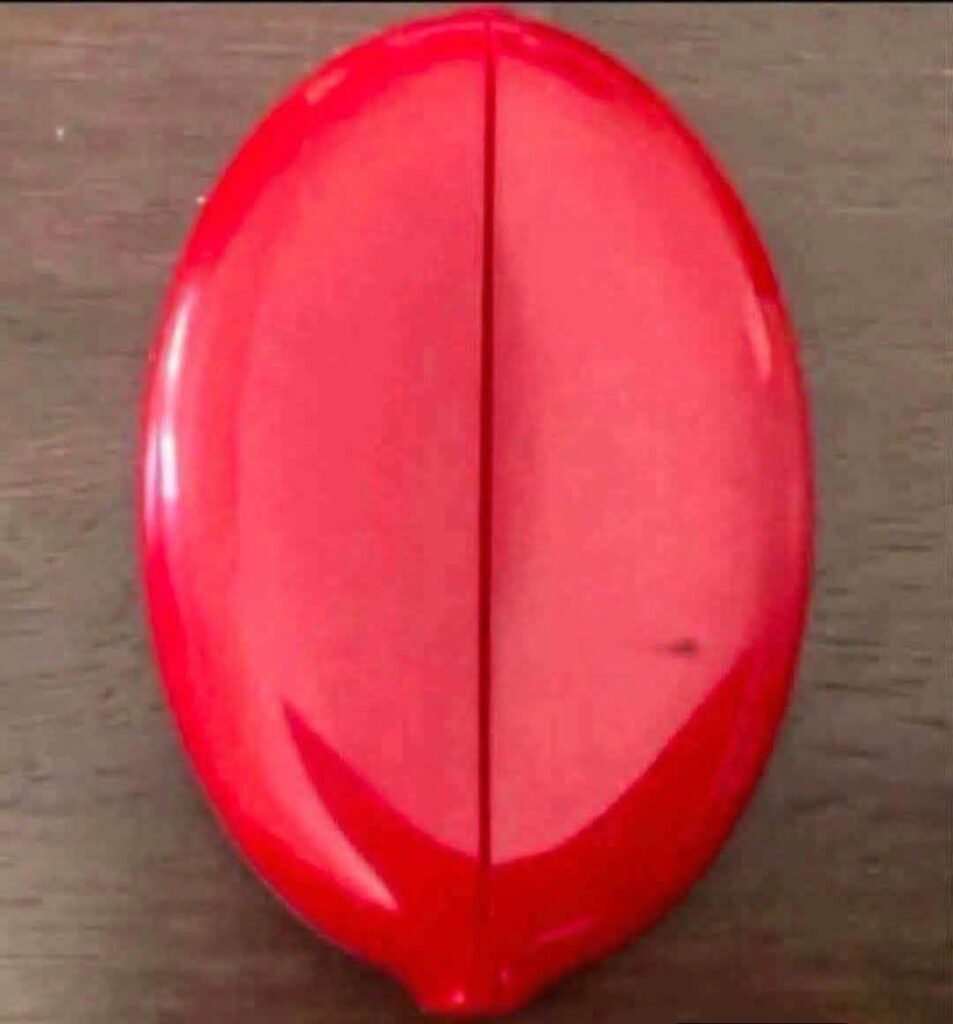
At first glance, this small, brightly colored oval object can be surprisingly difficult to identify.
It doesn't have a zipper.
There are no buttons, snaps, or obvious hinges.
And yet, this simple little item was once a practical way to carry loose change.
It is a squeeze coin purse, sometimes associated with names such as Quikoin or Quikey. Similar oval designs have been made from flexible rubber, vinyl, and other plastic materials, and examples can still be found today.
The clever part isn't what you see on the outside.
It's how the thing opens.
The Simple Trick Hidden in the Design
Instead of using a conventional clasp, the purse has a narrow opening running through its center.
When the purse is left alone, the flexible material keeps that opening closed.
But squeeze the two ends together, and the shape changes.
The sides flex outward, causing the central opening to widen enough for coins or other small objects to be placed inside or removed.
Release your grip, and the flexible material returns toward its original position.
It's a remarkably simple idea.
No complicated mechanism is required.
Why Was This Design Useful?
The appeal was largely practical.
A small squeeze purse could be attached to a key ring or carried separately, providing a quick place for loose change.
Older examples were particularly suited to a time when coins were routinely needed for everyday transactions, including vending machines, laundromats, parking, transportation, and public telephones.
The design was also compact enough to slip easily into a pocket, purse, or bag.
And because there were so few moving parts, the basic concept was straightforward to manufacture and use.
Some Were More Than Coin Holders
Here's another interesting part of the object's history.
Squeeze purses were also used as promotional products.
Businesses and organizations could have their names, logos, or contact information printed on them and distribute the little purses as advertising items.
Historical records from the U.S. International Trade Commission describe self-closing purses as an advertising specialty, while surviving vintage examples show organizations such as credit unions and other businesses using the format for promotional purposes.
 Up Next: Page 2 of 2
That helps explain why collectors sometimes encounter these objects with unusual lettering...
What looks like a random vintage trinket may actually have been a piece of advertising from a particular business or organization.
Continue Reading