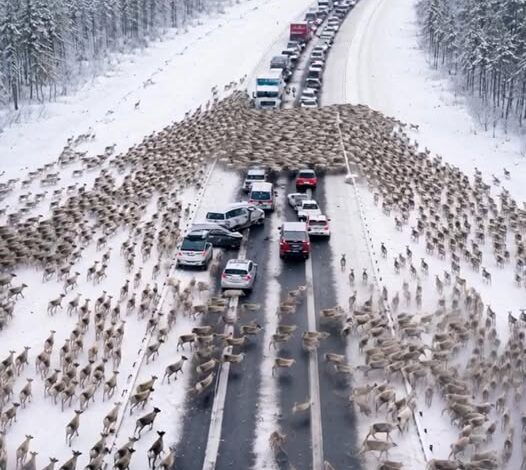
Shortly afterward, a single deer emerged from the forest and stepped near the road. Then another followed. Within minutes, more deer appeared—moving steadily, with clear urgency. Drivers slowed and eventually stopped as the animals crossed the highway in large numbers.
At first, the scene felt peaceful. People watched quietly, some taking photos, others simply waiting. The deer moved together, not startled by cars, not scattering, but crossing with determination. As more animals appeared, it became clear this was not a brief interruption. Traffic came to a complete stop, yet no one seemed impatient.
The atmosphere shifted as the number of deer continued to grow. Those familiar with wildlife behavior noticed signs of stress: rapid breathing, pinned ears, and young deer struggling to keep pace. The animals were not wandering or migrating. They appeared to be fleeing.
Then the forest grew unnaturally still.
Moments later, emergency alerts reached drivers’ phones, warning of extreme avalanche risk in the area and advising immediate evacuation. Attention turned to the surrounding mountains, where heavy snow had accumulated on steep slopes.
Soon after, a deep, continuous roar echoed through the trees. High above the highway, a large avalanche began moving down the mountainside, carrying snow, ice, and debris with increasing force.
Realizing the danger, people left their vehicles and moved away from the slope toward lower ground. With no formal instructions and little time to react, drivers and passengers followed the same direction the animals had taken—away from the mountain.
Shortly afterward, the avalanche reached the highway. The road was buried beneath deep snow and debris, destroying vehicles and infrastructure. Fortunately, no one was injured. Rescue teams later confirmed that the stopped traffic and early movement away from the slope prevented what could have been a major tragedy.
In the following days, experts explained that animals are often sensitive to environmental changes that humans may not immediately detect, such as vibrations or pressure shifts associated with avalanches. Wildlife behavior can sometimes act as an early warning, though such moments are rare and unpredictable.
The highway remained closed for weeks while crews cleared the area. The event left a lasting impression on those who experienced it—not as a miracle, but as a reminder of how closely human safety can be tied to awareness of the natural world.
Today, a small marker stands near the site, commemorating the moment when an unexpected pause allowed everyone to reach safety. For many, it serves as a quiet reminder that paying attention, slowing down, and respecting nature can sometimes make all the difference.