
In March 2018, the pedestrian bridge project at Florida International University (FIU) in Miami was expected to represent innovation and safety. The 53-meter-long structure was designed to provide students and residents with a safer way to cross a busy roadway.
However, just days after the bridge was placed over the highway, the structure collapsed, affecting multiple vehicles underneath and resulting in several lives lost. The event quickly became a major case study in engineering design, construction practices, and project oversight.
A Unique Design with Unexpected Vulnerabilities

This photo provided by DroneBase shows the collapsed pedestrian bridge at Florida International University in the Miami area on Thursday, March 15, 2018. (DroneBase via AP)
NYTCREDIT: DroneBase, via Associated Press
The FIU bridge used a concrete truss design that differed from typical modern pedestrian bridges. Unlike traditional trusses, which use multiple lines of supporting members, this design relied on a single line, creating a system with little redundancy.
Structural safety experts later explained that this configuration meant any major failure in one part of the system could lead to a wider collapse, as the load had limited alternative paths.
In addition, the project included “cold joints”—areas where concrete was poured at different times. These sections require careful preparation to ensure proper bonding. Unfortunately, a key instruction related to surface preparation did not appear on the final construction drawings, which introduced additional structural weakness.
These vulnerabilities passed through multiple stages of review without being identified.
Warning Signs Before the Collapse
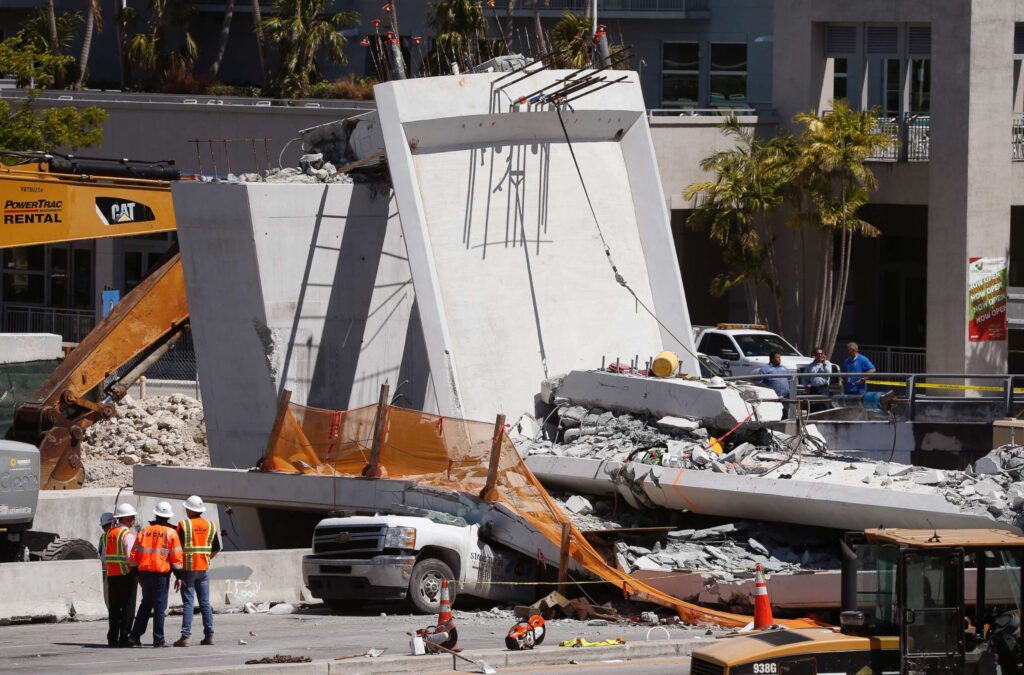
The main span of the bridge was built offsite and then transported into position. Once installed, teams noticed cracking at certain node points—specifically at the connection between the 11th and 12th truss members. These cracks were visible and significant, indicating that the structure was under stress.
Despite this, traffic beneath the bridge was not stopped, and the structure was not braced with temporary supports. Later, workers attempted to adjust the tension on reinforcing bars within one of the diagonal members. This was intended to restore stability but unintentionally increased stress on an already vulnerable section.
Shortly after this tensioning work began, the bridge collapsed.
Investigation Findings
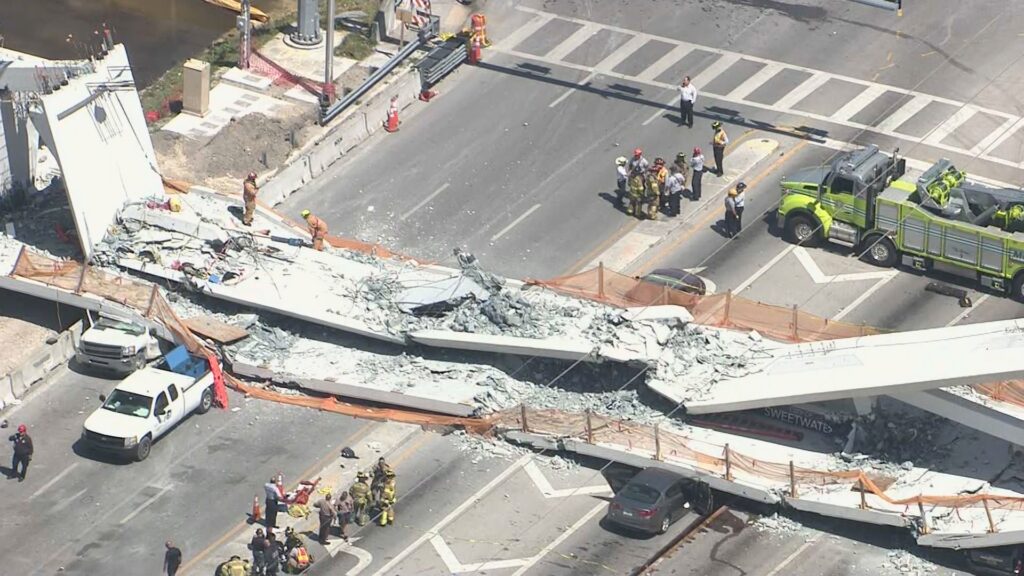
The National Transportation Safety Board (NTSB) conducted an extensive investigation. Its 2019 report identified several critical factors that contributed to the collapse:
1. Incorrect load calculations
The design team underestimated the forces acting on a key structural node.
2. Overestimation of strength
The capacity of the node to withstand shear forces was assumed to be higher than it actually was.
3. Service void placement
Openings used for utilities were positioned too close to a critical structural point, reducing its strength further.
4. Insufficient peer review
Errors in the design and calculations were not detected during independent checks.
A global safety network, CROSS-UK, later highlighted that the decision not to close the road and the choice to continue tensioning contributed to the failure.
Systemic Issues Beyond Engineering
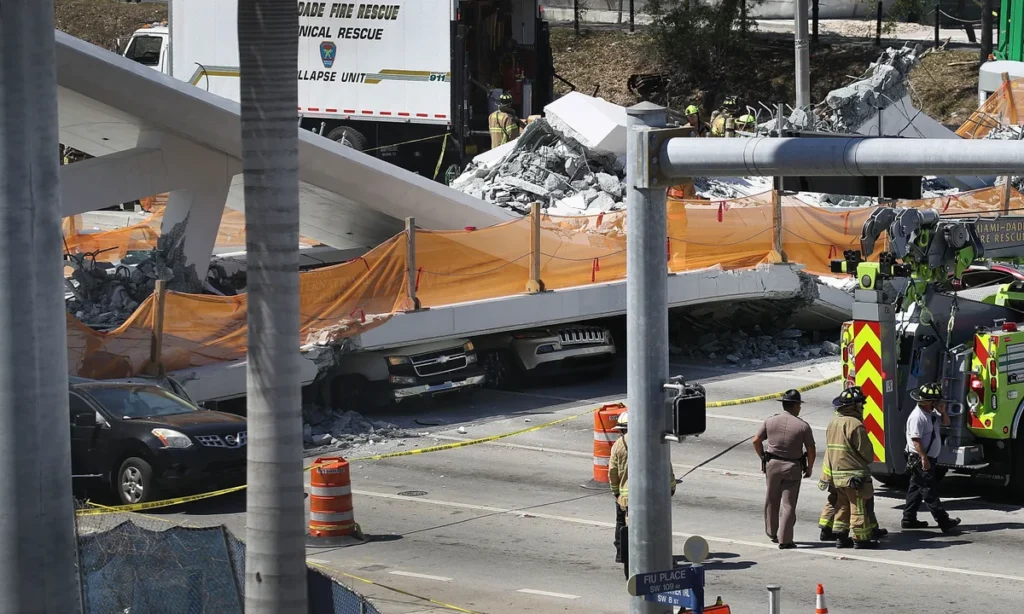
While technical mistakes played a major role, the event also reflected broader organizational challenges:
- Cracks were identified early but not thoroughly evaluated.
- Communication between project teams was limited.
- Safety protocols for road closures were not followed.
- Work continued despite visible signs of distress.
The collapse emphasized that construction safety depends not only on engineering accuracy but also on effective coordination and decision-making.
Lessons Learned for the Construction Industry
The FIU bridge collapse has been studied worldwide, and several key lessons have emerged:
1. Structural cracks must be assessed immediately
Any significant cracking in a major structural element should be reviewed by a qualified structural engineer before work continues.
2. Oversight must be comprehensive
Peer reviews must examine the full structural behavior—not just documentation.
3. Clear communication saves lives
Teams must share concerns promptly and act conservatively when structural integrity is in question.
4. Approaches must match complexity
Projects with innovative or unique designs require teams with specialized experience and additional layers of review.
Rebuilding with a Focus on Safety
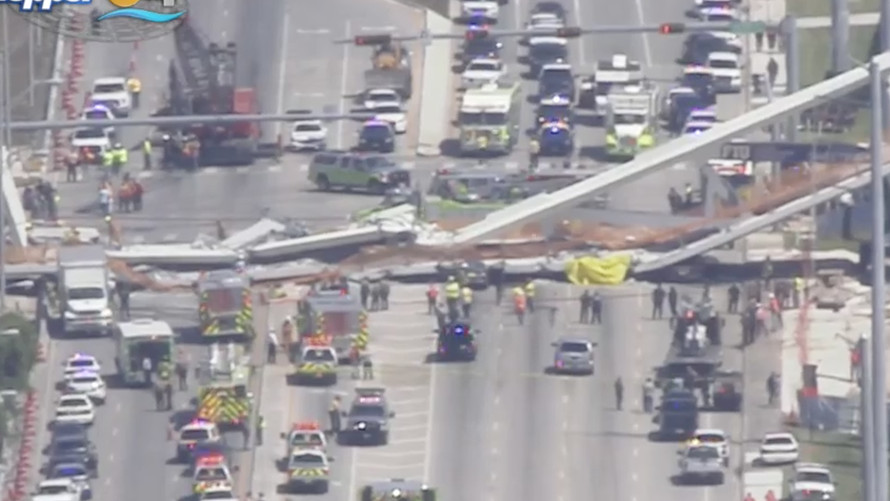
A replacement bridge is now under construction. This new design uses traditional engineering methods, emphasizes redundancy, and incorporates clearer safety checkpoints.
For the FIU community, the new bridge will eventually provide the safe access originally intended. For engineers, the reconstruction represents a renewed commitment to balancing innovation with proven safety principles.
A Lasting Reminder for Future Projects
The FIU bridge collapse remains one of the most widely studied engineering failures of the past decade. It demonstrates that:
- Innovation must be paired with strong oversight
- Early warning signs should never be dismissed
- Safety must take priority over schedules or cost savings
By learning from this event, engineers and project managers can help ensure that future structures are designed and built with the highest safety standards in mind.