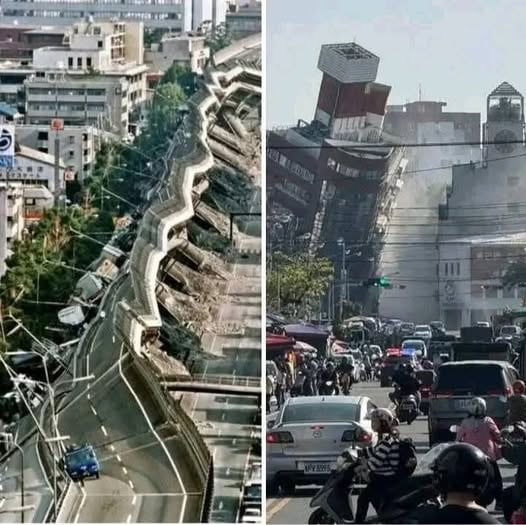
Even Bangkok, far from the epicenter, felt the tremor’s force. High-rise towers swayed noticeably, prompting evacuations and flooding social media with video clips of dizzying building movement. For many Bangkok residents, it was the strongest shaking they had ever felt.
Online, thousands of posts captured the moment: cracked streets, shattered storefronts, damaged homes, and families huddled together in public squares waiting for updates. Others filmed the emotional moments—people crying, neighbors comforting each other, communities forming support circles in the dark.
Transportation across both countries slowed immediately. Train lines stopped for inspections, some domestic flights were paused, and power outages left parts of several cities in darkness. Schools and offices announced closures as engineers began evaluating structural safety.
Emergency teams in Burma deployed quickly, especially to remote mountain communities near the epicenter where communication is limited and landslides are a serious risk. Temporary shelters opened in major cities, offering blankets, water, and medical assistance.
Thailand issued regional tsunami advisories shortly after the quake, though none materialized. Still, the alerts underscored the seriousness of a quake this large. Officials warned that aftershocks could continue for days or weeks and urged people to avoid unstable structures or steep terrain.
Seismologists appeared on national broadcasts reassuring the public that modern high-rises were designed to withstand this level of movement, but the footage of swaying towers spurred questions about preparedness in a region not known for frequent major quakes.
At first light, the assessment began. Families inspected their homes for cracks, businesses checked for damage, and farmers near the border evaluated land that had shifted or buckled. The psychological impact was clear—entire neighborhoods felt off-balance, as if the world beneath them had changed shape overnight.
International aid organizations immediately began monitoring the situation. The Red Cross, UN agencies, and NGOs prepared to mobilize if needed, noting that damage from large quakes often becomes fully visible only days later.
Aftershocks have already rippled through Burma and northern Thailand, keeping residents on edge. Scientists are now analyzing whether this was an isolated rupture or part of a larger tectonic pattern.
For now, the region is steadying itself. Neighbors are helping neighbors. Crews are clearing debris. Families are checking in with loved ones. And millions of people are processing the shock of waking up to a landscape—and a life—shaken without warning.
One thing is certain: the road to recovery will test resilience, unity, and strength across both nations.
What are your thoughts on the quake’s impact and the response so far? Share your perspective or personal experience in the comments below.