 Lifestyle
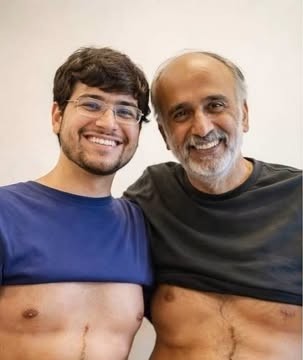
A Son Made a Remarkable Sacrifice for His Father—Then Everything Took an Unexpected Turn
Few decisions in life demand more courage than choosing to undergo major surgery for someone else.
For one son, there was never much of a question.
His father was sick.
His father needed a liver transplant.
And his son was willing to give him part of his own.
He knew the surgery carried risks. He knew recovery would be difficult. He knew there were no guarantees that everything would go according to plan.
But none of that outweighed one simple thought:
If he could give his father more time, he wanted to try.
So he became a living liver donor.
He entered the hospital as the healthiest person in the family.
He expected to leave as a recovering son who had helped save his father's life.
Instead, the operation became the beginning of a devastating chapter neither of them had imagined.
A Decision Made From Love
Living liver donation is an extraordinary medical undertaking.
Unlike a deceased-donor transplant, the procedure involves a healthy person voluntarily undergoing major surgery to donate a portion of their liver to someone in need.
The liver has a remarkable ability to regenerate, which makes living donation possible.
But regeneration does not make the surgery simple.
There are genuine risks.
Bleeding, infection, bile-related complications, blood clots, and problems with liver function can occur, even when experienced transplant teams take extensive precautions.
That reality is explained carefully to potential donors before they are approved.
The donor must understand something difficult:
They are accepting medical risk without receiving a physical benefit themselves.
For this son, however, the decision came down to his father.
He wanted him to live.
The family went through evaluations, consultations, testing, and the emotional uncertainty that comes with preparing for transplantation.
Every step brought them closer to the moment they had been hoping for.
 Up Next: Page 2 of 4
And eventually, surgery day arrived.
There was fear.
Continue Reading