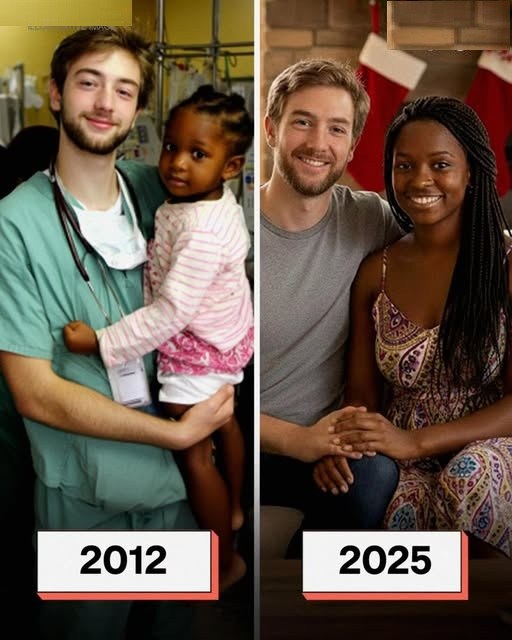
Thirteen years ago, everything I believed about life shattered in a single night.
It began with a siren, a rain-soaked highway, and a little girl named Avery.
She was only three when the paramedics rushed her into the emergency room where I worked. Her eyes were too wide for such a small face, her body trembling as though the world had grown far too large and dangerous all at once.
I was twenty-six, fresh out of medical school, still learning how to keep my hands steady when everything around me fell apart. I had seen injuries, heartbreak, even death—but nothing prepared me for the weight of that child’s stare.
The ambulance doors opened just after midnight. Two stretchers came first, both covered in white sheets. No movement. No voices. The silence said everything.
Then came Avery.
She sat upright on the gurney, gripping its rails as if they were the only solid thing left in existence. Her gaze darted across the room, searching—hoping—for something familiar in a place that felt like another planet.
Her parents were already gone.
When a nurse tried to guide her toward a quieter room, Avery panicked and clung to my arm with both hands. Her grip was fierce, desperate. I could feel her tiny heart racing through her fingers.
“I’m Avery,” she whispered. “I’m scared. Please don’t leave me.”
Those words didn’t fade. They rooted themselves inside me.
I knelt beside her with a cup of apple juice and read her a children’s book about a bear who couldn’t find his way home. She made me read it again. And again. Always the ending. Always the part where everything turned out okay.
When she traced the edge of my badge and murmured, “You’re the good one,” I had to step into the supply closet just to breathe.
By morning, social services arrived. They asked about family. Avery shook her head. No grandparents. No aunts. No uncles. Only fragments—pink curtains, a stuffed rabbit named Mr. Hopps.
And me.
That night became a week. The week became a future.