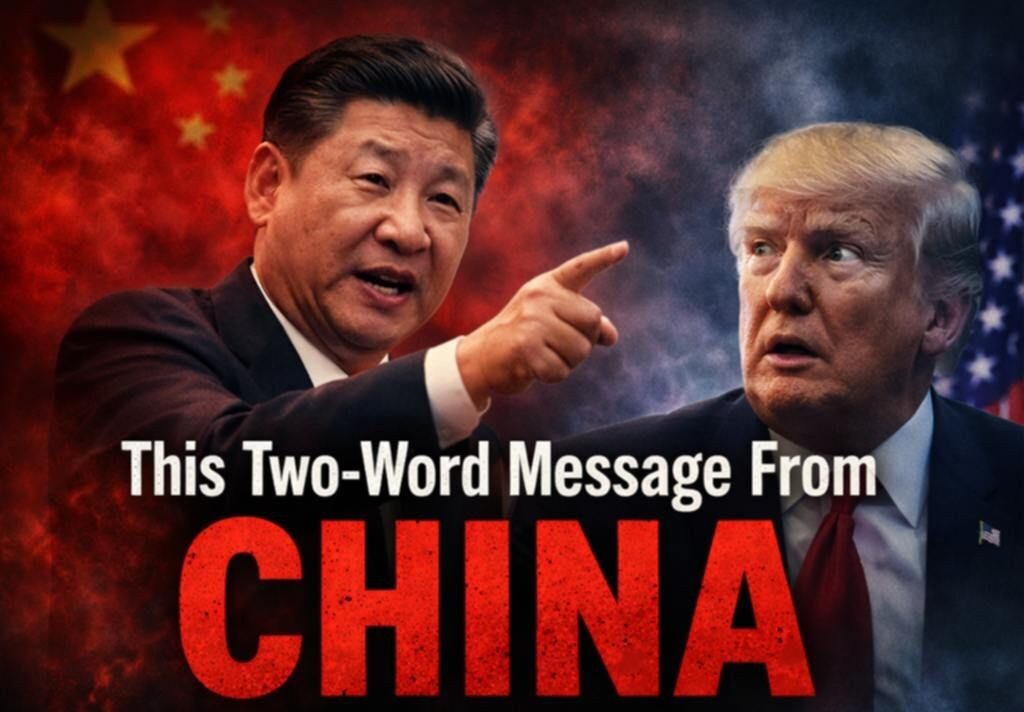
Inside the Pentagon, the reaction was immediate. Analysts who had treated Venezuela as a regional concern began reframing it globally. Maps were pulled out. Scenario planning shifted. The question was no longer, “What happens in Caracas?” It became, “Where does China respond—and when?”
No one expected direct military action in Latin America. That isn’t Beijing’s style. Instead, China plays long games, choosing asymmetric responses. When provoked in one theater, it exerts influence elsewhere—ideally where its opponent is already stretched. And so, attention drifted thousands of miles east to the South China Sea.
For years, the South China Sea has been one of the world’s most sensitive flashpoints. Chinese naval patrols shadow U.S. vessels. Artificial islands bristle with radar and runways. Every freedom-of-navigation operation carries risk. U.S. planners know this is where Beijing can send a message without firing a shot.
The warning’s implication was simple: if Washington acts decisively against Maduro, China will respond elsewhere, on its own terms. In geopolitics, signals like this are never emotional. They are calculated. Two words sufficed because the groundwork—economic entanglement, strategic positioning, decades of patience—was already in place.
Officials began tracing China’s deep ties to Venezuela. Oil shipments designed to skirt sanctions. Multi-decade joint ventures. Technology transfers embedding Chinese systems into Caracas’ infrastructure. Removing Maduro wouldn’t just topple a government; it would pull a pillar from Beijing’s regional strategy.
Washington’s silence was equally telling. It signaled recalculation, an understanding that the stakes went far beyond a political payoff. Publicly, nothing changed—no press conferences, no headlines. But behind closed doors, confidence shifted to caution.
This episode underscores a deeper truth about modern geopolitics. Power today isn’t just armies or speeches—it’s investments, shipping routes, debt, and the subtle understanding of global leverage. China didn’t need to threaten war. It didn’t need to posture. It reminded Washington that the game board is global, and every move carries consequences.
For Venezuela, the reality is grim. The country’s fate is increasingly shaped by superpower competition. Maduro’s survival is tied not only to internal politics, but to the complex web of international interests that extend far beyond Latin America.
For the U.S., the warning is a lesson in constraint. The era of acting decisively in one region without consequences elsewhere is fading. Every intervention now exists within a global ripple effect, measured in economic blowback, strategic countermoves, and silent warnings.
For China, the moment was a quiet assertion of confidence. No speeches, no public statements—just a clear message: Chinese interests in the Western Hemisphere are real, significant, and defended strategically.
In the end, the two-word message did exactly what it was designed to do. Momentum paused. Calculations shifted. Washington was reminded that in a world of great-power competition, even the smallest signals can cast the longest shadows.
The shortest words, often whispered, sometimes carry the heaviest weight in global affairs.
What do you think this means for U.S.-China relations and Latin America? Share your thoughts in the comments and join the conversation about global strategy and geopolitics.