“What do you mean?”
“What if we're both single at 60?”
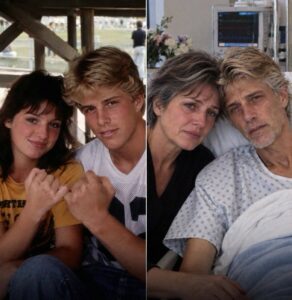
He held out his pinky.
“If we're both single at 60, we stop being idiots and find each other.”
I stared at his hand.
He wasn't laughing anymore.
I hooked my pinky around his.
Neither of us said what we were both thinking.
Two months later, Jeffrey left for college three states away.
At first, nothing changed.
We wrote constantly.
Long letters.
Birthday cards.
Stories about our ordinary lives.
He told me about his roommate, who apparently had never discovered the existence of laundry detergent.
I told him about working at the library while taking classes.
For the first year, I probably knew more about Jeffrey's life than some people who lived on his street.
Then the letters became less frequent.
Every week became every other week.
Every other week became once a month.
I told myself it was normal.
College was changing him.
My life was changing too.
I was training to become a teacher. I made new friends. I went on dates.
But whenever something important happened, Jeffrey was still the first person I wanted to tell.
Then he wrote to me about a girl named Margaret.
She was studying nursing.
He said she was funny, intelligent, and someone he thought I would like.
That's when I finally understood something I should have known years earlier.
I was in love with him.
I sat on my bedroom floor with his letter in my hands and cried.
That night, I started writing him a letter.
I told him everything.
I told him I loved him.
I told him I thought I always had.
Then I tore the letter into pieces.
If Jeffrey was happy, I couldn't bring myself to destroy that happiness just because I had finally understood my own feelings.
So I stayed silent.
The Letter That Ended Everything
In the summer of 1986, a letter arrived from Jeffrey.
I knew something was different before I even opened it.
His letters usually began with a joke.
This one didn't.
He told me he and Margaret were getting married in August.
I read the letter twice.
Then I reached the final paragraph.
Jeffrey asked me not to contact him anymore.
He explained that Margaret knew how close we'd always been, and he wanted to give his marriage a fair chance.
Our friendship meant too much to him to let it become something that could hurt his future wife.
At the bottom, he wrote:
“I hope you have a wonderful life, Ruthie.”
I cried for weeks.
But I respected his decision.
I didn't call.
I didn't write.
 Up Next: Page 3 of 5
I didn't try to find him.
I heard pieces of his life through people who still knew his family.
Continue Reading