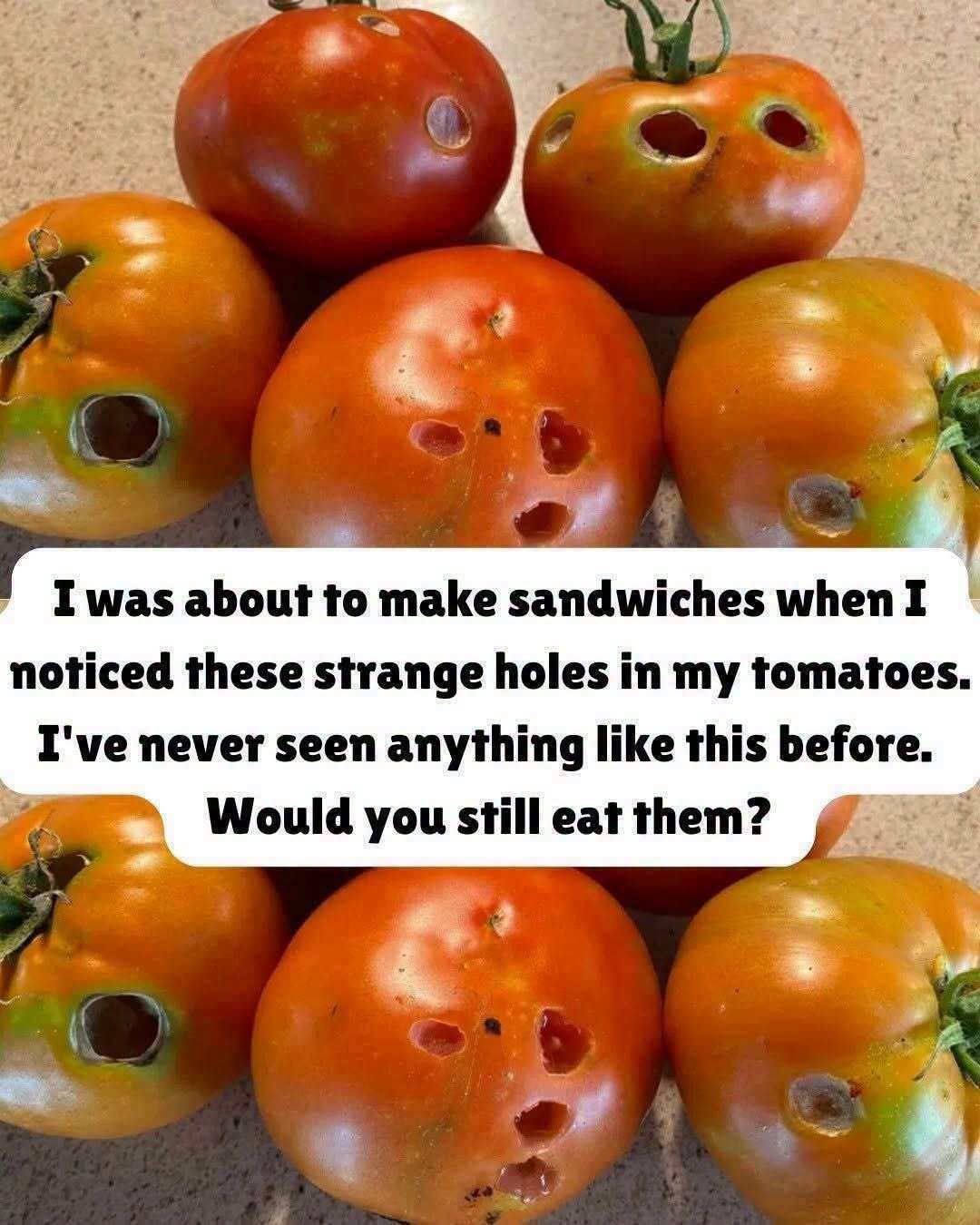
You walk into the garden expecting to pick a perfectly ripe tomato.
Instead, you find something strange.
There’s a hole in it.
Maybe it’s a tiny puncture near the stem. Perhaps a larger section has been eaten away. Sometimes the outside looks almost perfect until you turn the tomato around and discover the damage.
The immediate question is obvious:
What caused it?
A hole in a tomato can have several explanations, and the appearance of the damage can provide useful clues about what’s happening in your garden.
Start by Looking Closely at the Damage
Before reaching for an insecticide or assuming your entire crop is in trouble, examine the tomato carefully.
Not every hole has the same cause.
Pay attention to its size and location.
Is it a small puncture or a large opening?
Is the damage near the stem or closer to the bottom of the fruit?
Does the area look freshly eaten?
Is there dark material around the opening?
Are nearby leaves damaged too?
Those details can help narrow down the possibilities.
Caterpillars May Be Responsible
One possible culprit is a caterpillar feeding on the plant or fruit.
Tomato and tobacco hornworms, for example, are well-known garden pests. These large caterpillars can consume substantial amounts of foliage and may also damage developing tomatoes.
Despite their size, they can be surprisingly difficult to spot because their green bodies blend in with tomato leaves.
If you find damaged fruit, inspect the entire plant.
Look underneath leaves, along stems, and around partially eaten sections.
Missing leaves or significant chewing damage can be another clue that a caterpillar has been feeding nearby.
Smaller Pests Can Leave Different Marks
Not all tomato damage comes from large caterpillars.
Various insects can feed on tomatoes at different stages of development.
Some leave small punctures or scars rather than large openings. Others may feed on the surface or damage fruit while it is still developing.
This is why identifying the pest from the hole alone isn’t always possible.
Look at the entire plant rather than focusing only on one tomato.
Damage to leaves, stems, flowers, and neighboring fruit can provide additional clues.
Slugs and Snails Are Worth Checking For
If tomatoes are growing close to the soil, slugs or snails may also be worth considering.
These garden visitors prefer moist conditions and are often most active at night or during cool, damp weather.
Their feeding can leave irregular openings in ripe or nearly ripe produce.
If you suspect them, inspect the garden in the evening or early morning.
You may also notice slime trails on plants, containers, soil, or nearby surfaces.
Keeping ripe tomatoes from resting directly against damp soil can sometimes reduce opportunities for this type of damage.
Sometimes the Problem Isn’t an Insect
A damaged tomato doesn’t automatically mean you have a pest infestation.
Fruit can crack because of changes in moisture and growing conditions.
For example, a period of dry weather followed by heavy watering or rainfall may cause tomatoes to absorb water rapidly. The inside expands faster than the skin can accommodate, potentially creating splits.
Once the skin has opened, the damaged area can become more vulnerable to insects and decay.
What eventually looks like a mysterious hole may therefore have started as ordinary physical damage.
Birds and Other Animals May Take a Bite
Wildlife can also be responsible.
Birds sometimes peck ripe tomatoes, particularly when searching for moisture or food.
Depending on where you live, other animals may also investigate a vegetable garden.
If several ripe tomatoes repeatedly develop similar damage, think about when it’s happening.
Damage appearing overnight may suggest a different visitor than damage occurring during daylight hours.
Observation is often more useful than immediately assuming a particular animal is responsible.
Should You Eat a Tomato With a Hole in It?
This requires some judgment.
A tomato with a minor superficial blemish isn’t necessarily the same as fruit with extensive damage and deterioration.
However, an open hole provides a pathway for contamination and decay, particularly if insects or animals have been feeding on the fruit.
Be cautious with tomatoes showing mold, extensive softness, leaking areas, unpleasant odors, significant rot, or other obvious signs of spoilage.
When you’re uncertain about the safety of damaged produce, discarding it is the more cautious choice.
Check the Rest of the Plant
Finding one damaged tomato doesn’t necessarily mean every fruit will be affected.
But it is a good reason to inspect your plants.
Look underneath leaves and along stems.
Check neighboring tomatoes.
Remove severely damaged or rotting fruit rather than leaving it around the garden.
Also look for fallen tomatoes on the ground, as decaying produce can attract insects and other animals.
A few minutes of regular inspection can help you notice developing problems before damage becomes widespread.
Don’t Automatically Reach for Chemicals
Discovering holes in several tomatoes can make it tempting to immediately spray the plants.
First, determine what’s actually causing the problem.
Different pests require different approaches, and sometimes no pesticide is necessary at all.
Hand-removing certain caterpillars, improving garden sanitation, protecting fruit from animals, adjusting watering practices, or using physical barriers may be more appropriate depending on the cause.
If pest control becomes necessary, identify the pest and choose an approach appropriate for edible plants. Always follow product labels and local agricultural guidance.
Your Watering Routine Matters Too
Healthy tomato plants generally benefit from consistent care.
Large fluctuations in soil moisture can contribute to problems such as fruit cracking.
Rather than allowing the soil to become extremely dry and then soaking it heavily, aim for reasonably consistent moisture appropriate for your growing conditions.
Mulching around plants can also help reduce rapid changes in soil moisture.
Just avoid piling mulch directly against the plant stem.
One Tomato Can Give You Useful Information
A damaged tomato is disappointing, particularly when you’ve spent weeks waiting for it to ripen.
But it can also function as an early warning.
The hole might lead you to discover a caterpillar hiding underneath a leaf.
It might reveal that wildlife has discovered your garden.
Or you may realize that recent changes in rainfall and watering have caused fruit to crack.
The important thing is not to jump immediately to one explanation.
Observe first.
The Bottom Line
A hole in a tomato doesn’t have one universal meaning.
It may be associated with caterpillars or other insects, slugs or snails, wildlife, cracking, physical damage, or deterioration that occurred after the skin was broken.
The best clues usually come from examining the entire plant and surrounding garden.
Look at the shape and location of the damage, inspect nearby leaves and fruit, and consider recent weather and watering conditions.
Most importantly, don’t panic over one imperfect tomato.
Gardens are living environments, and occasional damaged produce is normal.
But when the same problem keeps appearing, your tomatoes may be giving you an important clue.
Sometimes all it takes is looking a little closer to discover what’s really happening in your garden.