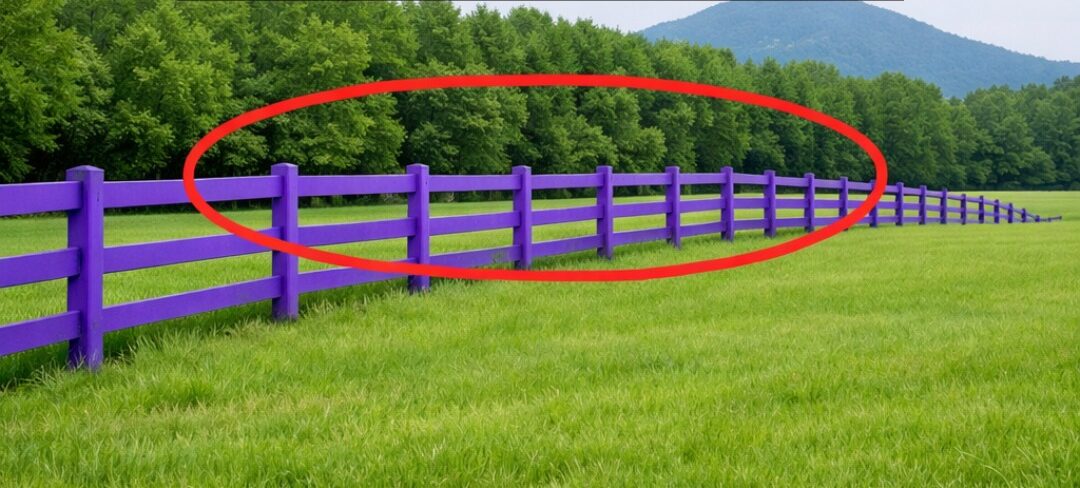
The Secret Meaning Behind Purple Fences: Nature’s “No Trespassing” Sign
If you’ve ever wandered along a quiet country road, a rural trail, or even a sleepy suburban neighborhood and noticed a splash of purple on a fence post or tree, you might have assumed it was just an odd paint choice. But that vibrant purple isn’t decorative — it’s a clear warning: “No trespassing.” In many rural areas across the United States, this color serves as a visual code that signals private property. Step inside without permission, and you could be facing legal trouble.
How the Purple Paint System Works
Several states, including Texas, North Carolina, and Illinois, have laws that recognize purple paint as a legitimate way to mark property boundaries. For the markings to be enforceable, they must follow strict rules: vertical stripes at least one inch wide and eight inches long, painted three to five feet off the ground, and spaced roughly every 100 feet along the property line. This method is practical — unlike signs that can fade, fall, or be blown away, the paint stays visible, clear, and hard to ignore.
Why Purple?
The choice of purple is deliberate. Rare in nature, it immediately pops against trees, grass, and soil. Unlike red, brown, or orange, it’s distinct enough that locals, hikers, and hunters recognize it as a warning. Over time, purple has become a quiet code among landowners: a firm, wordless way to say, “This land is private.”
Continue reading on next page…