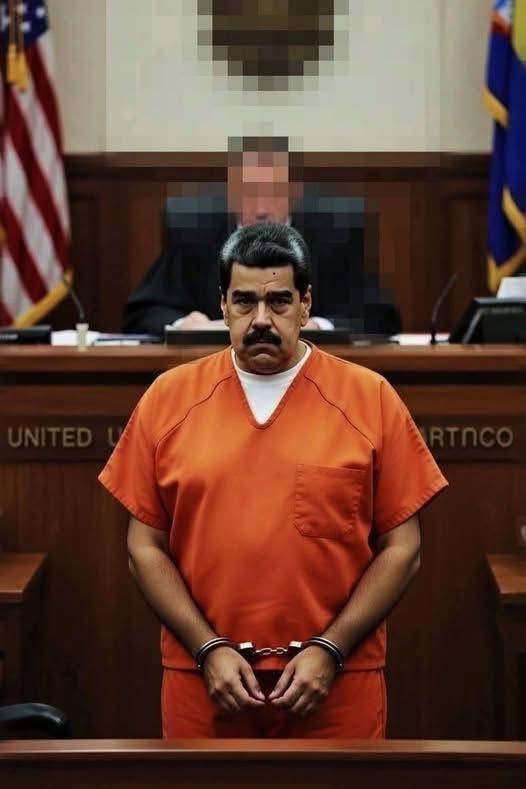
The United States Senate has emerged as the focal point of a serious constitutional confrontation, triggered by a dramatic U.S. military action in Venezuela that has upended long-standing assumptions about presidential authority. After American forces carried out a covert overnight operation that resulted in the capture of Nicolás Maduro, lawmakers in Washington found themselves sharply divided over the legality and legitimacy of the move. What the Trump administration initially described as a narrowly tailored law-enforcement mission has rapidly evolved into a far-reaching debate over executive power, congressional responsibility, and how modern conflicts should be legally defined.
The operation itself was swift and highly coordinated, but its political consequences were anything but contained. In early January, specialized U.S. units entered Caracas, detained Maduro and his wife, and transported them to New York to face federal charges tied to narcotics trafficking and corruption. While administration officials emphasized that Maduro had already been indicted and portrayed the mission as an arrest rather than an act of war, many observers were unconvinced. The use of advanced military assets, elite forces, and an uninvited incursion into a sovereign nation led critics to argue that the action crossed a critical line. From their perspective, bypassing Congress amounted to an undeclared intervention with regime-changing consequences.
These concerns soon crystallized into a legislative challenge through a War Powers Resolution introduced by a bipartisan group of senators, including Tim Kaine and Rand Paul. The proposal aimed to reaffirm congressional authority by requiring formal approval for any continued military presence or engagement involving Venezuela. Senate debate was intense, with lawmakers repeatedly referencing historical precedents and constitutional limits. Senator Paul argued that forcibly removing a sitting head of state through military means could not reasonably be classified as routine law enforcement. Senator Kaine similarly questioned the administration’s framing, suggesting that labeling such an operation as non-military strained credibility given its international impact.
The dispute reached a decisive moment on January 14, when the Senate voted on the resolution. After strong lobbying from the White House, several Republican senators reversed their earlier positions, resulting in a 50–50 split. Vice President J.D. Vance ultimately cast the tie-breaking vote, halting the measure and preserving the administration’s authority to act without immediate congressional approval. Although the resolution failed, the narrow margin revealed deep unease within Congress and highlighted growing tensions between the legislative and executive branches.
Supporters of the administration insist that the mission did not constitute warfare. They argue that the absence of a prolonged military occupation or declared conflict places the action outside the scope of the War Powers Act. In their view, Maduro was a criminal suspect whose continued freedom posed a direct threat to U.S. interests, warranting decisive executive action. They further contend that seeking congressional authorization in advance would have jeopardized operational security and risked allowing the target to escape.
Internationally, the consequences have been significant. Legal analysts and foreign policy experts have raised concerns about the precedent set by removing a sitting leader without authorization from the United Nations Security Council. Scholars warn that such actions could weaken global norms governing sovereignty and the use of force, potentially encouraging other nations to justify cross-border interventions under similar legal rationales.
The reaction across the region has been mixed and, in some cases, volatile. In Cuba, large demonstrations erupted outside the U.S. Embassy, with protesters accusing Washington of reviving interventionist policies in Latin America. Even governments critical of Maduro have expressed unease, wary of establishing a standard that permits unilateral action against national leaders. Inside Venezuela, the political environment has shifted dramatically. Meetings between U.S. officials and interim leadership signal an effort to stabilize the country while securing American influence during the transition period.
Symbolism surrounding the operation has further fueled debate. During a White House meeting, Venezuelan opposition leader and Nobel Peace Prize recipient María Corina Machado presented her medal to President Trump as a sign of appreciation. Supporters viewed the gesture as recognition of decisive leadership, while critics saw it as a troubling convergence of democratic symbolism and military force, underscoring the ideological divides exposed by the operation.
Despite the Senate vote, the issue remains far from settled. Members of the House of Representatives are drafting their own legislative responses, and constitutional experts anticipate legal challenges that could eventually reach the Supreme Court. At the heart of the dispute lies a fundamental question: in an era of rapid, precision-based military actions, where does executive authority end and congressional oversight begin?
The capture of Nicolás Maduro is likely to be remembered as a defining moment in U.S. foreign policy and constitutional interpretation. While some view it as a strategic success, others warn that it may carry lasting consequences for the balance of power within the American system of government. As lawmakers continue to debate the limits of presidential action, Washington remains divided—not only over Venezuela’s future, but over the enduring role of checks and balances in the modern presidency.