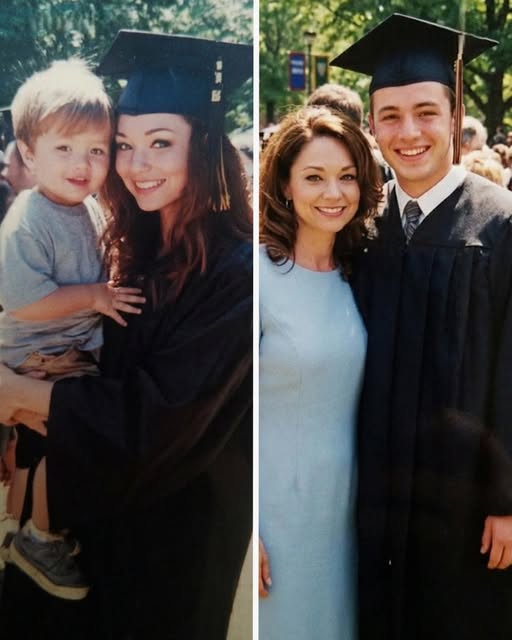
For as long as I can remember, my life followed a simple narrative: my mother raised me alone, and my biological father chose not to be involved. There were no dramatic details, no lingering bitterness — just a quiet acceptance of reality.
My mom did everything herself. She balanced work, parenting, and household responsibilities without complaint. She fixed broken appliances, helped with school projects, taught me how to drive, and made sure I never felt like I was missing out. Every night, she read to me until I fell asleep. She was consistent, dependable, and — I believed — completely honest.
She told me she became pregnant while she was still in college and that the man involved left when he learned about it. “He wasn’t prepared for responsibility,” she’d say. I never questioned it. I grew up thinking my story began with abandonment and continued with resilience.
By the time I reached my college graduation, it felt like proof that her sacrifices had been worth it. We had made it together.
The ceremony took place on a cool spring day in Chicago. My mother stood proudly in the crowd, wearing a dress she’d carefully chosen and a necklace she only wore for major life events. When my name was called and I walked across the stage, she applauded harder than anyone else.
Afterward, while families gathered for photos and celebrations, I noticed a man standing alone nearby. He was well-groomed, confident, and watching me with an intensity that felt out of place. When he finally approached, my mother froze. I could feel her tension instantly.
He asked my name to confirm it, then took a breath and said something that completely shifted my understanding of my life.
He claimed he was my biological father.
At first, I thought there must be some mistake. But he introduced himself and explained that he had only recently discovered the truth — that for over twenty years, he believed the pregnancy had ended in loss. According to him, he was never told I existed.
The celebration around us suddenly felt distant.
We moved away from the crowd and sat down, and that’s when everything unraveled. He explained that he and my mother had dated in college. When she became pregnant, he hadn’t planned to leave — but his parents had intervened without his knowledge. They were influential, financially powerful, and determined to control the situation.
They contacted my mother directly, warned her about costly legal battles, threatened custody disputes, and implied that with their resources, she wouldn’t win. She was young, scared, and had no access to legal counsel or family law support.
My mother finally spoke, her voice trembling.
“They made it sound like they could take you away from me,” she said. “I was terrified. I told him the baby was gone because I thought disappearing was the only way to protect you.”
She never took their money. She never sought revenge. She made a decision rooted in fear, not deceit.
The man gave me his contact information and said there was no obligation to reach out. He explained he’d learned the truth only months earlier and wanted me to have the option he never did. Then he left, blending back into the graduation crowd.
That night, our apartment felt unusually quiet. My graduation clothes sat untouched, and the excitement of the day was gone. My mother and I sat at the table, the weight of the truth between us.
“I should have told you sooner,” she said. “But every year made it harder. I wasn’t trying to be strong — I was just trying to keep you safe.”
For the first time, I understood the full cost of her choices. Single parenthood, constant fear, no financial safety net, no legal protection — just determination.
I told her what I meant with complete certainty: “You didn’t fail. You protected me.”
Rebuilding a connection with my biological father didn’t happen overnight. I waited weeks before reaching out. Eventually, we met for coffee. The conversations were cautious and sometimes uncomfortable. He shared his regrets but never blamed my mother. He understood the power imbalance and the pressure she had been under.
Over time, my emotions shifted. The anger faded, replaced by clarity. I realized that what I once thought was abandonment was actually the result of fear, manipulation, and impossible circumstances.
Months later, when my mother noticed his name appear on my phone, she smiled softly. “I trust you,” she said. “Whatever feels right for you.”
I didn’t suddenly gain a traditional father figure. You can’t recreate decades of shared memories. But I gained honesty. I gained perspective.
Most importantly, I saw my mother for who she truly was — not someone who was left behind, but someone who stood alone to protect her child when no one else would.
My graduation day didn’t ruin my story.
It revealed the truth behind it.