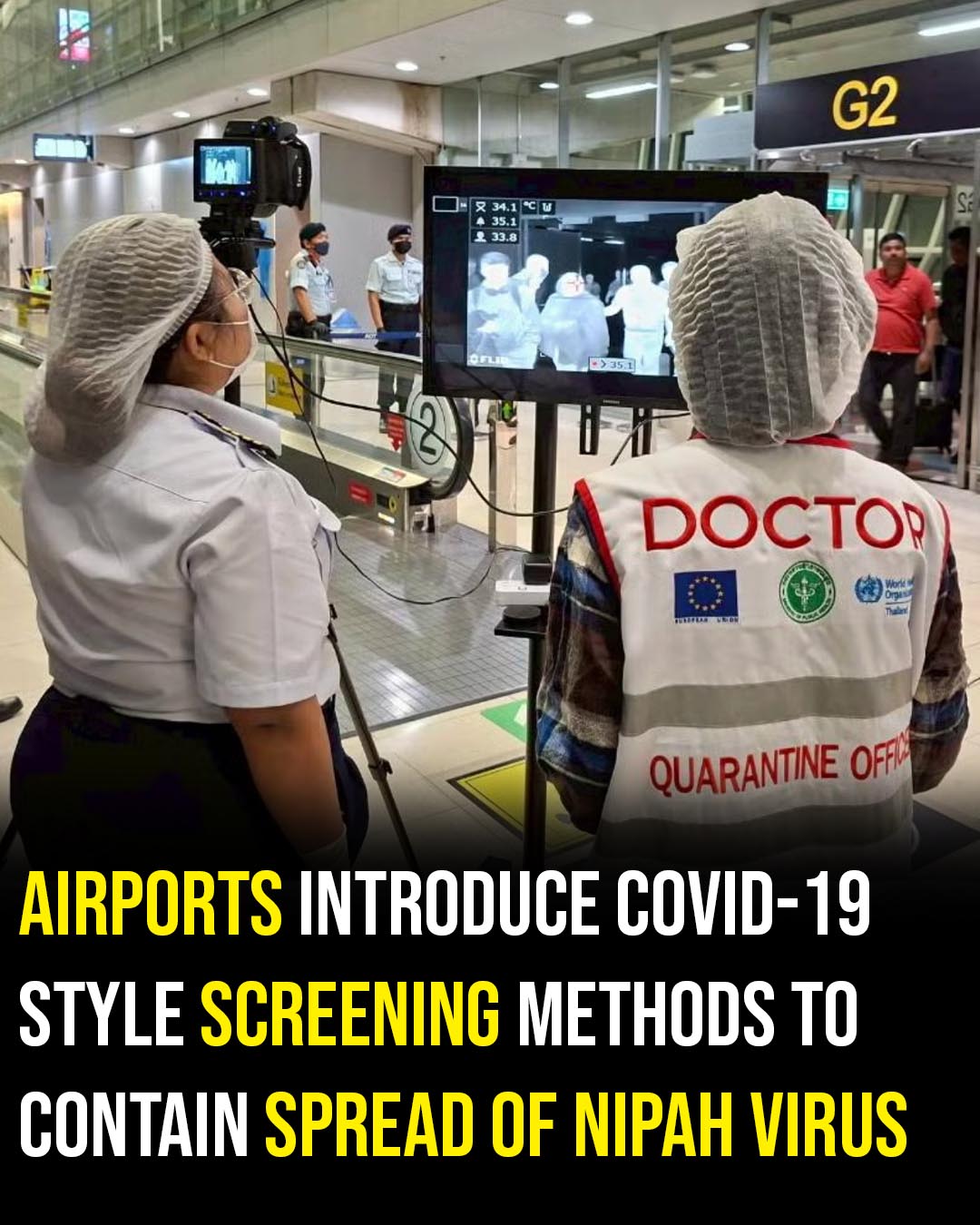
Health authorities in Thailand have increased disease prevention measures following reports of new Nipah virus cases in India, highlighting growing international vigilance around global health security.
According to officials, two cases of the Nipah virus have been reported in India’s West Bengal region since December. In response, several countries across Asia — including Thailand, Taiwan, and Nepal — have moved quickly to strengthen monitoring systems and reduce the risk of cross-border transmission.
What Is the Nipah Virus?
The Nipah virus was first identified in 1999 during an outbreak in Malaysia. While it is not a new disease, it remains a serious public health concern due to its high fatality rate, which has been estimated at between 40% and 75%. At present, there is no specific cure.
The World Health Organization states that the virus primarily spreads through animals such as bats and pigs, though transmission has also been linked to other animals, including goats, horses, dogs, and cats. Human-to-human transmission can occur through close contact with an infected individual, particularly when symptoms are present.
Heightened Airport Screening in Thailand
To prevent potential importation of the virus, Thailand has significantly tightened airport health protocols. Authorities report that more than 1,700 travelers have already been screened, with no confirmed infections detected so far.
Screening efforts are focused on passengers arriving from areas considered higher risk, particularly West Bengal. Most of these travelers enter Thailand through major international hubs such as Suvarnabhumi Airport, Don Mueang Airport, and Phuket International Airport.
Local media reports indicate that travelers from designated risk regions are required to complete health declaration forms prior to arrival and present medical certificates confirming they are fit to travel.
Aircraft and Baggage Safety Measures
Additional precautions extend beyond passenger screening. Aircraft arriving from outbreak-affected regions undergo sanitation inspections after each flight. If a suspected case is identified, the aircraft must be fully disinfected before being cleared for future use.
Designated parking zones have been established for flights arriving from affected areas, along with separate screening zones, isolation rooms, and specialized baggage-handling procedures.
Confidence From Health Officials
Thai health authorities have expressed confidence in their preparedness. Public Health Minister Phatthana Phromphat stated that if a suspected case is identified at an airport, the individual will be immediately isolated, with test results available within approximately eight hours.
He also emphasized that Nipah virus transmission differs from COVID-19, noting that asymptomatic individuals are not believed to spread Nipah. “For Nipah, transmission does not occur unless symptoms are present,” he explained.
A Proactive Public Health Response
Officials believe these early interventions will help prevent any local outbreak and protect both residents and travelers. The situation underscores the importance of international cooperation, airport health screening, and rapid response systems in managing emerging infectious diseases.
Sharing accurate information helps raise awareness and supports global public health efforts as authorities continue to monitor the situation closely.