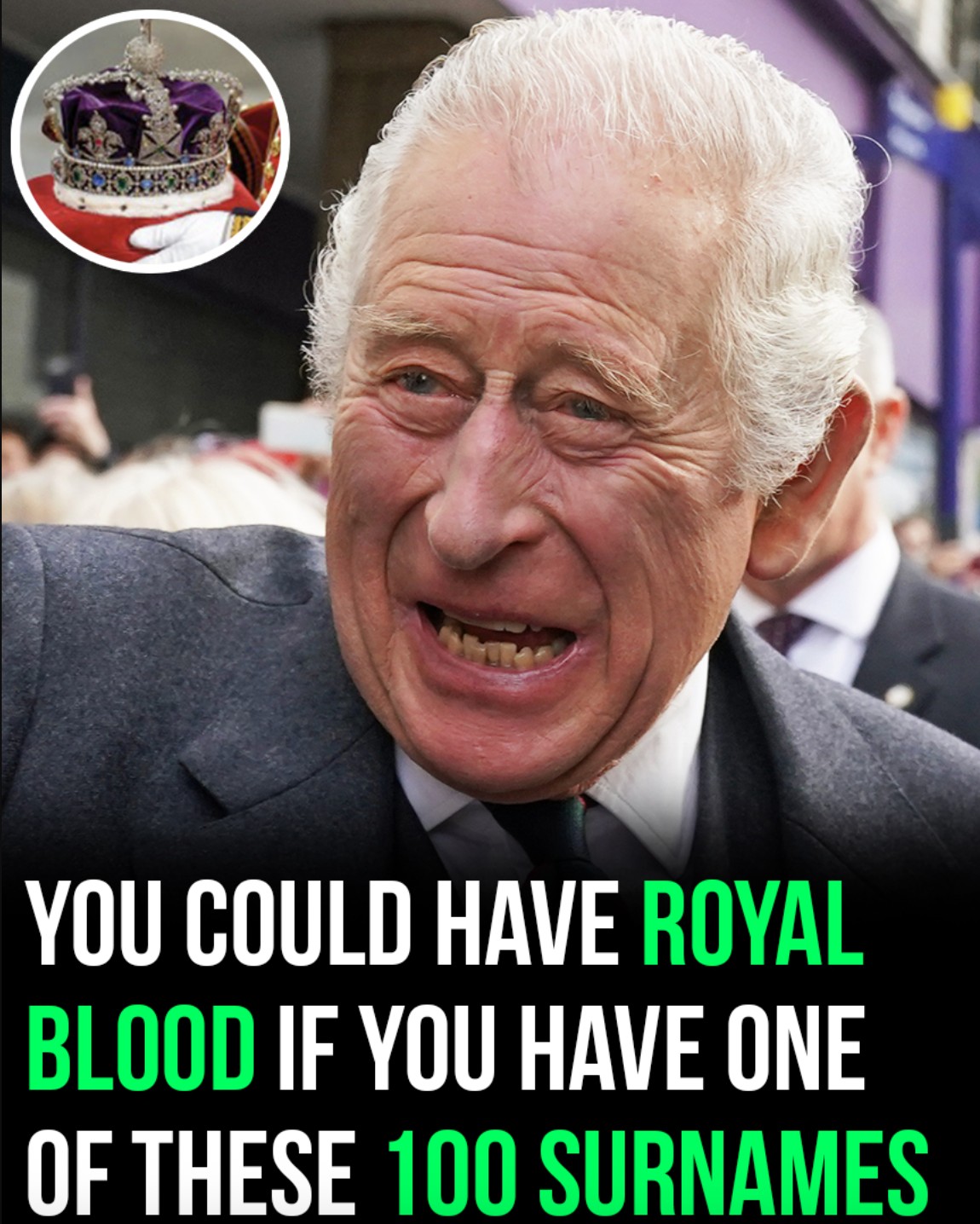
Have you ever looked at your last name and wondered whether it could connect you to royalty?
For centuries, royal families and aristocrats have been viewed as somehow separate from everyday people. In reality, they were—and still are—ordinary individuals whose family lines simply became powerful or influential over time.
Genealogy experts suggest that many people today may share distant ancestral ties to nobility without ever realizing it. In fact, your surname could offer a surprising clue about your family’s past.
Could Your Last Name Reveal Royal Roots?
Interest in royal ancestry has grown alongside the popularity of family tree research, DNA testing, and online genealogy platforms. When examining the British monarchy in particular, MyHeritage has identified at least 35 surnames that may suggest historical connections to nobility.
Expanding on that research, Family History Daily compiled a broader list of 100 surnames that could indicate royal or aristocratic lineage. Their findings are based largely on Americans of Royal Descent, an 1891 genealogical reference by Charles H. Browning, which analyzed hundreds of historical records tied to royal bloodlines.
The Modern Royal Surname Explained
Before diving into the list, it helps to understand the current royal family name: Mountbatten-Windsor.
While Windsor has been the royal house name for generations, Mountbatten comes from Prince Philip, the late husband of Queen Elizabeth II. Born a Prince of Greece and Denmark, Philip relinquished his foreign titles when he became a British citizen in 1947 and adopted his mother’s surname, Mountbatten.
When Elizabeth ascended the throne in 1952, she chose to combine both names, creating the official royal surname still used today.
100 Surnames Linked to Possible Royal Descent
Here is a list of surnames that genealogists say may point to royal or noble ancestry:
Abel
Alden
Appleton
Ayer
Barber
Barclay
Beverly
Binney
Brooke
Brown
Campbell
Carroll
Chauncey
Coleman
Cooper
Davis
Dickinson
Darling
Douglas
Dunbar
Edwards
Ellery
Ellis
Emmett
Evans
Farley
Fleming
Forest
French
Gardiner
George
Gerard
Gerry
Gibson
Graham
Hamilton
Haynes
Herbert
Hill
Howard
Hume
Irving
Jackson
James
Jenkins
Johnson
Kane
Kennedy
Ker
Key
King
Langdon
Lawrence
Lee
Leonard
Livingston
Lloyd
McCall
McDonald
Malcalester
Montgomery
Morris
Morton
Nelson
Nicholson
Nixon
Norris
O’Carroll
Ogle
Opie
Parsons
Patterson
Peabody
Pomeroy
Porter
Pratt
Preston
Quay
Randolph
Read
Reeve
Robinson
Rogers
Sanford
Shaw
Smith
Sowden
Stanley
Taylor
Townsend
Turner
Tyler
Valentine
Varson
Walker
Watts
White
Whiting
Williams
Young
Additional Names Tied to Aristocracy and Royal Houses
Beyond common surnames, certain historic family names are more directly associated with royal dynasties and noble houses across Europe:
Windsor
Tudor
Stuart
Plantagenet
Capet
Bourbon
Habsburg
Hanover
Valois
Lancaster
York
Bruce
de Valois
de Medici
Savoy
Orange-Nassau
Oldenburg
Glucksburg
Romanov
Baskerville
Darcy
Neville
Percy
Astley
Capell
Howard
Seymour
Grey
FitzAlan
Courtenay
Manners
Russell
Cavendish
Talbot
Spencer
What This Really Means
Having one of these surnames doesn’t automatically make you royalty. However, it can serve as an intriguing starting point for deeper ancestry research and family history exploration.
Notably, Queen Elizabeth II’s family tree has been traced back more than 1,200 years across 37 generations. One of her earliest recorded ancestors, Æthelstan, born around AD 895, is widely regarded as the first true King of England.
So next time you explore your genealogy records or take a DNA ancestry test, pay close attention to your surname—you might discover a connection to history that’s closer than you think.
Do you recognize your last name on the list? Share your thoughts and family stories in the comments!