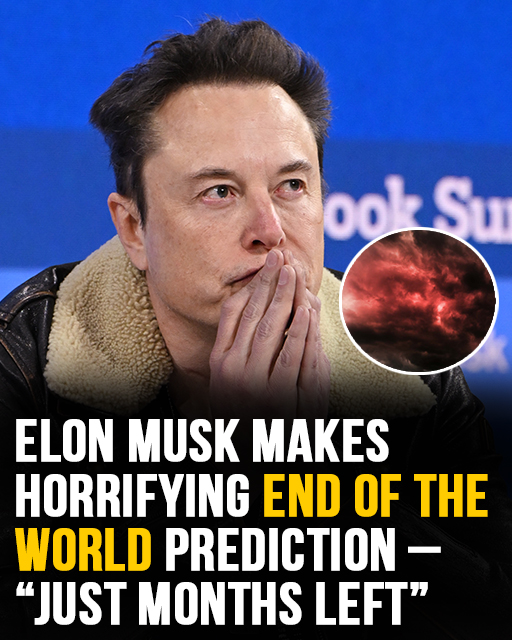
Elon Musk has delivered a striking assessment of the future of artificial intelligence, cautioning that humanity may be approaching a critical turning point as AI’s energy demands rapidly outgrow Earth’s capacity to supply power.
During a recent podcast appearance, the tech entrepreneur argued that the accelerating expansion of artificial intelligence is placing unprecedented pressure on global energy infrastructure. According to Musk, without a major shift in how and where AI systems are powered, the planet could struggle to keep pace with technological progress in the near future.
Musk emphasized that discussions about artificial intelligence often focus on software breakthroughs, algorithms, and automation, while overlooking a more fundamental limitation: electricity. Advanced AI models require massive data centers, specialized chips, and continuous cooling—all of which consume enormous amounts of power.
At present, Musk noted, the entire United States uses roughly half a terawatt of electricity on average. Doubling that output, he argued, would require an extraordinary and slow-moving expansion of power plants, transmission lines, and grid capacity.
“People underestimate how difficult it is to scale energy production at that level,” he explained, pointing out that AI’s growth curve is far steeper than that of traditional infrastructure development.
A Narrow Time Window
Musk suggested that the gap between AI’s energy needs and Earth’s power generation capabilities could become critical within a relatively short time frame. In his view, the most practical solution may lie beyond the planet itself.
He predicted that within roughly the next 30 to 36 months, space could become the most cost-effective and scalable location for hosting large-scale AI infrastructure. Moving data centers off Earth, he said, would bypass many of the physical and environmental constraints faced by terrestrial energy systems.
The SpaceX founder explained that Earth-based AI facilities are constrained not only by power generation, but also by land use, cooling requirements, and grid stability. These limitations, he believes, make it difficult to support exponential AI growth solely on the planet.
Why Space Changes the Equation
According to Musk, space offers a major advantage: uninterrupted access to solar energy. Solar panels in orbit are exposed to near-constant sunlight and are unaffected by weather, seasonal changes, or nighttime cycles.
He estimated that orbital solar panels can produce several times more usable energy than those on Earth. Combined with declining launch costs and improvements in satellite technology, the economics of space-based infrastructure become increasingly attractive.
Another major benefit, Musk said, is the reduced need for energy storage. On Earth, batteries are essential to compensate for intermittent renewable energy, adding cost and complexity. In orbit, continuous solar exposure could allow AI systems to operate without massive battery installations.
When viewed at scale, Musk argued, space-based energy generation may ultimately become cheaper and more efficient than expanding terrestrial power grids to meet AI demand.
Long-Term Technology Strategy
Musk framed the issue as a long-term challenge tied to humanity’s ability to harness energy effectively. Rather than thinking in terms of individual power plants, he suggested that future planning must consider how much of the sun’s energy civilization can realistically capture.
From that perspective, he argued, large-scale expansion beyond Earth becomes unavoidable.
Reports indicate that Musk has already taken steps in this direction. Regulatory filings have outlined plans to deploy an unprecedented number of satellites, potentially creating solar-powered orbital data centers capable of supporting AI systems without adding strain to Earth’s electrical grids.
If realized, such a network would far exceed the number of satellites currently in orbit and would represent a major shift in how digital infrastructure is deployed.
Growing Industry Concerns
Musk’s comments echo broader concerns within the technology and energy sectors. As AI adoption accelerates worldwide, governments and utilities are grappling with rising electricity demand, grid resilience, and environmental sustainability.
Data centers are already among the fastest-growing consumers of power, making energy efficiency and clean generation critical issues for future economic growth and technological leadership.
Whether space-based AI infrastructure becomes a reality remains uncertain, but Musk’s warning highlights a key question facing policymakers and industry leaders alike: can Earth’s energy systems scale fast enough to support the next phase of artificial intelligence?
What’s your take on this prediction about AI, energy, and space technology? Share your thoughts and join the discussion.