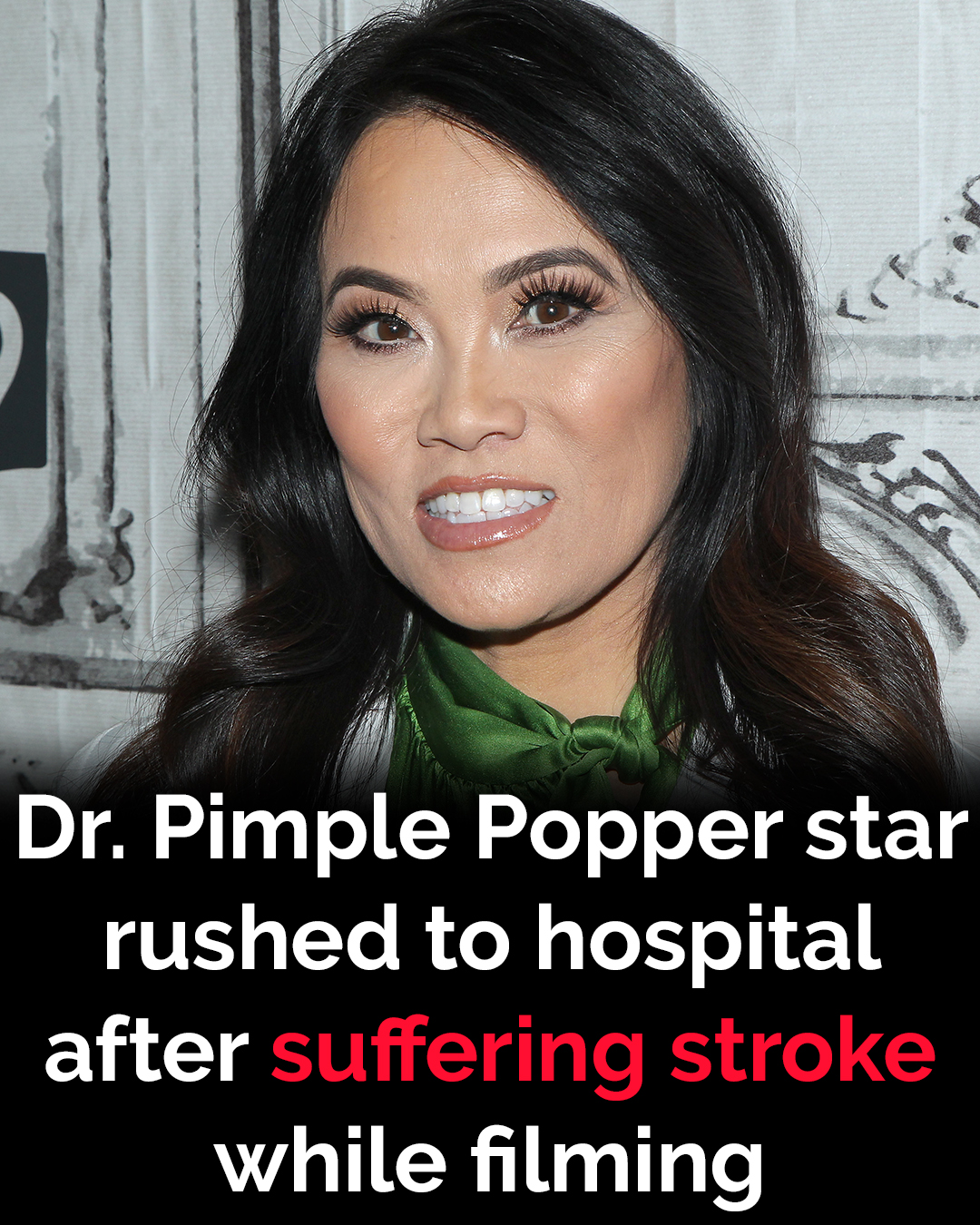
## Dr. Pimple Popper’s On-Set Health Scare: The Subtle Stroke Symptoms She Almost Missed
A fast-paced filming day can make anyone push through discomfort—but for celebrity dermatologist **Dr. Sandra Lee** (known worldwide as **Dr. Pimple Popper**), that decision nearly turned into a life-changing tragedy.
What started as a “normal” workday on her hit show reportedly shifted without warning. She felt **overheated, drenched in sweat, and unusually off**, symptoms many people might chalk up to stress, fatigue, or a hot flash. Like countless high-performing professionals, she kept going—focused on finishing the day rather than stopping to ask what her body was trying to say.
### When “Minor” Symptoms Turn Serious
Later, after returning to her parents’ home, the discomfort didn’t fade. It intensified.
She began feeling **restless and unwell**, and then came a sharp, unexplained pain shooting through one leg. Even with medical training, it can be surprisingly hard to accept that something truly dangerous might be happening—especially when symptoms don’t arrive like a dramatic movie scene.
But then the warning signs became impossible to ignore:
– **Coordination started to fail**
– **One side of her body felt heavy and unresponsive**
– When she lifted her hand, it **dropped** as if her body wouldn’t obey
And the most frightening moment: when she tried to talk, her speech didn’t come out normally. Words became **slurred and tangled**, a classic red flag for a neurological emergency.
That’s when the thought hit—could this be a stroke?
### The Diagnosis: Ischemic Stroke
Dr. Lee made the critical choice to seek emergency care immediately. At the hospital, doctors confirmed an **ischemic stroke**, which happens when a blockage prevents oxygen-rich blood from reaching parts of the brain.
In stroke care, timing is everything. Acting quickly can reduce long-term damage and improve recovery outcomes—one of the biggest reasons her decision to get help right away mattered.
### Recovery: Trading Filming for Physical Therapy
The aftermath reportedly forced a full pause on filming. Instead of treating patients and working on set, she shifted into **rehabilitation and physical therapy**, focusing on rebuilding strength, movement, and coordination.
For someone whose career depends on steady hands and precision, regaining fine motor control isn’t just personal—it’s professional. Recovery can also be emotionally draining, because stroke rehabilitation often involves re-learning tasks most people take for granted.
### A New Focus on Preventive Health
Now in her mid-50s, Dr. Lee has spoken about taking wellness more seriously and prioritizing key stroke risk factors, including:
– **Blood pressure monitoring**
– **Cholesterol management**
– **Stress reduction**
– Paying closer attention to early warning signs
Her experience is a reminder that medical emergencies can affect anyone—regardless of success, knowledge, or status.
### The FAST Rule: A Simple Stroke Warning Checklist
One of the most important takeaways she highlights is the **FAST** method, a widely used way to recognize stroke symptoms quickly:
– **F — Face drooping** (especially one-sided)
– **A — Arm weakness** (difficulty lifting both arms evenly)
– **S — Speech difficulty** (slurred or strange speech)
– **T — Time to call emergency services** (don’t wait)
The “T” is the key: **every minute counts**.
### The Bigger Lesson: Don’t Explain Away Your Symptoms
It’s easy to rationalize warning signs—fatigue, overheating, pain, dizziness—as “just stress” or “just a long day.” But sometimes those small signals are the first tremors of something much bigger.
Dr. Lee’s story resonates because it shows how quickly life can change—and how powerful it is to advocate for yourself when something feels wrong.
—
### Closing CTA
Have you or someone you love ever ignored symptoms that turned out to be serious? Share your thoughts in the comments, and if this article helped you, pass it along—you never know who might need the reminder today.