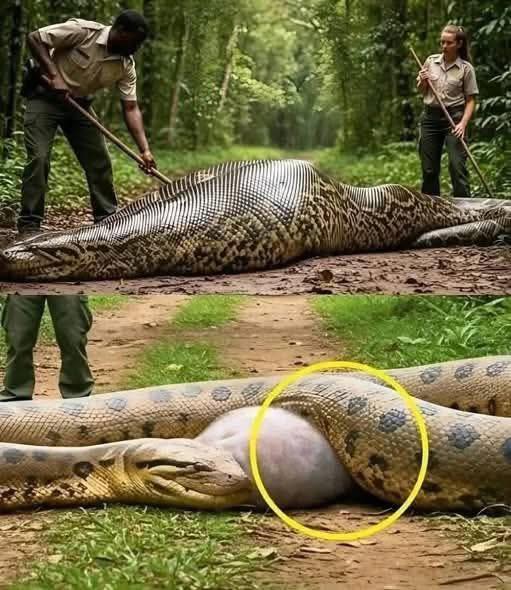
Park Rangers Save a Giant Green Anaconda After It Swallows Plastic Waste in a Protected Wetland
The remote wetlands of South America are famous for raw beauty, rich biodiversity, and some of the most powerful predators on Earth. But even in protected habitats, wildlife is increasingly threatened by a modern danger that doesn’t belong in nature: plastic pollution.
During a routine wildlife conservation patrol in a sunlit marsh, park rangers spotted something that instantly raised alarm. A massive green anaconda—one of the world’s largest snakes—was stretched across a muddy bank, barely moving. Instead of slipping into the water or reacting defensively, the reptile lay still, its body twisted in visible discomfort.
A Disturbing Sign: A Hard Bulge That Didn’t Belong
The team approached carefully. Even a weakened anaconda can be dangerously strong, using powerful constriction rather than venom. Up close, the problem became clear: a rigid, unnatural bulge sat in the middle of the snake’s body. It didn’t resemble a normal meal like a capybara, bird, or caiman. The shape was too hard, too sharp, and completely out of place.
Worse, the snake’s breathing was shallow and strained. The blockage appeared to be pressing into internal organs, putting the animal at risk of respiratory failure. Without fast intervention, the anaconda could have died slowly—an entirely preventable loss caused by litter carried into the wetland.