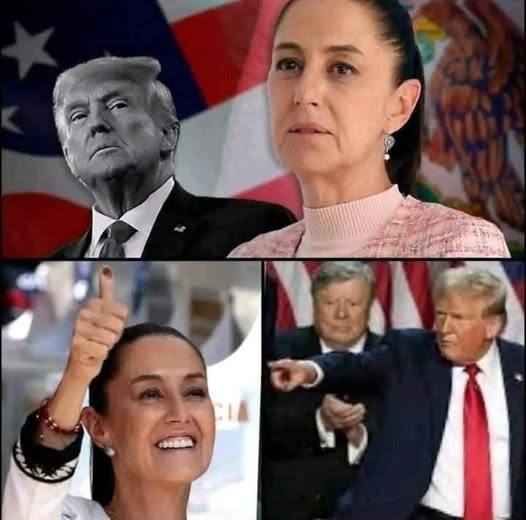
## Mexico’s President Says Trump Is Not the Only One Shaping the Global Crisis
As dawn broke, it felt like the world was watching two different versions of the same event.
In **Washington**, the message was confident and carefully framed. Officials described the operation as **decisive national security action**, arguing it was meant to **restore deterrence** and disrupt what they claimed was a fast-moving threat tied to **Iran’s nuclear ambitions**. The public line was clear: this was prevention, not escalation—an effort to stop a dangerous timeline before it reached a point of no return.
In **Jerusalem**, the tone was even more intense. Some insiders portrayed the strike as a turning point—one that finally shifted the region’s strategic balance after years of warnings, intelligence reports, and accusations that key “red lines” had already been crossed. For them, it wasn’t sudden. It was the outcome of a long buildup that many believed had been ignored for too long.
But away from podiums and headlines, a different mood spread—one driven less by victory speeches and more by uncertainty.
In **Tehran**, leaders signaled the response would come, and they suggested it might not look like a traditional battlefield exchange. Analysts warned retaliation could arrive through **missile pressure, allied militias, or cyberattacks targeting critical infrastructure**—methods that can raise the cost without triggering an immediate full-scale war.
Meanwhile, **European diplomats**—already strained by years of stalled negotiations—rushed to prevent the situation from spiraling. Their concern wasn’t just the next strike, but the possibility that each statement, each threat, and each counter-threat could lock every side into a cycle that becomes harder to stop with each passing day.
And that’s where the deeper fear sits: not simply what happened, but what happens next.
Because once major powers start trading “deterrence” for “retaliation,” the world can quickly reach a point where no one is fully in control—only reacting, step by step, until the line back to stability disappears.
**What do you think happens next—de-escalation, or a wider regional conflict?** Share your take in the comments, and if you want more clear updates on global politics and security, follow along for the next breakdown.