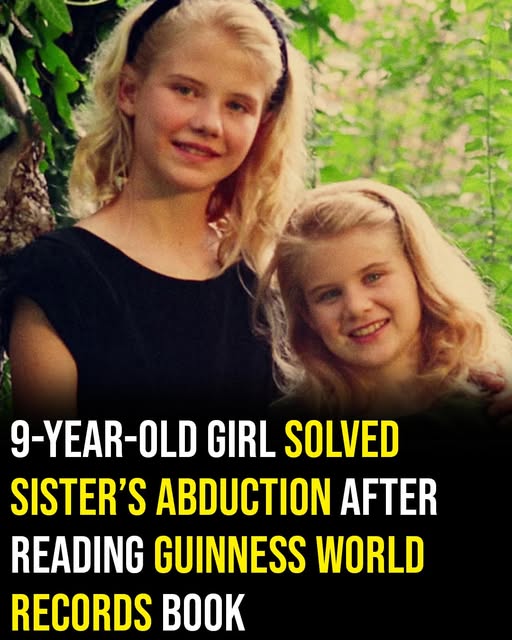
The story of Elizabeth Smart’s abduction is once again capturing public attention, thanks to a new Netflix true crime documentary that revisits one of the most well-known missing child cases in American history.
The series, Kidnapped: Elizabeth Smart, sheds new light on the investigation—and highlights a remarkable detail that played a critical role in identifying the kidnapper. That detail came from Elizabeth’s younger sister, who was only nine years old at the time.
A Crime That Shook the Country
In 2002, Elizabeth Smart was taken from her family’s home, a crime that instantly made national headlines. What made the case especially chilling was that the abduction occurred while her parents were away—and that Elizabeth’s sister, Mary Katherine Smart, witnessed the intruder.
In the documentary, both sisters recount the night that changed their lives forever. Mary Katherine describes seeing a man enter their home and force Elizabeth to leave under threat. For months, investigators believed the child’s memory might hold the key to solving the case.
They were right—but the answer surfaced in an unexpected way.
An Unlikely Clue From a Familiar Book
Following the kidnapping, Mary Katherine struggled with fear and anxiety. In the documentary, she explains that bedtime became especially difficult, and she often tried to distract herself by reading or thinking through what had happened.
Several months later, while flipping through a Guinness World Records book, something suddenly clicked.
“For no clear reason,” she explains, “a name came into my head. I immediately knew who had been in my bedroom that night.”
The name was Immanuel.
A Name That Changed the Investigation
Mary Katherine’s father, Ed Smart, recalls the moment clearly. One evening, his daughter told him and his wife that she believed she knew who kidnapped Elizabeth—and identified the man by that name.
“Immanuel” was an alias used by Brian David Mitchell, a self-styled preacher who had crossed paths with the Smart family months earlier. Mitchell had been preaching locally when Elizabeth and Mary Katherine’s mother met him and offered potential work at their home.
Mitchell later visited the house for small jobs, giving Mary Katherine a brief but lasting exposure to him—one her young mind didn’t fully process until much later.
Doubts, Then Confirmation
Initially, law enforcement was cautious. At the time, investigators were focused on another suspect who later died while in custody. Still, Mary Katherine’s confidence prompted renewed attention to Mitchell.
Eventually, authorities released a sketch based on the new information. That decision proved pivotal.
Mitchell was later spotted in public with Elizabeth, leading to his arrest and her safe recovery after nine months in captivity. Investigators confirmed that Brian David Mitchell was indeed responsible for the kidnapping.
Elizabeth Smart Speaks Out Today
More than twenty years later, Elizabeth Smart continues to share her experience, now as an advocate and survivor. In interviews connected to the Netflix documentary, she explained that the filmmakers worked carefully to avoid sensationalism while still telling the truth.
She emphasized that her ordeal was often misunderstood—and that survival did not mean the experience was easy or passive.
After seeing the final version of the documentary, she expressed appreciation for how accurately her story was portrayed and how it honored her resilience.
Why This Case Still Resonates
The Elizabeth Smart case remains a powerful example of how persistence, memory, and family determination can change the course of a criminal investigation. It also underscores the importance of listening to child witnesses—even when their insights take time to surface.
As this Netflix true crime series introduces the case to new audiences, it reminds viewers that justice can hinge on the smallest details—and that courage can come from the most unexpected places.
If this story moved you, consider sharing it so others can learn about one of the most extraordinary recoveries in modern true crime history.