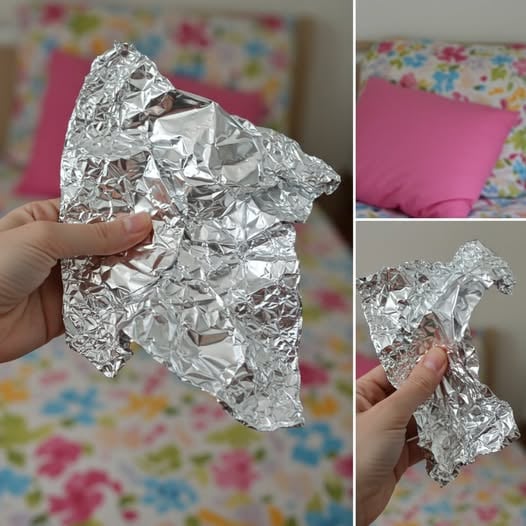
To understand why such a strange ritual has gained traction, one must look at the psychological mechanics of sleep. For many, the act of preparing for bed has become a stressful race against the clock. We worry about the emails we didn’t send or the early alarms we have to set. When someone introduces a ritual like the “aluminum foil trick,” it serves as a powerful psychological “pattern interrupt.” By performing an unconventional, intentional action right before lying down, the sleeper is effectively signaling to their brain that the day is over. This small, tactile ritual acts as a cognitive anchor, pulling the mind away from the abstract stresses of life and grounding it in a physical, albeit unusual, task. For those who find comfort in the ritual, the foil becomes a physical manifestation of their desire for peace—a “Do Not Disturb” sign for the subconscious mind.
However, when we move from the realm of anecdote to the laboratory of science, the narrative shifts. Sleep specialists and neurologists have been quick to weigh in on the viral trend, largely to clarify that there is no empirical evidence suggesting aluminum foil possesses intrinsic properties that alter human sleep cycles. From a biological standpoint, sleep is governed by the circadian rhythm and the release of melatonin, neither of which is influenced by the proximity of household metals. Experts point out that the “interference” people claim to feel from electronics is rarely solved by a single sheet of foil. If one were truly trying to block electromagnetic frequencies (EMF), a small square under a pillow would be woefully insufficient. Yet, even as they debunk the physics, scientists are fascinated by the “why” behind the trend.
The most likely explanation for the reported success of the foil trick is the placebo effect, though calling it “just” a placebo undermines how transformative that effect can be. If a person believes that the foil will help them sleep better, their parasympathetic nervous system—the “rest and digest” mode of the body—is more likely to engage. The reduction in anxiety leads to lower cortisol levels, which in turn facilitates a deeper and more restorative sleep. In this sense, the foil isn’t “fixing” the sleep; the person’s belief in the foil is allowing their body to do what it naturally knows how to do. It is a testament to the power of the mind-body connection, where a simple piece of kitchenware can act as a catalyst for a genuine physiological shift toward relaxation.
Beyond the psychological aspect, the foil trend highlights a growing cultural desperation for silence. We live in the most over-stimulated period in human history. Even when our eyes are closed, we are often “plugged in,” with our devices charging inches from our heads, emitting blue light and phantom vibrations. The foil-under-the-pillow trick is, in many ways, a modern folk-remedy response to this digital saturation. It represents a primitive attempt to reclaim the bedroom as a sacred space. Whether it works via physics or via the “magic” of belief, the underlying motivation is the same: a profound need to disconnect from the noise of the 21st century and reconnect with the restorative power of the night.
While the foil might provide a temporary psychological boost, long-term sleep health is usually built on more traditional foundations. Sleep hygiene—the practice of maintaining a consistent schedule, optimizing the bedroom temperature to around 18°C, and ensuring total darkness—remains the gold standard for rest. Experts suggest that while there is no harm in trying the foil trick, it should not replace the fundamental pillars of health. If the foil helps someone become more mindful of their sleep environment, then it has served a purpose. It might lead them to realize that their phone is indeed a distraction, eventually leading them to move the device to another room entirely—a move that would have a far more significant impact than any piece of metal.
The lifecycle of this viral trend also reflects how we consume information today. We are constantly looking for the “one secret trick” that will solve our complex problems. We prefer the idea of a quick fix—like a sheet of foil—over the difficult work of lifestyle changes, such as cutting out caffeine or putting down the phone an hour before bed. Yet, there is something undeniably charming about the “foil trick.” It is low-cost, harmless, and carries a hint of old-world mystery. It reminds us of a time when the world felt a little more magical and when a simple household object could be imbued with the power to protect or heal.
Ultimately, the aluminum foil under the pillow is less about the material itself and more about the human experience of seeking comfort. It is a story of how we navigate a high-stress world by clinging to rituals that make us feel safe. Whether the trend fades away by next month or becomes a permanent fixture in the annals of sleep folklore, it has already succeeded in starting a global conversation about the importance of rest. It serves as a reminder that sleep is not just a biological necessity but an emotional one. If a crinkle of foil is what it takes for someone to finally exhale, let go of their worries, and find a few hours of peace, then perhaps it isn’t so strange after all. In the end, the best sleep “hack” isn’t found in a store or a kitchen drawer; it is found in the quiet realization that we deserve to rest, and whatever ritual helps us reach that state is a ritual worth respecting. As we continue to experiment with everything from weighted eye masks to kitchen foil, we are all just searching for that elusive, perfect night of dreams.