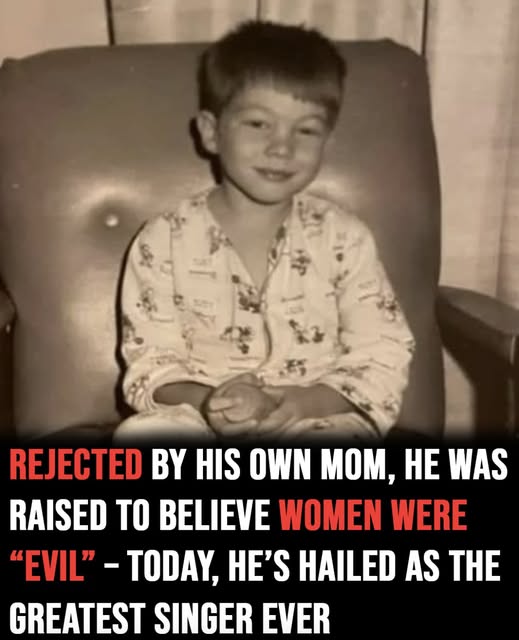
Long before he filled stadiums and topped global music charts, he was a child growing up in a small town in Indiana. Few could have predicted that this quiet Midwestern upbringing would produce one of the most recognizable voices in rock music history.
His early life was shaped by strict rules, emotional hardship, and instability. Raised in a household where fear and punishment were common, he endured experiences that would later influence both his personality and his songwriting.
Early Life Marked by Instability
Born in Lafayette, Indiana, in February 1962, he was named William. His mother was only 16 years old at the time, while his biological father was 20 and later described as troubled but charismatic. The couple separated when William was just two years old.
After the split, his biological father abducted him and allegedly subjected him to abuse before disappearing from his life. William never reconnected with him as an adult; his biological father was killed in Illinois in 1984.
His mother later married Stephen L. Bailey, who adopted William and renamed him William Bruce Bailey. For years, William believed Bailey was his real father, only learning the truth as a teenager — a revelation that deeply affected him.
A Strict Religious Household
The household William grew up in followed rigid religious beliefs. He attended a Pentecostal church multiple times each week and participated in church programs, including teaching Sunday school. Years later, he described the environment as restrictive and overwhelming.
Popular music, television, and other everyday forms of entertainment were frequently banned for being considered immoral. He has said women were portrayed negatively, and creative expression was discouraged. This strict upbringing left long-lasting emotional scars.
William has spoken publicly about being physically and emotionally abused by his stepfather. He also expressed lasting resentment toward his mother for allowing the abuse to continue — feelings that later became themes in his music.
School Years and Mental Health Struggles
Outside of home, school life offered little relief. By his early teens, William was known for his defiant behavior and outspoken nature. Former classmates recalled that he was often bullied and ridiculed for openly talking about his dream of becoming famous.
Despite the mockery, he remained determined. His behavior eventually led to a bipolar disorder diagnosis during his teenage years, as professionals attempted to understand his emotional volatility and rebellious actions.
He frequently expressed frustration with his hometown, once comparing life there to imprisonment. Yet through it all, music became his emotional outlet.
Finding Freedom Through Music
William began singing at an early age, performing in church choirs and family music groups. He later joined school choirs and studied piano, quickly standing out for his vocal power and stage presence.
Teachers remembered him as intelligent, charismatic, and capable of capturing attention instantly. However, after learning the truth about his biological father at age 17, his behavior grew more reckless.
He was arrested multiple times, serving short jail sentences and facing the possibility of serious legal consequences. Realizing he needed a change, he left Indiana and moved to Los Angeles in December 1982.
Reinventing Himself in Los Angeles
In Los Angeles, he immersed himself in the local rock scene, inspired by legendary artists such as Queen, Aerosmith, and Elton John. Determined to build a music career, he adopted the name Axl Rose, later legally changing it to W. Axl Rose.
In 1985, the groundwork for Guns N’ Roses was laid. After signing with Geffen Records in 1986, the definitive lineup came together: Axl Rose, Slash, Izzy Stradlin, Duff McKagan, and Steven Adler.
Their debut album, Appetite for Destruction, was released in 1987. Initially slow to gain momentum, the album exploded in popularity thanks to relentless touring and hit singles like “Welcome to the Jungle” and “Sweet Child o’ Mine.”
The album has since sold more than 30 million copies worldwide, earning its place as the best-selling debut album in U.S. history.
Fame, Conflict, and Lasting Impact
Axl Rose’s commanding vocals and uncompromising artistic vision made him one of rock music’s most influential frontmen. However, fame brought conflict. The late 1980s and 1990s were marked by band tensions, lawsuits, canceled performances, and media scrutiny.
Despite internal turmoil and long periods away from the spotlight, Rose remained a central figure in rock history. Guns N’ Roses was inducted into the Rock and Roll Hall of Fame in 2012, though Rose chose not to attend the ceremony.
In later years, the band reunited for highly profitable stadium tours, reaffirming their status as global music icons.
Personal Relationships and Privacy
Rose has kept much of his personal life private, though his early relationships were widely publicized. His marriage to Erin Everly, the inspiration for “Sweet Child o’ Mine,” was short-lived and troubled. She later accused him of emotional and physical mistreatment, allegations that were resolved through a private settlement.
Rose has stated that he chose not to have children due to the demands of his career and concerns about time and stability.
The Rock Legend Today
Even decades into his career, Axl Rose continues to command attention. In late 2025, he made headlines after an intense onstage incident during a concert in Buenos Aires — a reminder of the passion that has always defined his performances.
In interviews, Rose has acknowledged attending therapy to address anger, stress, and the long-term effects of childhood trauma.
From a difficult upbringing to global superstardom, his life story is a powerful example of resilience. By channeling pain into creativity, Axl Rose transformed personal hardship into music that continues to resonate with audiences around the world.