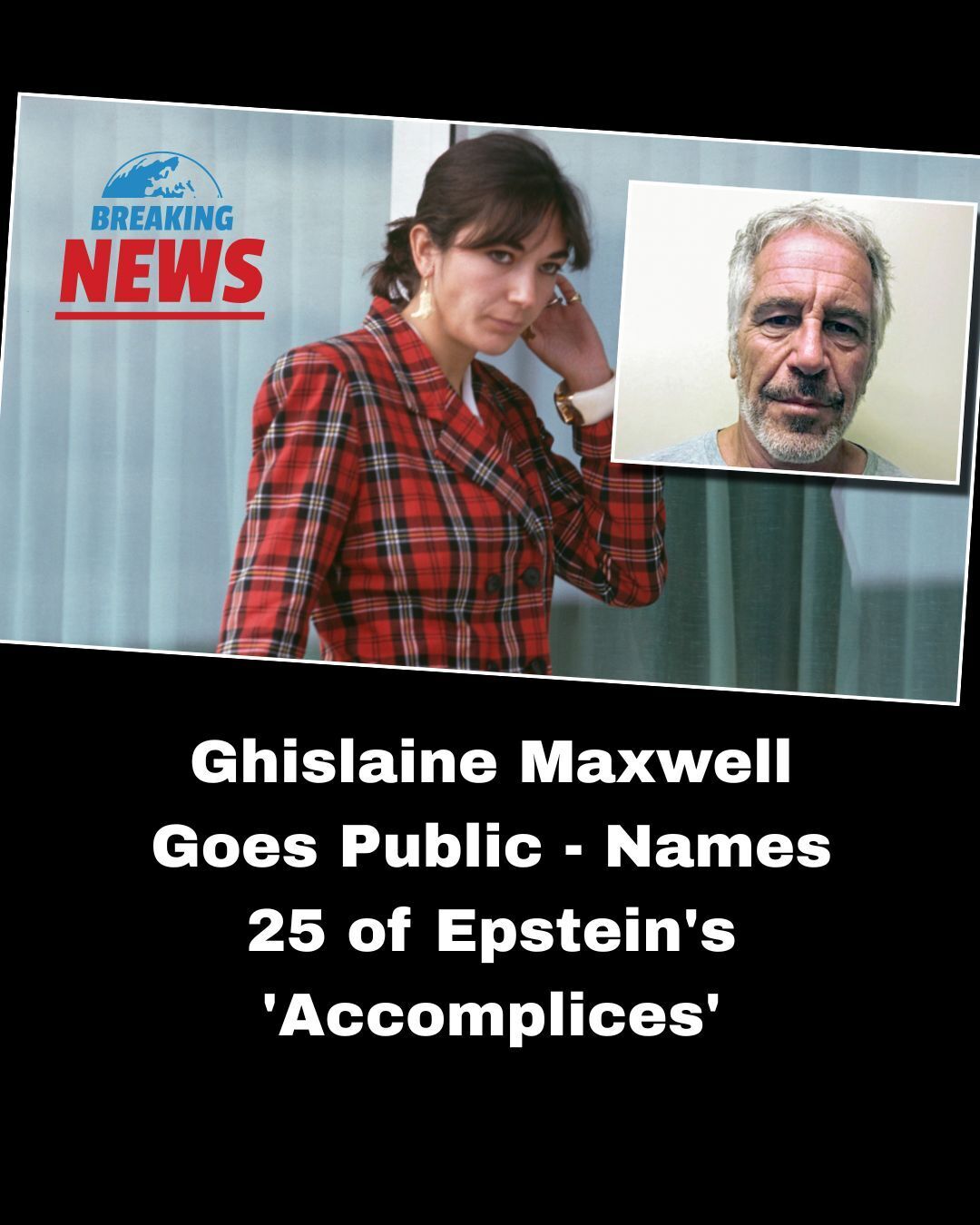
From inside a federal prison in Texas, Ghislaine Maxwell is mounting a new legal challenge that threatens to reignite public scrutiny of the Jeffrey Epstein case. The convicted sex trafficker has submitted handwritten court filings alleging that at least 25 individuals connected to Epstein reached confidential legal settlements that allowed them to avoid criminal charges and public exposure.
In her filings, Maxwell argues that while she became the central figure held accountable, a much broader group of powerful associates quietly escaped scrutiny. She claims these individuals—whom she describes as well-connected men and internal staff members—were able to resolve potential legal risk behind closed doors, leaving her as the sole focus of prosecution.
A Claim of Unequal Accountability
Maxwell’s argument centers on what she describes as a fundamentally uneven application of justice. According to her filings, federal authorities and civil attorneys pursued her aggressively while permitting others to negotiate private resolutions that kept their names out of court records and criminal indictments.
She further alleges that at least four individuals who worked closely within Epstein’s operation were either granted immunity or were never charged, despite allegedly possessing detailed knowledge of how the network functioned. Maxwell contends that information related to these individuals was not disclosed to her defense team, which she claims limited her ability to present a complete picture during her trial.
In her view, this selective approach created a narrative in which responsibility was narrowed rather than fully examined.
Timing Amid Release of Epstein Records
These claims arrive as the U.S. government faces increasing pressure to release long-sealed Epstein-related documents, including travel records, witness statements, and investigative materials. As portions of these records slowly become public, Maxwell is using the lack of full transparency to question how decisions were made about whom to prosecute.
Her filings echo a question that has persisted since Epstein’s death in 2019: who else was involved, and why were certain individuals never charged?
By pointing to alleged confidential settlements, Maxwell suggests that civil litigation tools—such as nondisclosure agreements and financial payouts—were used to prevent evidence from reaching criminal proceedings.
Legal Strategy and Public Reaction
Legal analysts note that Maxwell’s filings face significant hurdles. As a convicted defendant, her claims must meet a high legal standard to affect her sentence or conviction. Courts generally view post-conviction motions with skepticism, particularly when they involve shifting blame.
However, in the court of public opinion, her assertions have gained traction among those concerned about transparency, accountability, and the influence of wealth within the legal system. Each newly released document is now examined through the lens of her allegations, with redactions and sealed names fueling further debate.
Maxwell’s argument is not only legal but reputational. She is attempting to reframe the narrative from individual guilt to systemic failure, asserting that the investigation focused on visible figures while protecting others from consequence.
Impact on Survivors and the Broader Case
For survivors of Epstein’s abuse, Maxwell’s claims present a painful contradiction. On one hand, any information that could expose additional wrongdoing is viewed as a step toward broader justice. On the other, her effort to portray herself as unfairly singled out is seen by many as minimizing her own role and responsibility.
Advocates emphasize that regardless of broader networks or unresolved questions, Maxwell was convicted based on evidence presented at trial.
An Ongoing Debate Over Transparency
As more Epstein-related records are released, the tension between Maxwell’s claims and the government’s official account is likely to intensify. Whether her allegations ultimately change any legal outcomes remains uncertain, but their cultural and political impact is already evident.
Her filings have shifted public discussion away from whether she committed crimes—something a jury has already decided—and toward whether the full scope of the Epstein network was ever meaningfully addressed.
While Maxwell may spend the remainder of her sentence in prison, the questions she has raised about confidential settlements, prosecutorial discretion, and elite accountability are unlikely to disappear.
As documents continue to surface, each release now carries added weight—either reinforcing or undermining her assertions. In that sense, even from behind bars, Ghislaine Maxwell remains deeply entangled in the ongoing debate over whether the Epstein investigation revealed the whole truth, or only part of it.