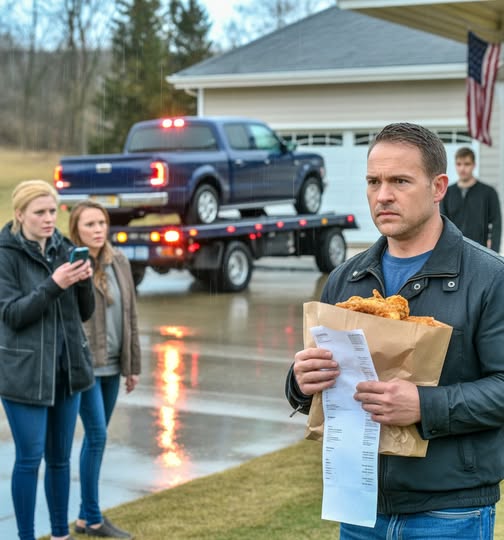
The December cold in Hendersonville was sharp enough to cut through the thin seams of my garage door. I stood in the shadows, holding a still-warm bag of fried chicken from Ingles, thinking only of a calm evening at home. That illusion shattered the moment I heard my stepson speak.
“Yeah, I already took care of the brake line,” Trevor said casually, as if he were ticking off an errand. “I’ll see you at his funeral tomorrow.”
The glow of his phone lit his face through a narrow crack in the door—relaxed, unbothered, frighteningly calm.
My stomach dropped. I listened as my wife of eleven years, Deborah, answered on speaker. She didn’t protest or panic. Instead, her voice was measured, almost relieved.
“Tomorrow,” she murmured. “Just don’t be careless.”
In that moment, I understood that the woman I had built a life with was quietly discussing my death with her thirty-two-year-old son.
I had always believed patience solved more problems than force. During my years as an HVAC technician, I taught younger workers that rushing only caused damage. That lesson became my lifeline. I slipped away into the night and sat in my car, shaking, breath fogging the windshield. In a town this small, I knew that calling the police without proof would backfire. Trevor would appear concerned. Deborah would cry and suggest I was unwell. Suspicion alone wouldn’t save me.
Instead, I called roadside assistance and had my silver F-150 towed away while it was still dark. As the truck was pulled onto the flatbed, something inside me broke—the final thread of the life I thought I had. I drove through the mountain roads to Asheville, heading to the one person who would take me seriously: Eugene Carter, Trevor’s biological father.
Eugene, a retired mechanic, wasted no time. He slid beneath the truck and emerged moments later, pale under the flashlight.
“This was intentional,” he said quietly. “Clean cut. No accident.”
Seeing the damage made the betrayal feel real in a way words never could.
With guidance from my attorney, Elizabeth Garrett, I began documenting everything. Fear means nothing in court—facts mean everything. While Deborah painted a story online about an “unstable husband” who had walked out, I was collecting evidence. A longtime friend helped me retrieve store footage showing Trevor purchasing the tool used days earlier, followed shortly by Deborah paying cash for related supplies.
The worst discovery came during a supervised visit to collect my belongings. Hidden inside a nightstand was a prepaid phone. It contained extensive messages between Deborah and an insurance agent, Glenn Hartman. They discussed a future together, funded by my life insurance and retirement savings after my “accidental” death.
Then I remembered the cameras. Months earlier, I had installed motion-activated security cameras in the garage after neighborhood thefts. When I reviewed the footage, my hands shook. The video showed Trevor entering the garage—then Deborah.
“You sure about this?” he asked.
“Do it properly,” she replied. “Make it look normal.”
I watched her stand there as he worked on my vehicle.
At the preliminary hearing, Deborah arrived dressed for sympathy—tissues in hand, cross around her neck. It didn’t last. The prosecution played the garage footage in open court. The room went silent. When Glenn Hartman testified about the insurance plan, Deborah broke, blaming her son. Trevor responded in kind, shouting that she had planned everything.
The judge remanded them both into custody without bail. Trevor later accepted a plea deal and received eighteen to twenty-five years. Deborah went to trial and was convicted on all charges, receiving fifteen to twenty years for conspiracy.
A year later, I live in a modest apartment in Asheville overlooking the French Broad River. I am fifty-nine now. The scars remain, but the fear does not. I’ve begun seeing someone—Margaret, a librarian who understands that trust takes time. We walk by the river often. The air feels honest.
I survived not because I fought back, but because I listened to that quiet inner warning and chose patience over panic. I let evidence speak when confrontation would have failed. Some battles aren’t won by force—they’re won by stepping aside, staying calm, and refusing to play along. The river keeps moving forward, and for the first time in years, so am I.