Although certain parasites can be associated with meat, appearance alone cannot determine whether an object is a parasite, connective tissue, or another foreign material.
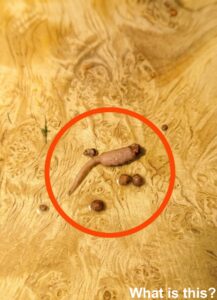
A pale, curled strand may simply be fat or connective tissue, but it is not possible to confirm that explanation without examining the material.
If something unusual appears in your ground beef, avoid eating it until you have identified what it is.
If you are concerned, take a clear photograph, preserve the sample if possible, and contact the retailer or local food-safety authority for guidance.
What Happens to Fat and Connective Tissue During Cooking?
Heat changes the structure of meat in several ways.
1. Fat begins to melt
As ground beef cooks, its fat softens and renders. Small pieces can separate from the meat and collect into irregular shapes.
2. Connective tissue contracts
Collagen-rich connective tissue changes with heat. Thin strands can tighten, shrink, and curl, sometimes producing unusual shapes.
3. Meat proteins change texture
Muscle proteins contract and change structure during cooking, affecting the appearance and consistency of the finished meat.
These natural changes explain why ground beef can sometimes contain pieces that look unfamiliar or unexpected.
Is It Safe to Eat Ground Beef With Strange-Looking Material?
This is where caution matters.
Not every unusual-looking piece in cooked meat indicates contamination. However, identifying something as harmless connective tissue based only on its appearance is not reliable.
The safest approach is to avoid eating meat when you cannot identify an unusual object.
 Up Next: Page 3 of 3
Ground beef should reach an internal temperature of 160°F (71°C), measured with...
Proper cooking is important, but it does not guarantee that every possible foreign object or contamination concern has been resolved.
Continue Reading