By the time I reached adulthood, my childhood no longer lived in clear memories of moments or faces. Instead, it existed through smell. Scents became my map, guiding me through the corridors of the past.
There was the harsh bite of diesel that lingered on my mother’s fluorescent work vest, the sterile sting of bleach embedded in our cramped kitchen floor, and the heavy, sour odor rising from trash bags piled behind the apartment dumpster. These smells became markers of time, each one tied to days spent following my mother through a life shaped by early mornings and physical labor.
She woke before sunrise to climb onto the back of a sanitation truck, lifting bins that outweighed common sense, while the city remained silent and asleep. That was her reality, though it had not always been the life she envisioned.
Once, she had been a nursing student, chasing a future she cared deeply about. She shared that dream with a husband who returned home from construction work exhausted but smiling, always steady, always present. He was her support, her laughter, her sense of balance. When he fell from a scaffold one afternoon, everything fractured.
In a single moment, certainty vanished. The home they had built together—along with their plans and spoken hopes—lost its foundation. She became a widow overnight, left with mounting bills, an infant she was still learning to know, and no clear direction forward.
The sanitation department was the only opportunity available. She accepted it without hesitation.
I doubt she understood how deeply that decision would shape both of us. The metallic crashes of bins and the mechanical groan of hydraulic lifts would become the background of my childhood, teaching lessons no classroom ever could.
Being raised alongside a garbage truck came with a label that followed me everywhere: “the trash lady’s kid.” In elementary school, the insults were blunt and loud. “Dirty.” “Smelly.” “Do you live in a dump?” they yelled, their voices echoing through hallways and playgrounds.
The name clung to me relentlessly.
As I grew older, the cruelty softened in volume but sharpened in intent. By middle school, it appeared in empty chairs beside me, muffled laughter behind my back, and friends quietly drifting away toward someone more acceptable. I learned that staying unnoticed was safer than standing up.
Lunch became a solitary ritual, eaten behind vending machines where no one looked twice. That hidden corner was my refuge, the only place where shame loosened its grip.
At home, I kept my silence. My mother’s weary smile, the way she rubbed her sore back after endless shifts, felt too fragile to burden with my pain. Watching her endure was enough.
Somewhere early on, I made a promise to myself. If she could carry the weight of the city on her shoulders—lifting dumpsters, absorbing judgment, sacrificing her body for my future—then I would carry her effort forward in my own way.
School became my answer. Every chapter read, every problem solved, every late night under a dim lamp became part of an unspoken agreement between us. While she sorted waste, I sorted dreams.
Then there was Mr. Anderson, my mathematics teacher. He noticed what others overlooked—the way I stayed after class, the margins of my notebook filled with repeated solutions, my pencil worn down to almost nothing. He challenged me beyond what I believed I could handle.
The problems stretched me, pushed me to frustration, yet every success brought a quiet affirmation: “You’re capable of more than you realize.” Slowly, belief took root.
His classroom became a sanctuary—numbers and logic shielding me from judgment. For the first time, I began to imagine a future larger than survival.
The night my scholarship acceptance arrived remains vivid. It covered tuition, housing, and basic expenses. I held the letter as if it might disappear, stunned by the weight of possibility in my hands.
Hope was no longer abstract. It was real, earned, and undeniable—a dawn breaking after years of darkness.
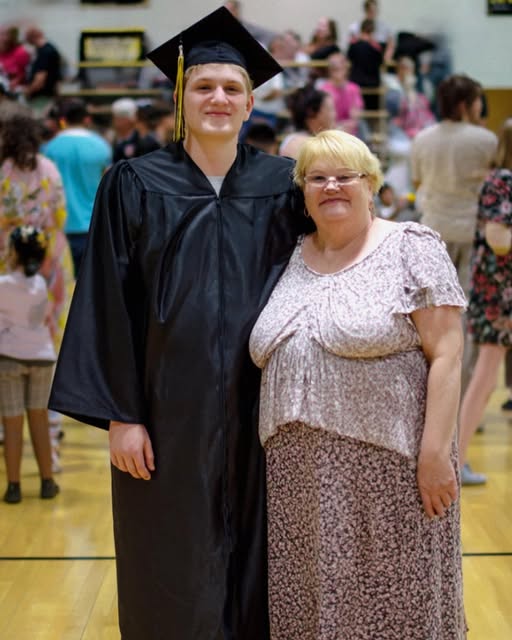
Graduation day arrived with an unexpected courage. Standing in the gymnasium, diploma in hand, I spoke honestly. I talked about isolation, about cruelty disguised as humor, about lunches eaten alone. I spoke about my mother—the woman many had dismissed—who worked before daylight and returned home drained yet loving.
Then I shared the scholarship, the opportunity that had lifted me beyond the limits others tried to impose.
The applause was overwhelming, but nothing compared to my mother’s expression. Pride shone through her tears, her posture softened by years of labor, her smile unbroken.
She had carried me through alleys and streets, through exhaustion and doubt. Now she saw proof that her sacrifices mattered.
That evening, we sat together at our small kitchen table, my diploma resting between us. Her hands bore the marks of years of work, her face the quiet history of resilience. In that moment, clarity settled in.
Being known as “the trash lady’s kid” had never been a mark of shame. It was a legacy—of endurance, humility, and love strong enough to withstand anything.
The world may dismiss certain work as dirty or insignificant, but through her, I learned what true cleanliness is. It is not about appearance, but about integrity. Not about status, but about commitment.
Cleanliness begins in purpose and shows itself through honest effort.
Throughout college, I carried that lesson with me. Late nights studying, balancing work and responsibility, pushing through moments that once seemed impossible—all of it was a tribute to her.
When I came home on breaks, she still woke before dawn, still climbed into the truck, still met each day with quiet determination. I watched with gratitude, knowing she had prepared me through example, not instruction.
She taught me that fairness is rare, judgment is common, but perseverance remains undefeated. Progress is not sudden—it is built slowly, through consistency and resolve.
By the time I finished college, I no longer hid my past. I spoke openly about it, without apology. I carried pride instead of embarrassment.
From her, I learned that dignity is earned daily, love is proven through sacrifice, and resilience is grown together—not alone.
Looking back, I understand that the world she lived in, once defined by diesel and refuse, was my first classroom. Every bin lifted, every street walked, every tired smile carried meaning.
Now, when I pass a city street and catch the familiar scent of diesel and trash, it does not sting. It reminds me of strength.
What once was meant to diminish me has become something I honor—a symbol of perseverance, devotion, and the power of quiet effort.
I did not inherit shame. I inherited resilience.
And through my mother, I learned that a life lived with honesty, sacrifice, and heart will always shine, no matter where it begins.