By morning, the thieves could be gone, leaving grieving families with the horrifying possibility that the bodies of their loved ones had been stolen.
Imagine burying your mother, father, child, or spouse, believing you had finally given them peace, only to discover that someone had secretly dug through the earth and taken their body away.
For many families, this was more than theft. It was a violation of dignity, faith, and the final promise they had made to the person they loved.
But the families were not powerless for long.
They began searching for ways to protect their dead. Some graves were covered with heavy stone slabs. Others were guarded by watchmen, while certain burial grounds installed protective structures around newly buried bodies.
And in some places, the answer was iron.
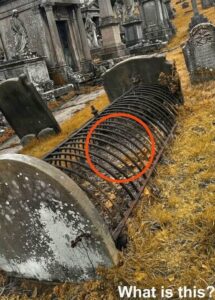
Heavy metal cages and reinforced frames were placed over graves, making it far more difficult for resurrection men to reach the bodies beneath them. These protective structures became known as mortsafes.
They were not designed to trap the dead inside. They were built to keep the living out.
Every bar, every bolt, and every heavy piece of iron served a purpose. What might look like an unsettling monument today was once a desperate family's last line of defense against people willing to disturb the dead for money.
And the most disturbing part?
These protections were often temporary.
Once enough time had passed for the body to decompose beyond the point at which it would be useful to anatomists, the mortsafe could be removed and reused to protect another grave. In some communities, families or groups of families shared these expensive devices, passing them from one burial to the next.
 Up Next: Page 3 of 3
Think about that for a moment.
A family would bury someone they loved, surround their grave with iron, and wait for the earth to do what they believed...
Continue Reading