Retaliation: Missiles Across the Region
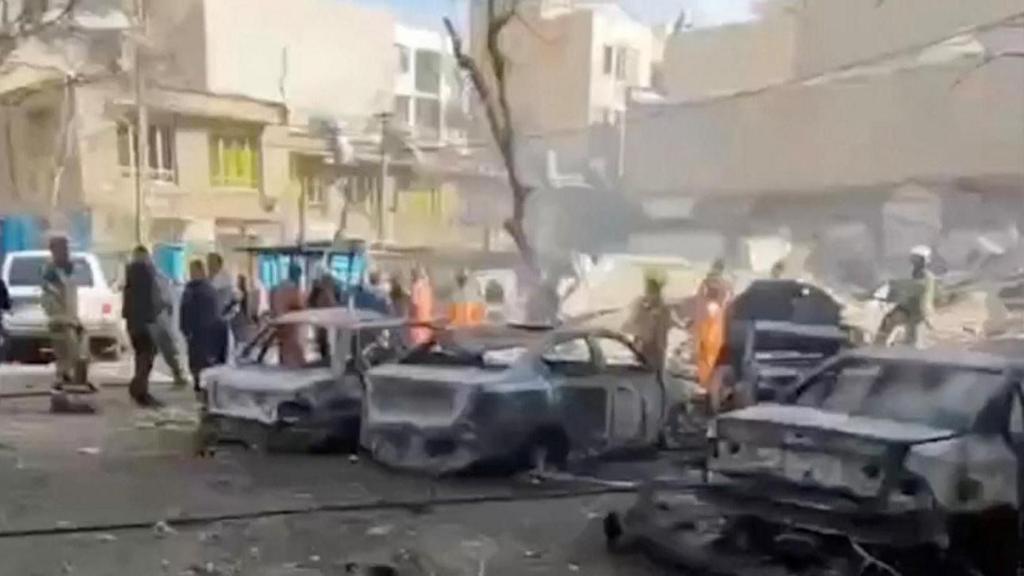
Within hours of the joint strikes, Iran’s Islamic Revolutionary Guard Corps (IRGC) launched a massive barrage of missiles and drones targeting U.S. military bases, Israeli military positions, and facilities in Gulf Arab states. Pentagon installations and air bases in Qatar, Kuwait, Bahrain, and other host nations were struck or targeted, according to official regional statements.
Though many of the incoming missiles were intercepted by allied air defenses, at least one fatality was reported in the United Arab Emirates after debris from an intercepted missile fell into a residential area. Officials in Bahrain and other Gulf states confirmed engagements with Iranian projectiles, underlining how deeply the conflict has spread beyond the initial battlefield.
International Repercussions and Diplomatic Strain
Global reactions to the crisis have been swift. Russia condemned the U.S.-Israeli strikes as an “unprovoked act of armed aggression,” demanding an immediate halt to the military actions and advocating for a UN Security Council meeting to address the growing crisis. Moscow’s statements highlighted fears of “humanitarian, economic, and possibly radiological catastrophe” if the conflict continues to spiral.
Meanwhile, several European governments called for restraint, urging all parties to adhere to international law and protect civilian lives. Emergency consultations among European Union foreign ministers are underway, reflecting deep concern over the potential for wider regional instability.
Tehran’s Stance and Warnings
Iranian officials have framed the joint U.S.-Israeli offensive as a blatant violation of the United Nations charter and vowed a “no-leniency” response against what they called foreign aggression. Tehran’s foreign ministry accused the two powers of attempting to derail diplomatic negotiations aimed at limiting Iran’s nuclear ambitions and hinted at further escalation if pressure continues.
State broadcasters in Tehran echoed the government’s rhetoric, proclaiming that “all American and Israeli assets and interests in the Middle East have become legitimate targets.” Iranian leaders have also urged civilians in major cities to remain vigilant, with reports of fuel queues and some residents leaving Tehran amid fears of continued strikes.
Crisis at Home and Abroad
Across the Middle East, normal life has been disrupted. Airspace closures in Iran, Iraq, and the UAE have grounded flights, while cities like Haifa in northern Israel experienced air-raid sirens as defenses activated against incoming fire. Security services globally, from capitals in the Gulf to major cities like New York, have heightened alerts in response to fears of extremist reprisals or terror attacks linked to the conflict escalation.
A Turning Point?
Analysts say the cycle of attack and retaliation marks a significant escalation in what has been a lengthy and complex confrontation between Tehran, Washington, and Tel Aviv — one that has endured intermittent flare-ups over nuclear ambitions, regional proxy wars, and long-standing geopolitical rivalries. While past clashes have seen waves of strikes and counter-strikes, the scale and breadth of the latest exchanges point to a potentially broader regional conflict, with serious implications for global security, energy markets, and diplomatic efforts aimed at de-escalation.
As tensions continue to mount and diplomatic efforts struggle to keep pace, the coming days will likely prove critical in determining whether the crisis abates or descends further into open confrontation.