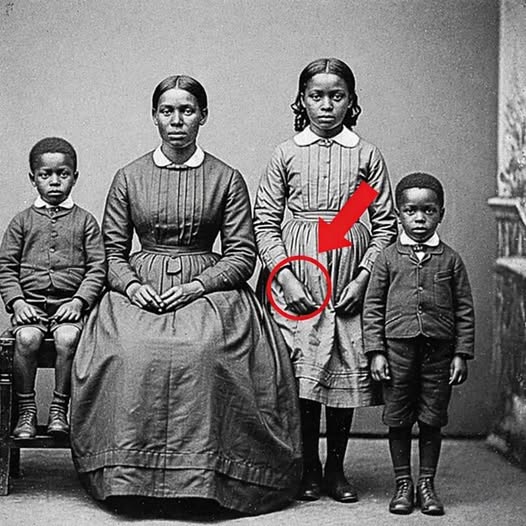
The passage of time has a curious way of flattening the edges of human suffering, turning the visceral realities of the past into the sterile curiosities of the present. For decades, a specific sepia-toned photograph dated 1872 sat undisturbed in various archives, an unremarkable relic of the nineteenth century. To the casual observer, it was merely a portrait of a Victorian-era family: a mother and father seated with practiced rigidity before a wooden backdrop, flanked by five children. Their clothing was stiff and formal, their expressions frozen into masks of solemnity by the long exposure times required by the cameras of the age. It was a picture of order, a quiet document of a domestic unit that seemed to blend seamlessly into the thousands of other anonymous family portraits of the post-Civil War era.
However, history is rarely as silent as it appears, and the truth often waits in the margins for a witness with the patience to look closer. That witness was Sarah Mitchell, a dedicated historian and archivist in Richmond, Virginia. While working on a high-resolution digitization project intended to preserve local historical records, Sarah found herself staring at the 1872 portrait on a large monitor. As the pixels sharpened and the textures of the old paper became visible in microscopic detail, her focus drifted from the stoic faces of the parents to the smaller figures of the children. It was then that she noticed a detail that would transform the photograph from a piece of genealogy into a haunting piece of forensic evidence.
Continue reading next page…