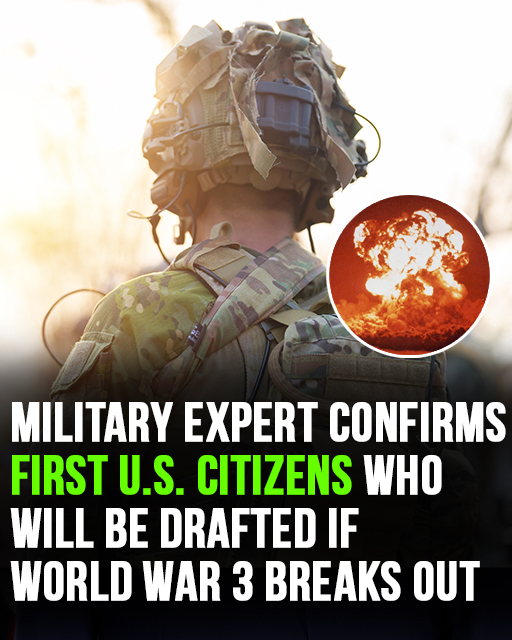
Under current federal law, nearly all male U.S. citizens and male immigrants—regardless of their legal status—are mandated to register with the Selective Service within a thirty-day window of their eighteenth birthday. While the system allows for late registration until a man turns twenty-six, the consequences of non-compliance are severe. Failing to register is a felony punishable by a fine of up to $250,000 and five years in federal prison. Beyond these legal penalties, a failure to register can result in a lifetime of bureaucratic hurdles, including being barred from federal student aid, government-sponsored job training, and many public-sector careers. For immigrants, it can lead to a five-year delay in citizenship proceedings. This registration serves as the master list from which a future draft would be drawn.
Should a global crisis escalate to the point of World War III, the mechanism for reinstatement is structured and rapid. The process would begin in the halls of Congress, where lawmakers would need to amend the Military Selective Service Act to grant the president the authority to begin conscription. Once that legal threshold is crossed, the Selective Service System (SSS) moves from a data-collection agency to an operational one. The centerpiece of this activation is the national lottery.
The draft lottery is designed to be a transparent, high-stakes public event, likely live-streamed to every corner of the nation. During the lottery, birthdays are drawn at random to establish the priority order for induction. According to established SSS guidelines, the primary group targeted for service are those whose twentieth birthday falls within the calendar year of the lottery. This “age twenty” cohort is the first to receive induction orders. If the military’s personnel requirements are not met by this group, the lottery expands in ascending order to those aged twenty-one, twenty-two, twenty-three, and so on, up to the age of twenty-six. Younger men, specifically those aged eighteen and nineteen, would not be called until the entire twenty-to-twenty-five age bracket has been exhausted.
Once a young man’s lottery number is called, the transition from civilian to potential soldier is swift. He is ordered to report to a Military Entrance Processing Station (MEPS). Here, the individual undergoes a battery of physical, mental, and moral evaluations to determine fitness for duty. In times of peace or limited conflict, the military maintains strict standards regarding health, education, and criminal history. However, military experts and former combat personnel warn that these standards are flexible. During a national emergency or a large-scale global war, the military’s “manpower needs” often take precedence over traditional disqualifiers.
A former Army combat medic recently highlighted this reality, noting that if the government becomes desperate for boots on the ground, traditional exemptions may vanish. Individuals who are overweight or do not meet standard physical training requirements might still be inducted and put through rigorous “fat camps” to reach fitness goals. Similarly, those without high school diplomas or individuals with misdemeanor and even certain felony convictions could find themselves drafted under “moral waivers” if the shortage of personnel becomes acute. The Selective Service aims to deliver the first group of inductees to the Department of Defense within just 193 days of a crisis being authorized by law, leaving little time for those selected to settle their affairs.
A significant point of modern debate remains the gender-specific nature of the draft. Currently, only men are required to register. While there have been sporadic legislative discussions about expanding the Selective Service to include women—reflecting the fact that women now serve in all combat roles within the volunteer force—no such change has been enacted into law. This means that, as the law stands today, the front lines of a future conscripted force would be composed entirely of young men.
The prospect of a draft is no longer a theoretical exercise relegated to history books. As geopolitical tensions simmer in Eastern Europe, the Middle East, and the Pacific, the conversation around national service has gained a renewed sense of urgency. The Selective Service System exists as a “insurance policy” for the nation’s defense, a system designed to scale the American military from hundreds of thousands to millions in a matter of months. While the United States currently relies on the professionalism of its all-volunteer force, the legal blueprints for a draft remain etched in the federal code, waiting for a moment of crisis to transform a generation of twenty-year-olds into the next wave of American defenders. Whether for deterrence or active mobilization, the order of precedence is clear, and for those in the eighteen-to-twenty-five demographic, the lottery of birth dates remains the most significant variable in their future should the world once again descend into total war.