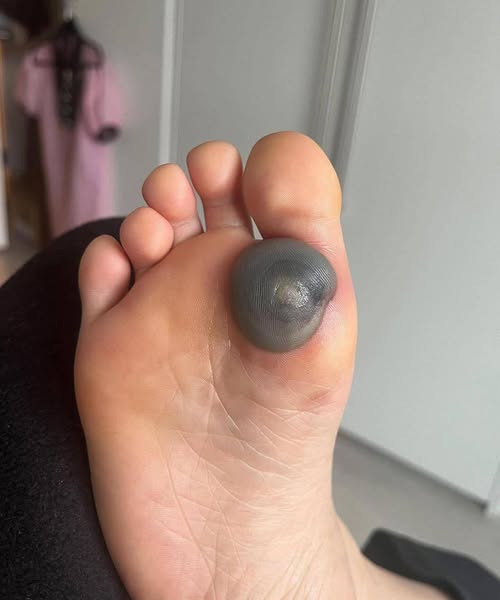
Discovering a dark, blood-filled blister on your child’s skin can be an alarming sight. One moment, their skin appears perfectly normal, and the next, a swollen, purple-black bubble has surfaced, looking almost like a tiny storm trapped beneath the skin. As a parent, it’s natural to feel a mix of fear and uncertainty. You might try to reassure yourself that it’s “just a blister,” yet its deep color and tense appearance suggest something more concerning. The instinct to fix it clashes with the worry that any interference could worsen the situation.
To manage these injuries properly, it helps to understand what’s happening beneath the surface. A blood blister is a type of subepidermal hematoma. Unlike a standard friction blister, which contains clear fluid, a blood blister forms when trauma ruptures small capillaries under the skin without breaking the outer layer. The result is a raised pocket of blood trapped beneath intact skin—a bruise that has no outlet.
Most blood blisters occur from mechanical trauma. Common causes include slamming a finger in a door, wearing tight shoes that pinch the toes, or repeated friction on the palms from sports or tools. Children experience these injuries in an instant: a slip on the playground or an awkward grip on a bicycle handlebar is enough. Because the skin remains unbroken, the body naturally keeps the fluid contained and sterile, allowing the healing process to begin safely.
Blood blisters can also appear inside the mouth. Oral blisters, known as angina bullosa haemorrhagica, may show up on the tongue, cheeks, or roof of the mouth. They are usually triggered by biting, dental appliances, or eating hot or hard foods. Although alarming in appearance, these are generally harmless and caused by the same mechanical forces as blisters on the skin.
The most important rule for treating a blood blister is simple: do not pop it. The intact skin acts as a natural barrier against infection. Puncturing it exposes the underlying tissue to bacteria, transforming a contained injury into an open wound.
Instead, care should focus on gentle protection. Clean the area with mild soap and water, pat it dry, and cover it loosely if it’s in a location prone to friction, such as the hands or feet. Specialized “donut” pads can relieve pressure from the blister’s center. Over one to two weeks, the body will naturally absorb the trapped blood. The dark color gradually fades to brown, and the skin eventually peels away to reveal healthy tissue.
While most blood blisters are minor, frequent or unexplained occurrences may indicate an underlying health issue. Conditions such as diabetes, circulation problems, or clotting disorders can make blood vessels more fragile and slow the healing process.
Parents should also watch for warning signs of infection. Heat, redness spreading from the blister, pus, severe pain, or fever all require medical attention. Similarly, multiple blisters, clusters, or the appearance of tiny purple spots (petechiae) elsewhere on the body warrant a prompt pediatric evaluation.
Doctors can perform blood tests to check for platelet or clotting problems and may assist with professional drainage if a blister becomes overly large or tense.
Ultimately, a blood blister—even one that looks alarming—is usually the body’s way of isolating and repairing an injury. Protecting it and allowing it to heal naturally ensures the best outcome. These spots also serve as reminders to remain attentive to your child’s overall health. Skin acts as an early warning system, and a sudden blood blister is an opportunity to observe, assess, and safeguard the body’s vital systems.
Whether it resolves quietly or recurs as a pattern, the appearance of a blood blister is a call to care, vigilance, and respect for the body’s remarkable healing processes.