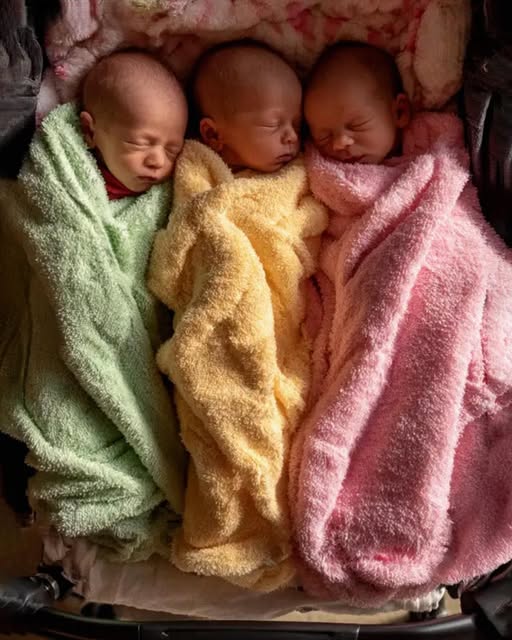
People often describe parenthood as something that reshapes your life, but no one warns you that sometimes the transformation begins quietly—with lukewarm coffee and a few words that fracture everything you thought was solid. At twenty-six, I was still wrapped in the confidence of early adulthood. I believed I had built something durable: a steady career, a nursery painted in calming colors, and a fiancée named Nancy, the person I trusted above all others. We had grown together since college, assembling our future from ordinary routines and late-night conversations about the adults our children might one day become. When we learned she was pregnant with triplets, fear set in—but it was the kind of fear I was willing to face, as long as we faced it together.
That future unraveled just six weeks after our daughters were born. One unremarkable morning, Nancy kissed my forehead, said she was heading to work, and never came back. At first, my thoughts spiraled toward catastrophe—accidents, hospitals, worst-case scenarios. I called her phone repeatedly until it went dead. Her workplace confirmed she never arrived. The panic shifted into something colder when I moved the coffee maker and noticed a folded note. It contained no apology, no mention of our children, no explanation—only a single sentence: “Please don’t look for me.”
The weeks that followed passed in a haze of police visits, missing-person paperwork, and an unbearable quiet. There were no signs of violence, no missing money, nothing to chase. It was as though Nancy had simply removed herself from existence. While authorities eventually closed the case, I couldn’t afford to stop functioning. I had three newborn daughters—Lizzie, Emmy, and May—who depended on me completely. My parents stepped in without discussion, taking over night feedings and endless laundry. I remember sitting in the rocking chair at impossible hours, all three babies pressed against me, promising them safety even when I wasn’t sure how to keep that promise.
Time passed, and the years reshaped me. I didn’t just become “exhausted”—I became someone built by responsibility. Lizzie grew into a fearless, outspoken presence. Emmy became thoughtful and observant, expressing herself through notebooks full of drawings. May was my constant reassurance, gripping my hand at night as if afraid I might disappear the way her mother had. They became my entire universe. I eventually stopped trying to make space for romantic relationships; raising them wasn’t a chapter of my life—it was the whole story.
Nine years later, on New Year’s Eve, our home smelled of baked pastries and excitement. The girls were debating fireworks when a knock interrupted everything. Standing outside, snow melting into her coat, was Nancy. Older, worn down—but unmistakably her. I stepped outside and closed the door behind me, unwilling to let her disrupt the life we had carefully built.
She spoke in rushed explanations—about panic, about feeling trapped, about a hospital worker named Mark who helped her escape. She described years spent overseas, claiming control and isolation, a life she framed as punishment. I listened without reacting. When she said she wanted to see “her” daughters, I corrected her. She had missed everything that mattered. Her reply was sharp and calculated: “Then we’ll let the court decide.”
The lawsuit arrived days later. She was requesting shared custody, packaged in formal language that ignored nearly a decade of absence. I knew the girls deserved honesty. When I told them the truth—that the woman who gave birth to them wanted to meet—they responded with caution, not fear. We met in a coffee shop, neutral and tense. Nancy tried casual conversation, but the girls were not fooled. Emmy asked the question none of us had ever escaped: “Why did you leave us?” The answer—that she panicked—rang hollow. Lizzie calmly stated that they had grown up just fine without her. May stayed close to my side. They agreed to limited contact, only if I was present.
The court saw what she wouldn’t admit. Her request was denied. I retained full custody, and she was ordered to pay years of unpaid child support. The reality of accountability drained the resolve from her face. Shortly afterward, she disappeared again, sending one final message saying she had made a mistake returning. I deleted it.
When I told the girls she wouldn’t be coming back, there was no devastation. Lizzie smiled and said, “It’s okay, Dad. We have you.” That sentence alone justified every sleepless night, every sacrifice since I was twenty-six.
That weekend, I chose joy. We went to the nail salon—lavender for Emmy, red for Lizzie, glitter for May. Then I surprised them with a trip to Disneyland. We drove through the night, music low, snack wrappers everywhere, the girls asleep in the back seat.
Watching fireworks light up the sky, I understood something clearly for the first time. Nancy leaving had broken me—but it had also given me a life I wouldn’t trade for anything. I raised three strong, compassionate, and grounded young women who knew that love isn’t about DNA or words written on paper. It’s about presence. About showing up, every day.
What began with a note hidden under a coffee maker ended with something unshakable. We weren’t missing anything. We were whole—not because of who walked away, but because of who stayed.