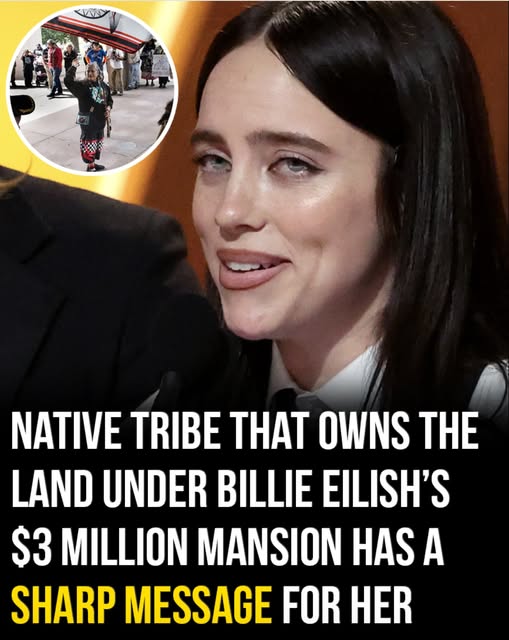
The Native American tribe whose ancestral territory includes the land beneath Billie Eilish’s Los Angeles mansion has issued a response following comments the singer made during her recent Grammy Awards acceptance speech.
Eilish, 24, took home Song of the Year for Wildflower at the February 1 ceremony and used her time on stage to speak about immigration and federal enforcement agencies. Standing beside her brother and longtime collaborator Finneas, the Grammy-winning artist made a statement that quickly sparked nationwide debate.
While expressing gratitude for the award, Eilish said she believed “no one is illegal on stolen land,” a remark referencing the history of colonization in North America. She also voiced strong opposition to U.S. immigration enforcement agencies, reinforcing views she has shared publicly in the past.
Public Reaction Divided
The comments drew widespread attention across social media and news platforms. Supporters praised Eilish for using her global platform to highlight immigration issues and Indigenous history. Critics, however, questioned the remarks in light of the fact that her estimated multi-million-dollar Los Angeles home sits on land historically inhabited by the Tongva (Gabrielino-Tongva) people.
In response, a spokesperson for the Tongva tribe addressed the situation in a statement to The Daily Mail.
“As the First People of the greater Los Angeles basin, we recognize that Ms. Eilish’s home is located on our ancestral territory,” the spokesperson said. “While she has not contacted our tribe directly regarding her property, we do appreciate moments when public figures help bring visibility to the true history of this country.”
The tribe confirmed it had reached out to Eilish’s representatives to express appreciation for her acknowledgment, while also emphasizing the importance of naming the Tongva people specifically in conversations about Southern California.
“It is our hope that future discussions clearly reference the Gabrieleno Tongva people, so the public understands that the greater Los Angeles area remains our ancestral land,” the statement added.
Calls for Action Grow Online
As the story gained traction, some commentators and political figures went further, calling on Eilish to take tangible action aligned with her remarks. Suggestions ranged from returning the property to the tribe to using the home to house migrants—ideas that quickly fueled online debate.
Several conservative commentators and lawmakers criticized what they described as a contradiction between Eilish’s views and her lifestyle, pointing to celebrity wealth, luxury real estate, and private security as examples.
Others responded with sarcasm, questioning whether high-profile entertainers living in gated mansions were disconnected from the realities faced by everyday Americans.
Florida Governor Ron DeSantis and other public figures also weighed in, echoing arguments that land acknowledgments should be accompanied by concrete steps if they are to be meaningful. Tesla CEO Elon Musk reacted briefly online, signaling agreement with those critiques.
A Broader National Conversation
Eilish has consistently spoken out against immigration enforcement practices, alleging mistreatment of migrants and criticizing high-profile raids. Her Grammy remarks came amid renewed national debate over immigration policy, border enforcement, and the role of federal agencies.
The discussion now extends beyond celebrity culture, touching on Native American land rights, celebrity activism, immigration law, and the responsibilities of public figures. While opinions remain sharply divided, the exchange has once again placed Indigenous history and modern political issues at the center of the national conversation.