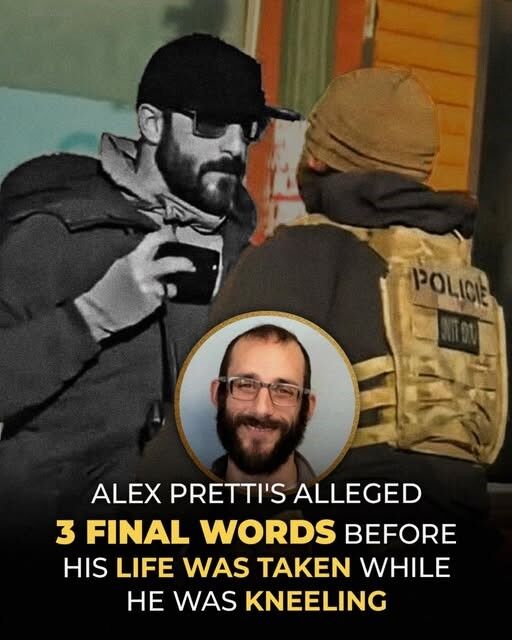
The streets of Minneapolis — a city often at the center of national conversations about public safety and civil rights — became the scene of another devastating loss. The death of Alex Pretti, a 37-year-old medical professional, has left a family grieving and a community demanding answers, as officials and legal experts examine what happened in the moments leading up to the fatal encounter.
As cellphone footage circulates online and official statements are analyzed, sharply different versions of events have emerged. What remains beyond dispute is that a man known for saving lives lost his own during a chaotic confrontation involving federal immigration agents.
A Life Dedicated to Healthcare and Service
By profession, Alex Pretti was an intensive care unit nurse at the Minneapolis VA Hospital. His days were spent caring for critically ill patients, many of them military veterans, in an environment defined by urgency, precision, and compassion.
Colleagues recall him as steady under pressure and deeply committed to patient care. His family describes a man who believed service didn’t need recognition — it was simply a responsibility. That philosophy guided his work in medicine and his interactions in daily life, according to those closest to him.
He was not known as someone who sought attention or conflict. Instead, he was widely regarded as calm, dependable, and motivated by concern for others.
What Led to the Fatal Encounter
The confrontation occurred during a federal immigration enforcement operation on a Minneapolis street. According to witnesses, tensions escalated quickly as a crowd formed and voices were raised.
Family members and bystanders who reviewed available video footage say Pretti stepped forward after seeing a woman pushed amid the commotion. They maintain his actions were consistent with his instincts as a nurse — moving toward someone who appeared at risk, rather than away from the situation.
Federal authorities, however, have presented a different account.
Conflicting Narratives and Video Evidence
Investigators stated that Pretti posed an immediate threat to officers and was armed, a claim that sits at the center of the ongoing legal and public debate.
Multiple bystander videos show a fast-moving and confusing scene. In several clips, Pretti appears to be holding a dark object, which supporters say was a cellphone. The footage does not clearly show him aiming or pointing a firearm. In one widely shared video, he appears to be on or near his knees when shots are fired.
Federal officials caution that video recordings do not capture the full context officers experience in high-risk situations, noting that split-second decisions are made based on perceived threats that may not be obvious on camera.
Civil rights advocates and legal analysts, however, argue that the footage raises serious questions about whether lethal force was justified.
Expert Analysis Adds Complexity
A neuroscientist later weighed in on a specific movement seen just before the shooting — Pretti reaching toward his back pocket. While law enforcement may interpret such a gesture as reaching for a weapon, behavioral science experts note it can also be a reflexive response under stress.
According to these experts, such movements can result from a startle response or an attempt to retrieve identification or a phone, particularly when someone is trying to calm a situation or document an encounter. This perspective has added further complexity to the investigation into use-of-force decision-making.
Earlier Incident Raises Additional Debate
Public attention has also focused on video from an encounter involving Pretti and federal agents approximately eleven days earlier. In that footage, he appears visibly frustrated and is seen kicking a vehicle’s taillight.
Critics argue the incident suggests a pattern of confrontational behavior. Supporters counter that it reflects emotional distress over aggressive enforcement tactics in his neighborhood and should not be used to justify a later fatal outcome.
They emphasize that one moment of anger does not erase years of professional service or define a person’s character.
Impact on the Community and Healthcare Colleagues
The death has deeply affected those who worked alongside Pretti, including nursing students he helped train. Former trainees describe him as a patient mentor who emphasized calm decision-making in high-pressure environments.
For them, the portrayal of Pretti as a violent aggressor is difficult to reconcile with the person they knew — someone who taught that staying grounded could save lives.
Ongoing Federal Review and Search for Accountability
As the investigation proceeds, involving federal authorities and forensic review, Minneapolis once again finds itself confronting questions about law enforcement accountability, community trust, and the balance between enforcement and escalation.
The final moments of Alex Pretti — including what he may have tried to say or do amid the chaos — remain unclear. What is certain is that his death has become part of a broader national discussion around public safety, civil liberties, and federal oversight.
For his family, the focus remains on preserving the truth of who he was in life, not just how he died. They hope his legacy will reflect his commitment to healing, service, and human dignity — rather than being reduced to fragmented video clips and competing narratives.
As officials work toward conclusions, many are calling for clarity that fully accounts for both the facts of the incident and the life that was lost.