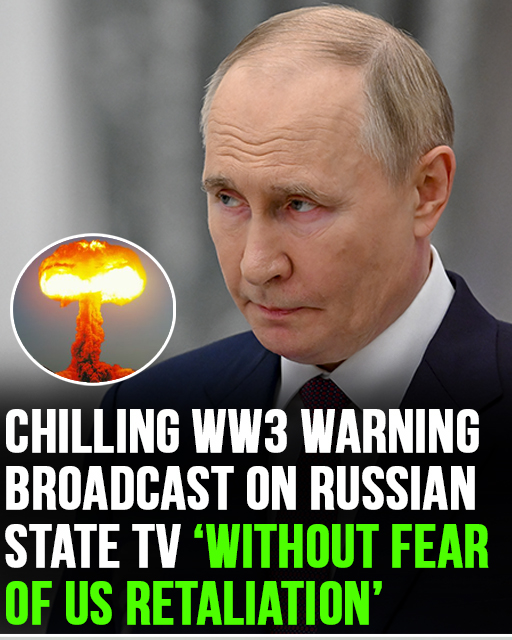
As geopolitical tensions continue to strain relations between the United States and its European partners, concerns about global security and the risk of a wider conflict are increasing. Russian state media has openly highlighted the growing divide, with commentators suggesting that Moscow could act militarily across Europe without fear of a response from Washington.
The relationship between the U.S. and its European allies has faced renewed pressure over the past year, largely driven by President Donald Trump’s repeated criticism of long-standing international alliances. His public skepticism toward NATO and its 32 member nations has raised questions about the future of collective defense and transatlantic cooperation.
Speaking to the Associated Press on January 20, Trump insisted that NATO had improved during his leadership. “I’ve made NATO much stronger,” he said, while simultaneously emphasizing the alliance’s reliance on U.S. support. “Whether you like it or not, NATO is only as good as we are. Without us, NATO is not very strong.”
Doubts About Alliance Commitments
One day later at the World Economic Forum in Davos, Trump again stirred controversy by questioning whether NATO allies would support the United States during a crisis, despite the U.S. being one of the alliance’s founding members.
“I know we would come to their rescue,” Trump said, according to the BBC, “but I really do question whether they would come to ours.”
This uncertainty has unsettled European leaders, especially as NATO’s collective defense clause—Article 5—depends heavily on trust and mutual assurance among members.
Controversial Proposals and Growing Friction
Trump’s criticism of NATO has been ongoing, but it intensified in Davos when he revived a disputed proposal involving Greenland. He called for renewed discussions about U.S. acquisition of the territory, arguing that it could strengthen global security rather than weaken it.
“I’m seeking immediate negotiations,” Trump said, claiming such a move would enhance NATO’s overall defense posture. He also repeated his view that the United States has been “treated very unfairly by NATO.”
While Trump stated he would not use military force to pursue the idea, his comments left European allies uneasy. He remarked that the U.S. could act decisively if it chose to, describing American power as “frankly unstoppable,” though he emphasized he had no intention of using force.
Backlash Over Military Contributions
Tensions escalated further after Trump criticized NATO’s role in Afghanistan during an interview at Davos. He suggested allied forces stayed away from frontline danger, comments that were widely challenged by verified military data.
According to publicly available figures, thousands of NATO troops—including hundreds from the United Kingdom and other European nations—lost their lives during the conflict. British Prime Minister Sir Keir Starmer condemned Trump’s remarks as “insulting and frankly appalling,” citing the emotional toll on families of fallen soldiers.
Although Trump later praised British troops, no formal apology followed.
Russian Media Exploits the Divide
Against this backdrop of strained international relations, Russian state television has amplified its messaging. Kremlin-aligned broadcaster Vladimir Solovyov stated on air that Russia could target “any part of Europe” without concern over U.S. retaliation, suggesting that Washington may no longer fully back NATO.
Solovyov claimed that shifting U.S. foreign policy could leave Europe isolated, portraying internal Western disagreements as a strategic opening for Moscow. He also accused Western governments of escalating tensions by continuing support for Ukraine.
While European nations remain protected under NATO’s collective defense framework, repeated public doubts about alliance unity have fueled uncertainty. Analysts note that such rhetoric from Russian media reflects how these divisions are being interpreted—and potentially exploited—on the global stage.
A Critical Moment for Global Stability
Experts in international relations warn that unity among allies is a key pillar of global security. As geopolitical rivalries intensify, mixed messaging around defense commitments can heighten instability and embolden adversarial narratives.
The situation underscores the importance of diplomatic clarity, alliance cohesion, and consistent foreign policy leadership in preventing escalation during an already volatile period in global affairs.