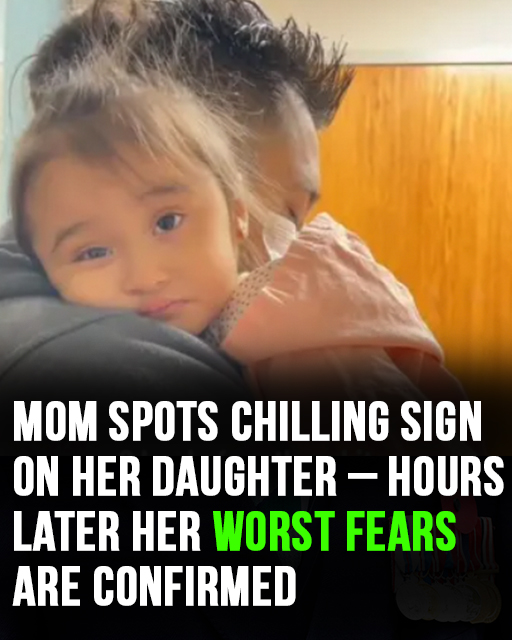
A mother’s intuition turned out to be critical after she noticed a subtle but unsettling change in her young daughter — a decision that may have saved the child’s life. Just hours later, the toddler was unconscious in a hospital intensive care unit, battling a serious medical emergency.
Nearly three years ago, Stacy, a North Carolina mother, returned home from work expecting a normal evening. Instead, she immediately sensed something was off with her 3-year-old daughter, Lany.
As the family got ready to leave for dinner, Lany appeared unusually withdrawn and exhausted — not in the typical way a toddler might act after a long day.
“She wasn’t just tired,” Stacy later explained in an interview. “Her energy was completely different.”
The child’s eyes appeared glassy and heavy, as if she had been crying, and her expression seemed distant. Nothing dramatic had happened, but the change was significant enough to alarm her mother.
Just before leaving the house, Lany suddenly stopped, sat down near the door, and appeared unable to continue.
“She didn’t seem to have the strength to move,” Stacy recalled. “Her eyes weren’t focused, and although she responded when we spoke to her, it felt like she wasn’t really there.”
Trusting a Parent’s Instinct
Rather than brushing it off, Stacy and Lany’s father, Pablo, trusted their instincts and immediately took their daughter to the emergency room.
“I just knew something was wrong,” Stacy shared in a social media post. “Even her dad, who usually thinks I’m overreacting, agreed. We didn’t want to take any chances.”
At the hospital, doctors initially suspected Lany might have ingested something that caused drowsiness. However, when the toddler repeatedly complained of severe head pain, medical staff ordered further testing.
Then, the situation suddenly worsened.
A Rapid Medical Emergency
While waiting for results, Lany began having a seizure.
“Everything escalated so fast,” Stacy said. “Within seconds, doctors and nurses rushed in. Seeing her seize while connected to oxygen was one of the most terrifying moments of my life.”
After the seizure, Lany remained unconscious for nearly six hours. Doctors quickly determined she needed to be airlifted to a specialized pediatric hospital for emergency care.
Because several specialists needed to treat Lany during the flight, her parents were unable to travel with her.
“When we arrived later, she was taken straight to the ICU,” Stacy recalled. “There were doctors everywhere, running tests and asking questions. All I could say was, ‘She was fine… and then she wasn’t.’”
A Devastating Diagnosis
Doctors soon delivered devastating news: Lany had suffered a major brain bleed.
Medical staff explained that they planned to place her in a medically induced coma to protect her brain while they searched for the cause of the seizure and hemorrhage.
As preparations were underway, Stacy and Pablo faced another emotional blow. They were questioned by both doctors and law enforcement as part of a standard investigation to rule out traumatic injury.
“That was heartbreaking,” Stacy said. “Being questioned like that while your child is critically ill was overwhelming.”
A Small Miracle
Just moments before doctors moved forward with inducing the coma, something unexpected happened.
“Suddenly, she woke up,” Stacy recalled. “She started crying and calling for us.”
Because Lany was responsive, doctors decided not to proceed with the coma. While it was a positive development, the emotional toll remained immense.
“Watching your child suffer while being unable to help is every parent’s worst nightmare,” Stacy said. “I felt terrified, powerless, and broken — all at once.”
The Cause Revealed
The following day, an MRI finally provided answers.
Doctors diagnosed Lany with a cavernoma — a rare condition involving an abnormal cluster of blood vessels in the brain. These malformations have thin walls that can leak or rupture, potentially causing seizures, brain bleeds, or stroke-like symptoms.
In Lany’s case, the cavernoma had filled with blood and ruptured, triggering both the seizure and hemorrhage.
“Finally, we had an explanation,” Stacy said. “It was overwhelming, but also a relief. We knew it wasn’t something we caused or missed. It was something she was born with.”
Recovery and Ongoing Care
Surgery was considered, but because the cavernoma was located near the area of the brain responsible for vision, the risks were significant. After consulting multiple specialists, the family chose careful monitoring instead.
Lany was placed on anti-seizure medication, which has been highly effective.
“She hasn’t had a single seizure since,” Stacy shared. “She has annual MRIs and sees an amazing pediatric neurologist. She’s healthy, happy, and truly thriving.”
Now several years later, the family remains hopeful that Lany may be able to stop medication in the future.
A Mother Changed Forever
Looking back, Stacy says the experience completely reshaped how she approaches parenting and child health.
“I no longer assume that something serious will be obvious,” she said. “I’ve learned to trust my instincts, speak up, and advocate fiercely for my child.”
She added that being a parent sometimes means pushing for answers, seeking second opinions, and asking difficult questions.
“This experience showed me a strength I didn’t know I had,” she said. “My job is to protect her — and I take that seriously.”