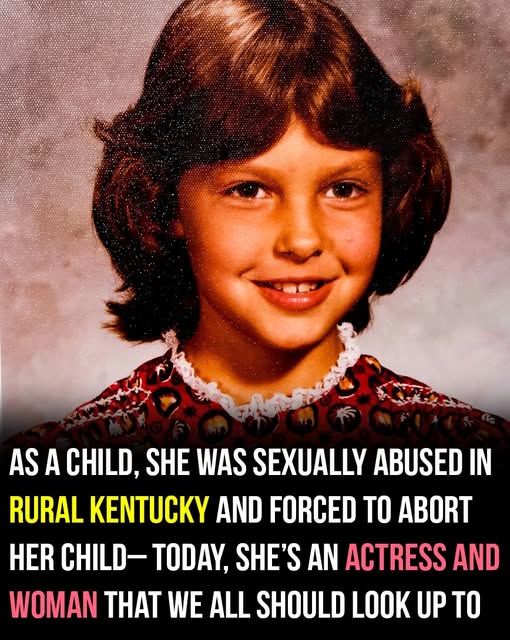
Ashley Judd’s life unfolded under the weight of a famous surname, yet from an early age she resolved not to live as a reflection of anyone else’s success. Known publicly as the daughter of country music legend Naomi Judd and the half-sister of Wynonna Judd, Ashley’s personal journey has been shaped far more by endurance, self-determination, and moral conviction than by celebrity lineage.
Born on April 19, 1968, in Los Angeles, Ashley entered a family that would soon fracture. Her father, Michael Ciminella, worked in horse racing marketing, while her mother, then a homemaker, harbored ambitions in music. The marriage dissolved when Ashley was still very young, prompting Naomi to relocate with her daughters to rural Kentucky. What followed was a childhood marked by financial insecurity and instability. Basic necessities were often uncertain, with periods lacking electricity or indoor plumbing. The family relied on second-hand clothing and modest, homegrown meals, while Naomi worked relentlessly—first in nursing, later in music—to keep the household afloat.
Constant movement defined Ashley’s youth. By her late teens, she had attended thirteen different schools, a reflection of the instability caused by her mother’s touring schedule and fragmented family support. She spent time living with elderly grandparents and navigating a strained relationship with a father battling addiction. In her memoir All That Is Bitter & Sweet, Ashley described the emotional isolation she felt during these years, loving her mother while simultaneously feeling displaced within her world.
The hardships of Ashley’s childhood extended beyond poverty and instability. She later revealed that she was subjected to sexual abuse beginning at a young age and endured multiple sexual assaults as a teenager, one of which resulted in pregnancy. She has spoken publicly about the profound emotional and legal implications of that experience, emphasizing the importance of access to safe reproductive healthcare and survivor-centered justice. These disclosures, shared openly in speeches and interviews, positioned her as a powerful advocate for survivors long before such conversations became mainstream.
Despite these traumas, Ashley pursued education and independence. After high school and college studies in Kentucky, she moved to Los Angeles with minimal resources and no industry connections. Supporting herself through restaurant work while studying acting, she steadily built her craft. Her breakthrough arrived in 1993 with Ruby in Paradise, a low-budget independent film that showcased her emotional depth and earned her an Independent Spirit Award. The performance announced her as a serious actress capable of carrying complex, resilient characters.
Throughout the late 1990s, Ashley established herself in mainstream cinema with roles in films such as Kiss the Girls and Double Jeopardy, often portraying women who resisted victimhood and reclaimed agency. Yet professional success did not erase unresolved emotional pain. In the mid-2000s, she sought treatment for depression, later describing the experience as transformative and life-saving.
Healing became not only personal but purposeful. Ashley redirected much of her energy toward humanitarian and advocacy work, particularly for survivors of sexual violence in conflict zones. Her work took her to regions such as Rwanda and the Democratic Republic of the Congo, where she engaged directly with affected communities, prioritizing listening and long-term support over publicity.
Her personal choices reflected the same ethical deliberation. Married to Scottish racing driver Dario Franchitti from 2001 to 2013, Ashley openly discussed their decision not to have children, citing global inequality and moral responsibility. In Hollywood, she continued to confront systemic abuse, becoming one of the earliest and most prominent voices to accuse Harvey Weinstein of sexual harassment. Her willingness to speak publicly, despite professional risk, contributed significantly to the momentum of the #MeToo movement.
Ashley has also spoken about other instances of industry exploitation, including inappropriate audition requests and harassment by powerful figures. Her consistent refusal to compromise her boundaries underscored a career defined as much by integrity as by talent.
Though she continues to act selectively, Ashley’s primary focus has shifted toward advocacy. In 2021, while conducting humanitarian work in the Congo, she suffered a devastating leg injury after a fall in the rainforest. Stranded for hours, she was eventually rescued by local villagers. Her recovery was arduous, and medical professionals later described her outcome as remarkable.
Ashley Judd’s story is not one of effortless triumph, but of deliberate resilience. She has confronted abuse, instability, institutional injustice, and physical danger, transforming each chapter of suffering into action. Her legacy extends far beyond film credits. It lives in the lives she has supported, the systems she has challenged, and the conversations she helped bring into the light.
More than an actress, Ashley Judd stands as an advocate, a humanitarian, and a survivor who chose purpose over silence. Her life affirms that strength is not defined by origin or fame, but by the courage to confront injustice and the compassion to turn pain into progress.